
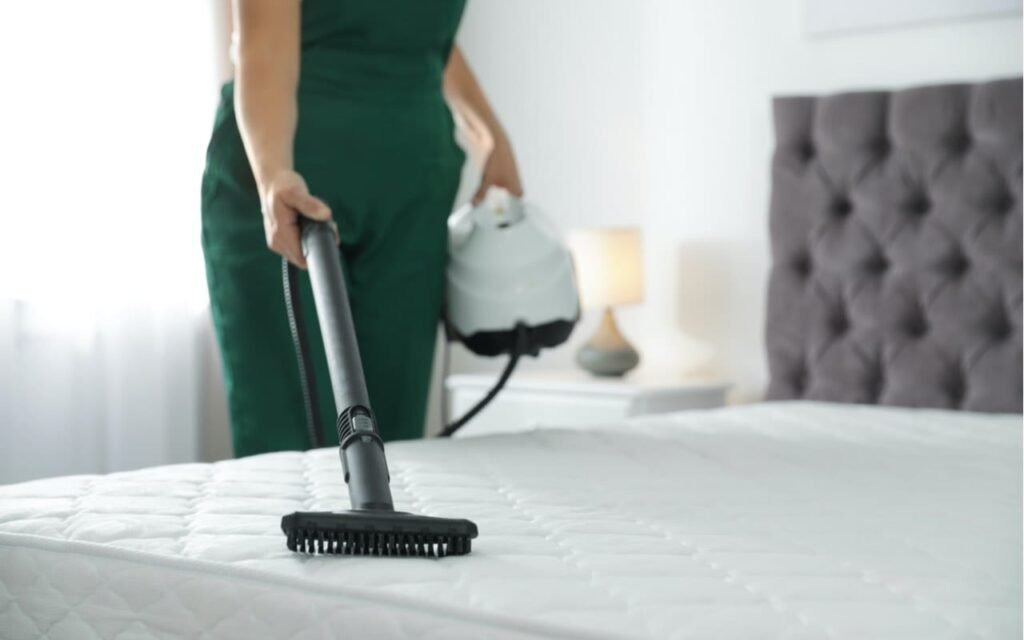
A mattress collects more than dust. Over time, sweat, skin oils, hair, crumbs, pet hair, and spills can build up on the surface. That is why knowing how to clean mattress at home can help you keep your bed fresh without buying special equipment.
The safest method is simple. Start with the care label, remove the bedding, vacuum the whole mattress, treat stains based on what caused them, and use as little moisture as possible. A key lesson in home cleaning is that a mattress should be **cleaned gently and dried completely**, not soaked.
This guide explains how to clean mattress at home with common household tools. It also covers stains, odors, memory foam, urine, sweat, and regular care so you can choose the right method for your mattress.

Why You Should Clean Your Mattress
Your sheets protect your mattress, but they do not keep every bit of dirt away. Dust, skin flakes, sweat, oils, hair, and small spills can still reach the mattress surface. Pets can add fur and outdoor dirt too.
Regular mattress cleaning can help keep the bed feeling fresh. It can also reduce surface dust and remove odors before they become harder to treat. Cleaning does not make a mattress new again, but it can support good bedroom hygiene.
How often you clean depends on your home and your needs. A light vacuum every few months is a useful routine for many homes, while spills and stains should be treated as soon as they happen.
- ✦ Dust and debris
Small particles can settle on the mattress surface and along seams. Vacuuming helps remove loose debris before you use any liquid cleaner.
- ✦ Sweat and body oils
Nightly use can leave moisture and oils behind. Over time, they may cause a stale smell or yellow marks.
- ✦ Spills and stains
Fresh spills are often easier to treat than old stains. Blot the area instead of rubbing it deeper into the fabric.
- ✦ Pet hair
Pets can leave hair, dander, and dirt on a mattress. A vacuum with an upholstery tool can help lift these materials.
What You Need to Clean a Mattress at Home
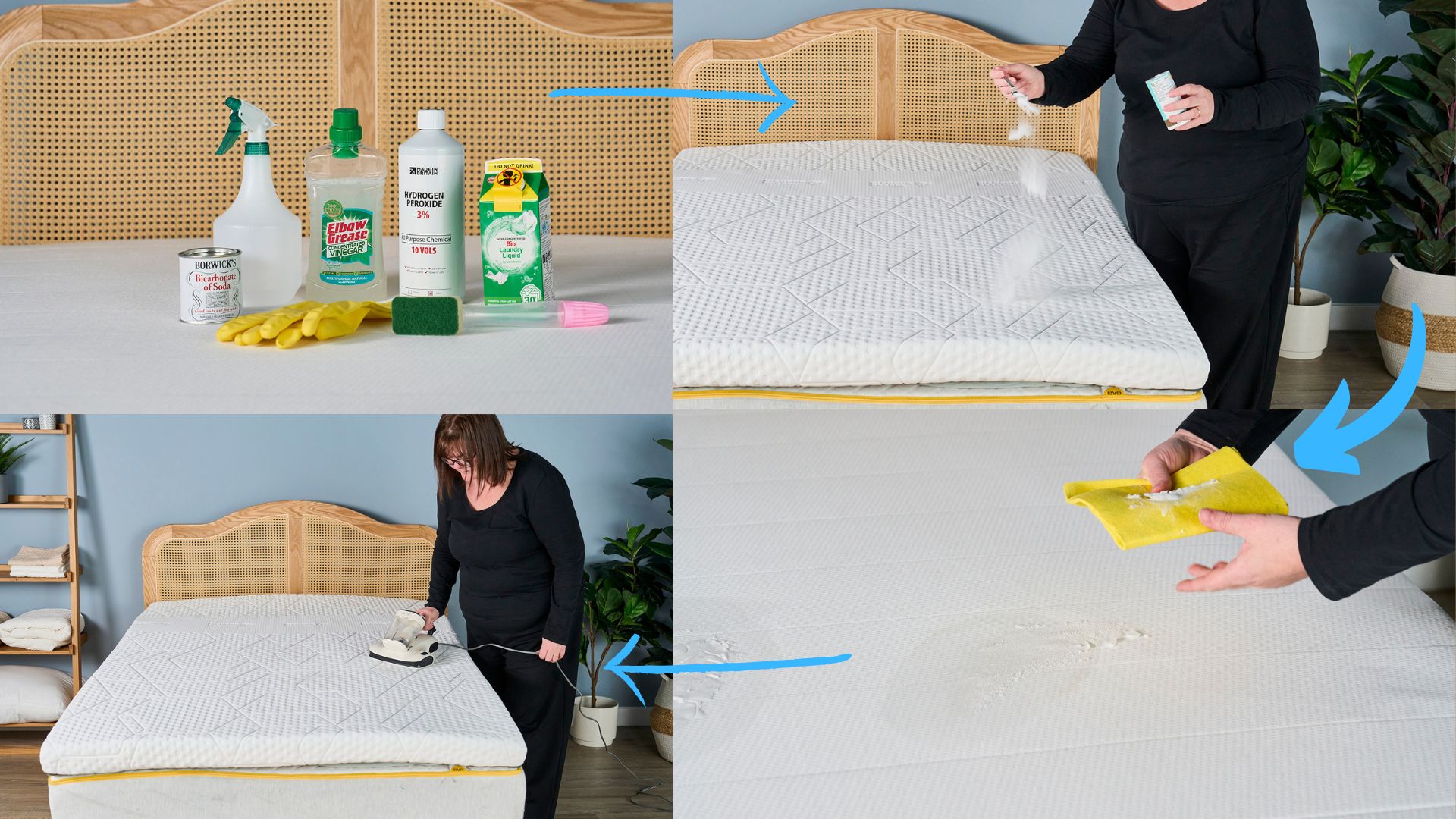
You do not need a large set of cleaning products. Most mattress cleaning jobs can be done with a vacuum, clean cloths, mild soap, and a small amount of water. Baking soda can help with surface odors, but it is not a cure for deep stains or moisture problems.
Before you start, read the mattress care label and any instructions from the maker. Some mattresses have covers that can be removed and washed, while others should not be exposed to certain cleaners or large amounts of water.
The goal is to use the **least amount of moisture and product needed**. This is especially important for foam mattresses, which can hold water inside for a long time.

- ✦ Vacuum cleaner
Use an upholstery attachment if you have one. It helps clean the top, sides, seams, and edges of the mattress.
- ✦ Clean white cloths
White cloths make it easier to see what you lift from a stain and reduce the risk of dye transfer.
- ✦ Mild dish soap
A small amount mixed with water can work for many fresh surface stains. Do not saturate the mattress.
- ✦ Baking soda
A light layer can help absorb some surface moisture and odors before you vacuum it away.
- ✦ Cool or lukewarm water
Use only a small amount when spot-cleaning. Very hot water may set some protein-based stains.
How to Clean Mattress at Home Step by Step
If you want to know how to clean mattress at home from start to finish, follow this order. It keeps loose dirt from turning into mud and helps you avoid adding too much water.
Give yourself enough time for the mattress to dry. If possible, clean it early in the day and improve airflow with open windows, a fan, or a dehumidifier. Never put sheets back on while the mattress still feels damp.

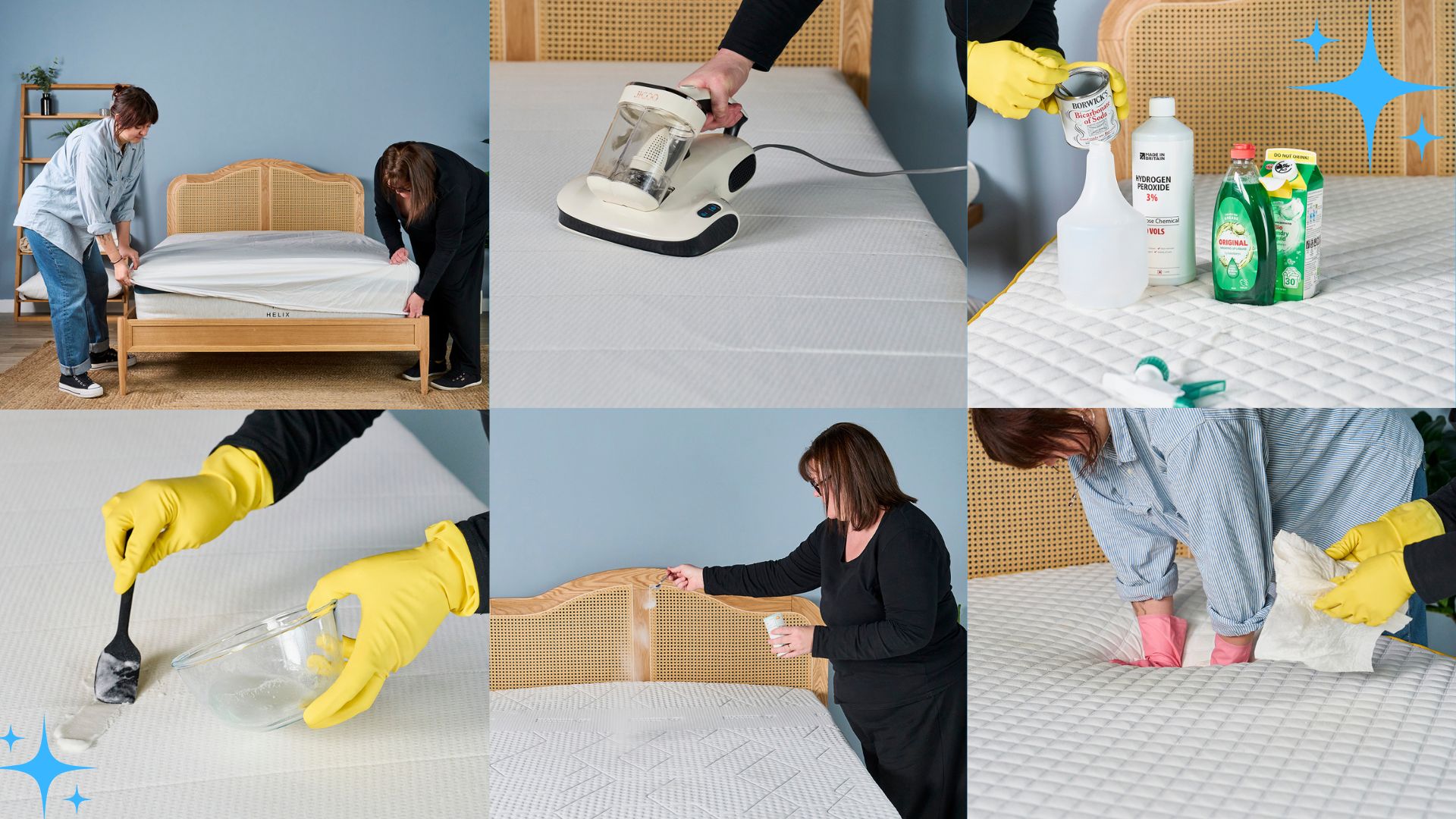
- ✦ 1. Read the care label
Check the maker’s cleaning instructions first. Follow them if they differ from general home-cleaning advice.
- ✦ 2. Strip the bed
Remove sheets, blankets, pillows, and the mattress protector. Wash the bedding according to its own care label.
- ✦ 3. Vacuum the mattress
Move slowly over the top, sides, seams, corners, and edges. Use the crevice tool where dust collects.
- ✦ 4. Treat stains
Apply a small amount of suitable cleaner to a cloth rather than soaking the mattress. Blot the stain from the outside toward the center.
- ✦ 5. Deodorize if needed
Sprinkle a thin layer of baking soda over the dry surface. Leave it for several hours, then vacuum it well.
- ✦ 6. Dry the mattress
Let the mattress air out fully. Use fans to improve airflow, but avoid adding more moisture while it dries.
- ✦ 7. Replace clean bedding
Once the mattress is completely dry, put on a clean mattress protector and fresh sheets.
How to Vacuum a Mattress
Vacuuming is the first major step in how to clean mattress at home. Start at one end and move in slow, overlapping passes. Pay extra attention to seams, edges, and areas under pillows.
Do not press a dirty vacuum attachment hard into the fabric. A gentle pass can lift loose debris without damaging the cover.
How to Spot-Clean a Mattress
For a basic stain, mix a small amount of mild dish soap with water. Dampen a clean cloth, wring it well, and blot the stain. Avoid pouring the mixture directly onto the mattress.
After blotting, use a second cloth that is only slightly damp to lift soap residue. Then let the area dry fully with good airflow.
How to Deodorize a Mattress
For mild odors, sprinkle baking soda over the dry mattress. Let it sit for several hours, then vacuum it thoroughly.
Baking soda can help with surface smells, but it will not fix mold, a deep liquid spill, or a strong odor caused by a hidden source. If a smell returns after cleaning, look for the cause rather than adding more powder.
How to Remove Common Mattress Stains
Different stains need different care. The main rule is simple: **blot, do not scrub hard**. Scrubbing can spread the stain and push liquid deeper into the mattress.
Always test a cleaning mixture on a small hidden area first. If the fabric changes color, feels damaged, or reacts badly, stop and use a method approved by the mattress maker.

- ✦ Sweat stains
Blot the area with a cloth dampened with a mild soap solution. Avoid soaking the mattress, then allow it to dry completely.
- ✦ Urine stains
Blot fresh liquid as soon as possible. For older or strong urine stains, use a cleaner made for the stain type and safe for your mattress material.
- ✦ Blood stains
Use cool water and blot gently. Avoid hot water, which can make some protein-based stains harder to remove.
- ✦ Food and drink
Lift solid pieces first, then blot the area with a lightly damp cloth and mild soap. Do not rub the spill deeper into the fabric.
- ✦ Pet stains
Remove solid material first, blot liquid, and use a pet-stain cleaner that is safe for the mattress. Follow the product label and keep the mattress from becoming saturated.
How to Clean Urine From a Mattress
When learning how to clean mattress at home after a urine accident, speed matters. Press clean towels onto the wet area to absorb as much liquid as possible. Do not rub the spot.
For a strong or old stain, a suitable enzyme cleaner may help break down organic residue. Check the mattress care instructions before use, and use only enough product to treat the affected area.
How to Clean Sweat Stains From a Mattress
Sweat marks often build up slowly, so they may need more than one gentle treatment. Use a lightly damp cloth with mild soap, blot the affected area, and give it plenty of time to dry.
Do not flood the mattress in an attempt to make yellow marks disappear at once. Repeated light cleaning is safer than one heavy application of water.
How to Clean Memory Foam and Other Mattress Types
The best method for how to clean mattress at home depends on the material. Foam, latex, innerspring, and hybrid mattresses can have different care needs, so the manufacturer’s instructions should come first.
Memory foam needs special care because it can hold moisture. Avoid soaking it and avoid aggressive scrubbing. A small spot-cleaning treatment followed by long, thorough drying is usually safer than a wet deep-clean method.
- ✦ Memory foam
Use very little liquid and blot gently. Do not soak the foam or use a cleaning method that the manufacturer does not approve.
- ✦ Latex
Check the maker’s instructions before using cleaners or water. Keep moisture low and dry the surface well.
- ✦ Innerspring
Vacuum the surface and spot-clean the cover as directed. Avoid getting excess liquid into the mattress.
- ✦ Hybrid
Treat the mattress based on its cover and foam layers. Follow the care guide because hybrid designs can vary.
- ✦ Removable mattress cover
If the cover is designed to be removed and washed, follow its label exactly. Do not assume every removable cover is safe for a washing machine.
Can You Steam Clean a Mattress?
Steam can add a lot of heat and moisture, so do not assume it is safe for every mattress. Some manufacturers may allow specific steam methods, while others advise against them.
If the care label does not approve steam cleaning, choose dry vacuuming and careful spot cleaning instead. A mattress that stays wet inside can be harder to dry and may develop new problems.
How to Dry a Mattress Safely After Cleaning
Drying is one of the most important parts of how to clean mattress at home. Even a small wet spot can take time to dry, especially in foam. Do not cover the mattress until the cleaned area feels fully dry.
Good airflow is your best tool. Place a fan so air moves across the surface, and use a dehumidifier if the room is damp. If the mattress can safely be placed in a bright, dry area, follow the manufacturer’s guidance rather than exposing it to harsh heat.

- ✦ Use fans
Move air across the mattress surface to speed evaporation. A fan can be useful even when the room feels dry.
- ✦ Increase airflow
Open doors or windows when outdoor conditions allow. Cross-flow can help moisture leave the room faster.
- ✦ Use a dehumidifier
A dehumidifier can help when indoor air is humid. This can be useful during wet weather or in rooms with poor airflow.
- ✦ Check before making the bed
Touch the cleaned areas and check seams and edges. If any part still feels damp, keep drying it.
What Not to Do When Drying a Mattress
Do not use intense heat unless the manufacturer says it is safe. High heat can damage some mattress materials or covers.
Do not put sheets over a damp mattress to hide the problem. Trapped moisture can slow drying and create an environment where unwanted growth can occur.
Mistakes to Avoid When Cleaning a Mattress
A common mistake is using too much water. More liquid does not mean a cleaner mattress. It can make drying harder and may push a stain below the surface.
Another mistake is using a strong cleaner without checking the care label. Mattress fabrics and foam can react badly to harsh chemicals, rough brushes, or unapproved treatments.

- ✦ Do not soak the mattress
Use a damp cloth rather than pouring water onto the surface. Keep liquid focused on the stain.
- ✦ Do not scrub hard
Hard scrubbing can damage the cover and spread stains. Blotting is usually a gentler approach.
- ✦ Do not skip the care label
The manufacturer knows the materials used in the mattress. Its cleaning instructions should guide your method.
- ✦ Do not mix cleaning chemicals
Never mix household cleaners unless the product labels clearly say the combination is safe. Some mixtures can create harmful fumes.
- ✦ Do not cover a damp mattress
Wait until the mattress is fully dry before replacing bedding. This helps prevent trapped moisture.
- ✦ Do not rely on baking soda for every problem
Baking soda may help with mild surface odors, but it cannot solve every stain, spill, or moisture issue.
How to Keep Your Mattress Clean Longer
Once you know how to clean mattress at home, prevention makes the job much easier. A washable mattress protector can act as a barrier between the sleeper and the mattress. Wash the protector as directed and replace it when it becomes worn.
Regular bedding care also matters. Wash sheets on a routine that fits your household, clean spills quickly, and vacuum the mattress from time to time. These small habits can reduce the need for heavy cleaning.
- ✦ Use a mattress protector
Choose a protector that fits your mattress and follow its washing instructions. A good protector can help shield the mattress from sweat and spills.
- ✦ Vacuum on a routine
Vacuum when you change or deep-clean bedding, or every few months if that fits your routine.
- ✦ Treat spills quickly
Blot new spills as soon as you can. Fresh stains are often easier to manage than old, dried stains.
- ✦ Keep pets protected
If pets sleep on the bed, use a washable barrier and clean it often. This can reduce fur, dirt, and accident damage.
- ✦ Let the bed air out
When practical, remove heavy bedding for a short time after waking so moisture can escape from the sleep surface.