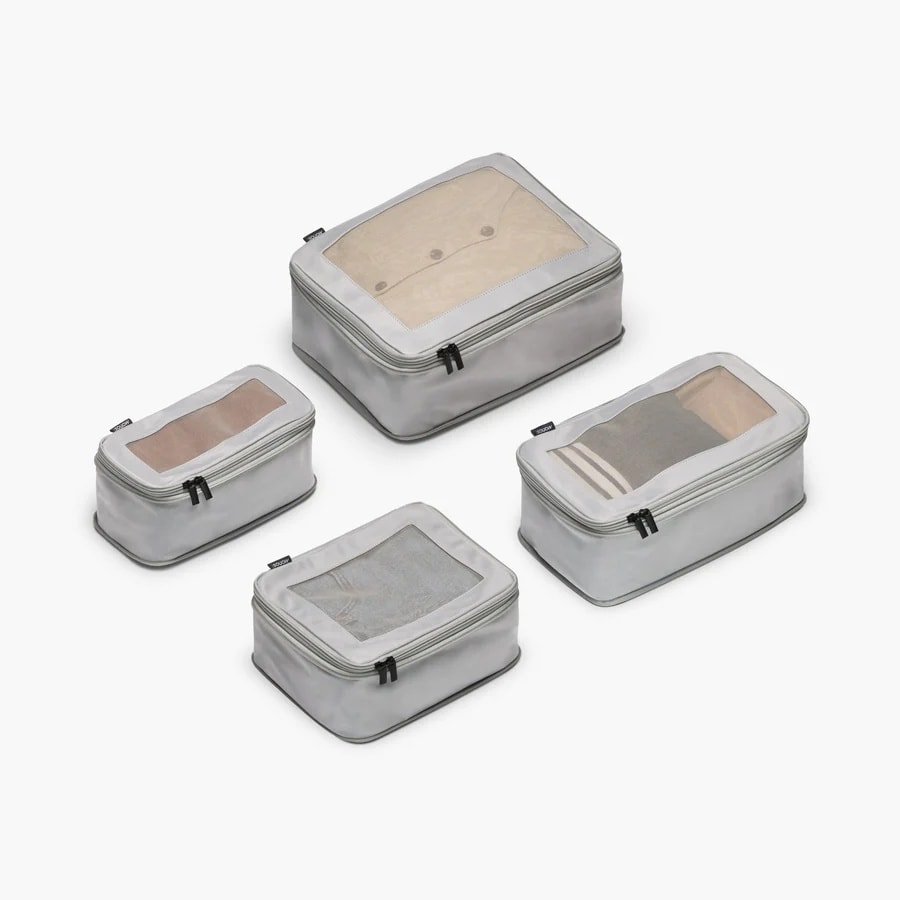
For U.S. travelers, packing cubes can make a suitcase easier to sort and unpack—but they do not create more space or reduce the weight of your clothes. Use a few cubes to group items by type or by day, then fit them inside your bag without blocking access to things you may need on the way.
The best setup depends on your trip, your bag, and how often you will change locations. Start with the clothes you plan to bring, not a pile of empty cubes.

What packing cubes do—and what they do not do
Packing cubes are soft, zippered fabric bags that hold and group items inside a suitcase or backpack. They can help you find a shirt, keep small items together, and move a set of clothes from your bag to a hotel drawer.
They are organizers, not magic space savers. A cube may help you pack more neatly, but it will not make clothes weigh less. Compression cubes can press soft items into a smaller bundle, but they may leave you with a dense, heavy bag that is harder to close or lift.
Think of cubes as small drawers for your luggage. Each one should have a clear job, such as holding tops, underwear, or a day’s outfit. If you need to open every cube to find one item, the system is not helping.
A useful packing cube system should:
- Keep similar items together.
- Let you reach often-used items without unpacking everything.
- Fit the shape of your bag without forcing the zipper.
- Make it easy to separate clean clothes from worn ones.
Cubes do not replace airline baggage rules. Check your airline’s current carry-on size and weight limits before you pack, since rules can differ by airline, ticket, and route.

Choose the right number and size of packing cubes
Choose cubes based on the bag you own and the way you travel. For most trips, a small set of two to four cubes is easier to manage than a large set of tiny pouches.
Before you buy or pack them, measure the inside of your suitcase or backpack. Look for the usable space between the bag’s edges, wheels, handles, and frame. A cube that fits on paper may not fit well around those parts.
| Cube size | Useful for | Watch out for |
|---|---|---|
| Small | Socks, underwear, swimwear, or accessories | Too many small cubes can make packing fussy |
| Medium | Shirts, shorts, or a few outfits | A full cube may be hard to fit around a bag’s frame |
| Large | Bulky clothes or several soft items | It can become heavy and awkward to lift |
| Compression | Soft items such as T-shirts or sleepwear | Compression saves volume, not weight |
The labels “small,” “medium,” and “large” are not standard sizes. Check each cube’s measurements and compare them with your bag.
A simple starting setup is one cube for tops, one for bottoms or outfits, and one small pouch for underwear and socks. Add a separate laundry bag if you need to keep worn clothes apart. You may need fewer cubes for a short trip or a small backpack.

How to pack clothes in packing cubes
pack each cube with a purpose, and leave enough room to close it without pulling hard on the zipper. A cube that is packed too tightly is harder to use and can put stress on its seams.
- Choose the clothes first. Set aside what you expect to wear, then remove items that do not work with more than one outfit.
- Group items by use. Put similar items together, or group a full outfit for each day if you will move between places often.
- Fold or roll to suit the clothes. Rolling can make soft items easy to arrange, while flat folding may work better for structured items. Try both and keep the method that fits your cube.
- Place heavy items near the bottom of your bag. This can make a backpack feel steadier when you carry it. Keep fragile items away from hard edges.
- Fill gaps with soft, light items. Socks or a thin shirt can fit around the sides of a cube, but do not force the bag shut.
- Keep key items easy to reach. Put a change of clothes, medication, and other essentials where you can get to them quickly.
For a longer trip, pack by category and plan to rewear suitable items. For a trip with several stops, pack by outfit or by the next part of the trip. The right method is the one that helps you find what you need without unpacking the whole bag.
Signs the system is working: You can name what is in each cube, the cubes sit flat in your bag, and you can reach your essentials quickly. If you keep searching through several cubes, change the categories or use fewer cubes.

Arrange cubes in a carry-on or checked suitcase
Place cubes in the bag in the order you expect to need them. This simple step can save time at airport security, during a flight, or when you arrive.
In a carry-on, keep travel-day items near the top or in an outside pocket. These may include a light layer, a change of clothes, and small items you need during the journey. Keep valuables and essential medication with you rather than packing them in a checked bag.
For a suitcase, place larger, flatter cubes along the bottom or sides, then use smaller cubes to fill open spaces. Keep shoes in a separate bag so their soles do not touch clean clothes. If your suitcase has a divider, use it to keep cubes from shifting.
Do not pack cubes in a way that hides items you must show or remove for screening. Packing cubes do not change airport security rules. For current U.S. screening guidance, check the TSA’s What Can I Bring tool. For liquids, medical items, and other special cases, follow the applicable TSA guidance and your airline’s rules.
A cube also does not guarantee that a bag meets an airline’s size limit. Check your airline’s current baggage policy and measure the packed bag, including handles and wheels where the policy requires them.

Use cubes for different kinds of trips
Change the cube plan to match how you will travel. A road trip, a one-bag city break, and a family trip do not need the same layout.
- Short trip: Use one cube for clothes and a small pouch for underwear and socks. Leave spare cubes at home if they do not serve a clear purpose.
- One-bag trip: Use a few cubes that fit the shape of your backpack. Keep the heaviest items close to your back and avoid overfilling compression cubes.
- Trip with several stops: Group clothes by stop or day so you can take out only what you need. Keep the next outfit near the top.
- Family trip: Give each traveler a distinct cube or color. Keep shared items, such as swimwear or first-aid supplies, in a separate, clearly labeled pouch.
- Work trip: Keep work clothes apart from casual clothes. Place items that crease easily on top, or pack them outside the cube if that gives them more room.
For dirty laundry, use a washable laundry bag or a cube reserved for worn clothes. Let damp swimwear or sweaty clothes dry when you can before sealing them away. A closed bag can hold moisture and odor.

Common packing cube mistakes and fixes
Most packing cube problems come from using too many cubes, packing them too full, or giving each cube a vague job. A few changes can make the system easier to use.
| Problem | Likely cause | What to try |
|---|---|---|
| Your bag will not close | Cubes are overfilled, or the bag is too small | Remove items first; do not force the zipper |
| You cannot find anything | Categories are too broad or unclear | Label cubes by type, person, or trip day |
| Your bag feels too heavy | You packed too much or used dense compression | Remove items and check your airline’s limits |
| Cubes waste space | Their shape does not match the bag | Use fewer cubes or try a different layout |
| Clothes come out creased | Garments are tightly folded or pressed under heavy items | Pack delicate or structured items with more room |
| Dirty clothes smell damp | Wet items were sealed away | Air-dry them before storing, or keep them separate |
Compression cubes are best for soft clothing that can be pressed without harm. They are not a good reason to add more clothes, and they do not lower the weight of your bag. If your bag is heavy, remove items rather than compressing them further.

Key takeaways
- Use each cube for a clear category, outfit, person, or trip stop.
- Choose cube sizes to fit your actual bag, not a standard size label.
- Pack only what you need; cubes organize clothes but do not reduce their weight.
- Keep essentials easy to reach and check your airline’s baggage rules.
- Leave room to close each cube without straining its zipper.
FAQs
Do packing cubes save space?
They can help you arrange clothes neatly, and compression cubes can reduce the volume of some soft items. But cubes do not reduce clothing weight, and they may take up space of their own. The result depends on the clothes, cube, and bag.
Should I roll or fold clothes in packing cubes?
Either can work. Rolling may suit soft, casual clothes and help you see what is inside. Folding may suit structured items or clothes that crease easily. Test both with your own clothes and cube.
Are compression packing cubes worth using?
They can be useful when you need to reduce the bulk of soft items. They are less useful if they make your bag too heavy, strain the zipper, or crush clothes that need to keep their shape.
Can I put liquids in packing cubes?
A cube is not a leakproof toiletry bag unless its maker says it is designed to contain leaks. Keep liquids in a sealed toiletry bag and follow current TSA screening rules for carry-on items.
How many packing cubes do I need?
Start with two or three, then add another only if it solves a real problem. The right number depends on your bag, trip length, and packing style—not on a fixed rule.
Conclusion
The best way to use packing cubes is to give each one a simple job, pack it without overfilling, and arrange it so the items you need are easy to reach. Start with a small set, check your bag’s fit and weight, and adjust the layout after each trip.