
Have you ever noticed how your kitchen seems to get messy almost the moment you start using it? You’re not alone.
No matter how carefully you try to keep things tidy, clutter and chaos quickly take over. But why does this happen so fast? Understanding the reasons behind your kitchen’s messiness can help you take control and keep your space clean with less effort.
Keep reading, and you’ll discover the simple truths that can change the way you manage your kitchen every day.

Credit: medium.com
Common Causes Of Kitchen Mess
The kitchen often becomes messy quickly, frustrating many people. Understanding common causes helps manage the clutter better. Kitchens are busy places where many tasks happen at once. This leads to spills, crumbs, and piles of dishes.
Knowing the main reasons behind kitchen mess can improve daily habits. The following sections explain the top causes clearly.
Frequent Cooking And Food Prep
Cooking creates mess fast. Chopping vegetables, mixing ingredients, and frying food leave spills and crumbs. Pots and pans get dirty. Sauces splash on counters. The more cooking, the more mess appears. Busy kitchens with many meals daily get messy quickly.
Lack Of Immediate Cleanup
Leaving dishes and spills for later causes clutter. Dirty plates stack up in the sink. Food scraps on counters attract bugs. The mess grows if cleaning waits too long. Immediate cleanup stops dirt from spreading and piling up.
Multiple Users In One Space
When many people use the kitchen, mess increases. Each person leaves behind tools and food bits. Different habits cause confusion about cleaning. Crowded kitchens have less space to work and clean. This makes tidying up harder and slower.
Hidden Factors That Add To The Mess
Many kitchens become messy quickly due to hidden factors that are often overlooked. These factors make it hard to keep the space clean and tidy. Understanding these issues helps manage clutter better.
Limited Storage Options
Small or few cabinets limit where you can store items. Countertops fill up fast with things that have no place. This clutter makes the kitchen look messy even after cleaning.
Without enough shelves or drawers, items pile up. Pots, pans, and utensils crowd the space. Finding what you need becomes difficult, leading to more mess.
Inadequate Organization Systems
Without clear systems, kitchen tools get scattered. Mixing cooking tools with cleaning supplies adds to the chaos. Lack of labeled containers or designated spots causes disorder.
Organizing by use or size can save space and time. Simple baskets or racks help keep things in place. Otherwise, clutter grows quickly and cleaning feels like a chore.
Poorly Designed Kitchen Layout
Bad layouts create traffic jams and block work areas. If the sink, stove, and fridge are too far apart, cooking slows down. Mess builds up during meal prep because of this.
Limited counter space forces stacking items on top of each other. Tight corners and narrow aisles make it hard to move around. All these design flaws add to kitchen clutter and mess.
Behavioral Habits That Worsen Clutter
Behavioral habits play a big role in how fast your kitchen gets messy. Small daily actions add up and create clutter quickly. Understanding these habits can help you keep your kitchen cleaner.
Some habits might seem harmless but actually make clutter worse. Changing these habits can make a big difference in your kitchen’s tidiness.
Leaving Dishes In The Sink
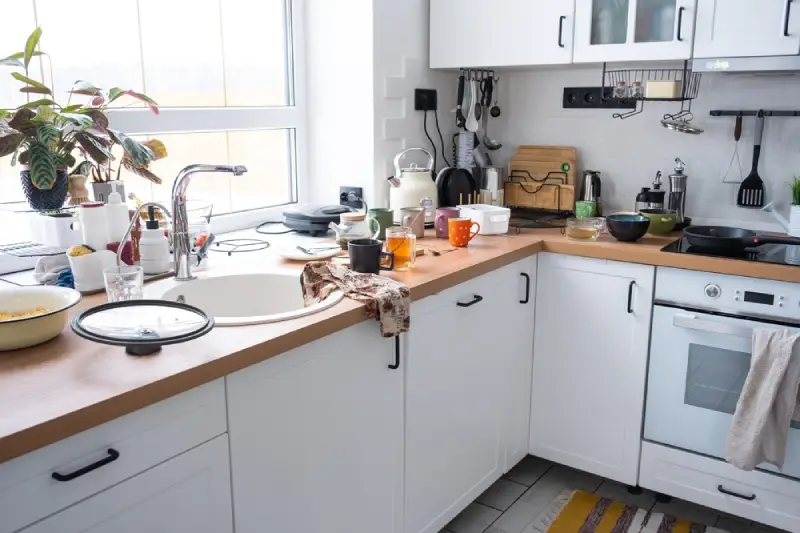
Leaving dirty dishes in the sink is a common habit that worsens clutter. Piled-up dishes take up space and create a messy look. They also attract pests and cause bad smells. Washing dishes right away helps keep the kitchen clean and clear.
Ignoring Small Spills
Small spills often get ignored or wiped later. These spots build up and make the kitchen look dirty. Sticky counters and floors invite more mess and bacteria. Cleaning spills immediately keeps your kitchen fresh and tidy.
Overstocking Counters
Counters filled with too many items look cluttered fast. Extra appliances, jars, and papers take up valuable space. Overstocked counters limit your workspace and make cleaning harder. Keeping only essentials on counters helps reduce clutter and improves kitchen flow.

Credit: www.besrey.com
Impact Of Kitchen Mess On Daily Life
A messy kitchen affects more than just looks. It impacts daily life in many ways. The clutter and disorder create several challenges that can disrupt routines. Understanding these effects helps highlight the need for a cleaner kitchen space.
Increased Stress Levels
A cluttered kitchen raises stress. Seeing dirty dishes and scattered items creates a feeling of chaos. This visual mess makes it harder to relax. Stress builds up, especially during busy mornings or late evenings. A clean kitchen brings calm and peace to the mind.
Reduced Cooking Efficiency
Mess slows down cooking tasks. Searching for utensils or ingredients wastes time. It also causes frustration and mistakes. A tidy kitchen allows faster meal prep. Everything is easy to find and use. This improves overall cooking flow and enjoyment.
Potential Health Risks
Dirty kitchens can cause health problems. Food spills and crumbs attract pests. Bacteria grow on unclean surfaces. This increases risks of food poisoning and allergies. Regular cleaning keeps the kitchen safer for all family members.
Simple Tips To Keep Your Kitchen Tidy
Keeping a kitchen tidy does not have to be hard. Simple habits can help maintain order and cleanliness. A clean kitchen makes cooking easier and more enjoyable. Here are easy tips to keep your kitchen neat every day.
Clean As You Go
Clean while cooking to avoid piles of dirty dishes. Wipe spills immediately to stop stains and messes. Rinse and load dishes into the dishwasher during cooking breaks. This habit saves time and keeps counters clear.
Use Smart Storage Solutions
Organize kitchen tools and ingredients in clear containers or labeled bins. Use shelves, hooks, and drawer dividers to keep items visible and easy to reach. Proper storage reduces clutter and makes cleaning faster.
Set A Regular Cleaning Schedule
Plan short daily cleanups to maintain tidiness. Schedule deeper cleaning once a week for floors and appliances. Consistent cleaning stops mess from building up and keeps the kitchen fresh.
Credit: www.mollymaid.com
Frequently Asked Questions
Why Does The Kitchen Get Messy So Quickly?
Kitchens get messy fast due to constant use and food preparation. Spills, crumbs, and dirty dishes accumulate quickly. Lack of immediate cleaning allows mess to build up, making the kitchen appear cluttered and untidy in no time.
How Do Cooking Habits Affect Kitchen Messiness?
Frequent cooking creates more mess from spills, splatters, and utensils. Complex meals often use multiple tools and ingredients, increasing cleanup needs. Quick or careless cooking habits can worsen the mess by spreading food and debris around.
Can Kitchen Design Influence How Messy It Gets?
Yes, kitchen layout and storage affect messiness. Poor organization leads to clutter and difficulty cleaning. Efficient design with ample counter space and storage helps keep the kitchen tidy and reduces mess buildup.
How Do Cleaning Routines Impact Kitchen Cleanliness?
Regular cleaning prevents mess from accumulating. Daily wiping of counters and washing dishes stops dirt buildup. Inconsistent cleaning routines allow mess to grow, making it harder to maintain a tidy kitchen.
Conclusion
A kitchen gets messy fast because we use it often and for many tasks. Food, dishes, and tools pile up quickly. Small spills and crumbs add to the mess without notice. Busy days leave little time to clean right away.
Understanding this helps us keep the kitchen tidier. Simple habits, like wiping counters after cooking, make a big difference. Regular cleaning stops messes from growing. A clean kitchen feels better and works better. It’s about small steps, done often, that keep the space neat.