If you are asking why air purifier smells bad after turning it on, the unit is often not creating the odor from nothing. More often, it is moving air over something that already smells. A loaded filter can hold smoke, cooking odors, pet smells, dust, and other compounds, then release some of that smell back into the room.
In U.S. homes, portable air cleaners often run for many hours in bedrooms, living rooms, kitchens, and home offices. That steady airflow makes small problems easy to notice. The good news is that most odor problems have a clear cause and a practical fix.
The key is to match the smell to the likely source. A dusty smell, musty smell, plastic smell, chemical smell, and burning smell can point to very different issues. This guide explains why air purifier smells bad, what you can check at home, and when it is safer to stop using the machine.
Why air purifier smells bad: the most common causes
There is no single answer to why air purifier smells bad. The smell may come from the filter, fan area, sensor area, electrical parts, or the air around the machine. In some cases, the purifier simply makes an existing indoor odor easier to notice by moving more air.
A dirty filter is one of the first things to check. Filters collect particles over time. If the filter also contains an odor-control layer, such as activated carbon, it can hold odor compounds until its capacity is used up.
Moisture is another common cause. A damp filter or damp area inside the unit can develop a stale or musty odor. The purifier may then spread that smell through the room whenever the fan runs.
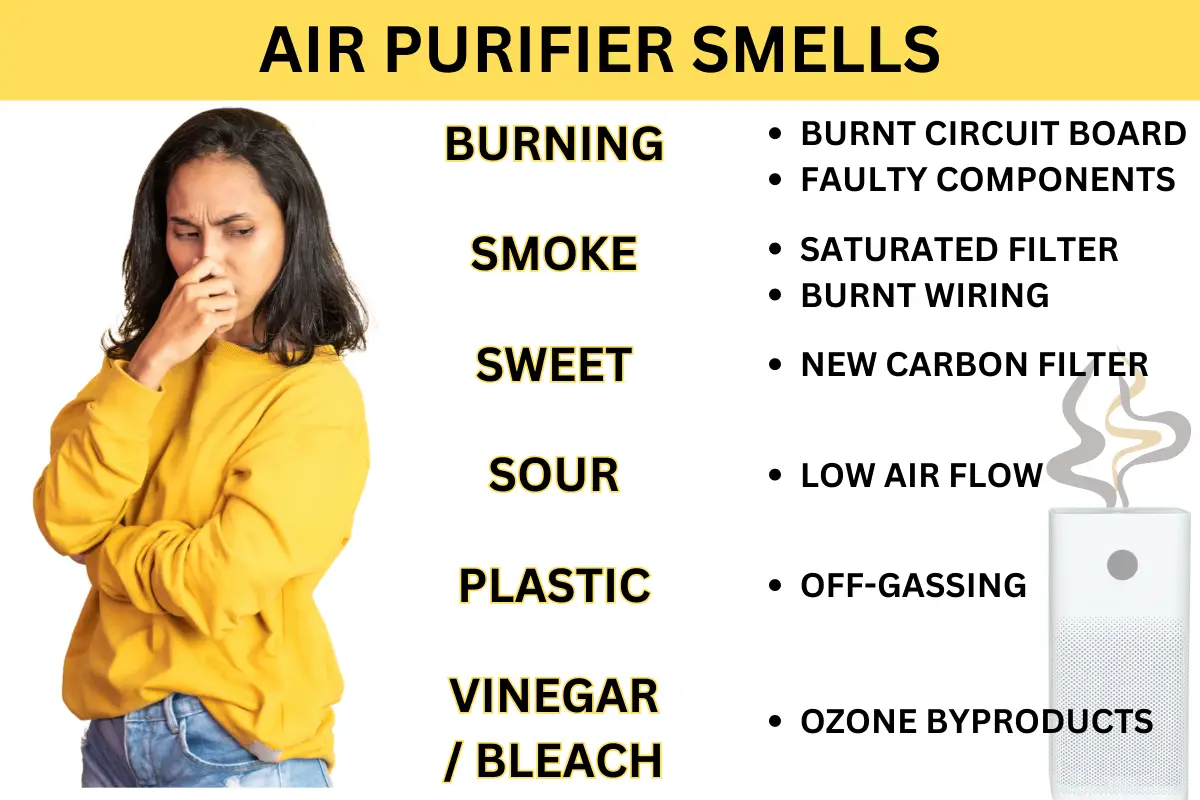
- ✦ Dirty or overloaded filter
Dust, smoke, pet dander, cooking particles, and other material can build up on a filter. A loaded filter may smell worse when air passes through it.
- ✦ Spent carbon filter
Activated carbon can adsorb many odor-causing gases, but it has a limited capacity. Once it becomes saturated, odor control can drop.
- ✦ Moisture
Water or high humidity can create a musty smell. Moisture can also support unwanted microbial growth if the conditions persist.
- ✦ New materials
A new purifier may have a mild plastic, rubber, paint, or manufacturing odor. This often fades with normal use and good ventilation.
- ✦ Strong indoor odor source
Cooking, smoke, pets, cleaning products, trash, damp carpets, and other sources can enter the purifier and become more noticeable during operation.
- ✦ Electronic air-cleaning technology
Some units use ionization or other electronic methods. These features can produce a sharp smell in some settings, especially when ozone is generated.
Why air purifier smells bad after running for a few hours
A purifier may smell fine when you first turn it on and then develop an odor later. This can happen because the filter collects more material as it runs. Heat from the motor and airflow can also make an existing filter odor easier to notice.
If the smell grows stronger during long runs, inspect the filter and the air intake. Also check the room for a source such as cooking smoke, a litter box, damp fabric, or recently used cleaning products.
- ✦ Check the filter first
Turn the purifier off and follow the manufacturer’s instructions before opening it. Look for heavy dust, discoloration, moisture, or an obvious odor.
Why air purifier smells bad after changing the filter
A new filter can have its own packaging or material odor. A mild new-filter smell may fade after the unit runs in a well-ventilated room, but a strong or irritating odor should not be ignored.
Make sure the replacement filter is the correct model and that all packaging has been removed. A filter installed in the wrong position can also affect airflow and performance.
- ✦ Check for leftover packaging
Remove every plastic bag, film, cardboard piece, and shipping material that the manufacturer says should be removed before use.
What different air purifier smells can mean
The type of smell gives you useful clues. A smell does not prove one specific cause, but it can help you decide what to inspect first. Always put safety first when the odor smells like burning plastic, hot wiring, or smoke.
A purifier that smells bad may be reacting to contaminants in the room rather than failing. For example, a purifier placed near a kitchen can quickly collect cooking odors. A unit in a basement or humid bedroom may collect damp air and develop a musty smell.

- ✦ Musty or moldy smell
Check for dampness, a wet filter, condensation, leaks, or mold near the purifier. A purifier can reduce some airborne particles, but it cannot fix the moisture source that allows mold to grow.
- ✦ Dusty smell
A dusty odor can occur when the filter is loaded or when dust has collected inside the housing. Clean only the parts that the manufacturer says are safe to clean.
- ✦ Wet-dog or pet smell
Pet dander and odor compounds can collect on filters. Washable prefilters may need cleaning, while disposable filters usually need replacement according to the manual.
- ✦ Smoke smell
Smoke particles and gases can load a filter quickly. A purifier with activated carbon can help with some gases, but source control and ventilation remain important.
- ✦ Sweet or chemical smell
Cleaning products, air fresheners, new materials, and other household products can release volatile compounds. Check nearby products and consider whether the smell started after cleaning or renovation.
- ✦ Sharp electrical or burning smell
Turn the purifier off and unplug it if safe to do so. Do not keep using a unit that smells like burning, has visible damage, becomes unusually hot, smokes, or shows signs of melting.
- ✦ Ozone-like or sharp fresh smell
Some electronic air-cleaning technologies can generate ozone. Ozone can irritate the lungs, so avoid using ozone-generating air cleaners in occupied spaces.
Why air purifier smells like plastic
A new purifier may have a mild plastic or manufacturing smell. This can come from plastics, adhesives, coatings, packaging, or other new materials. Good ventilation may help the odor fade faster.
If the plastic smell is strong, gets worse with heat, or is joined by smoke or a burning odor, stop using the unit. A normal new-product smell should not be confused with an electrical fault.
- ✦ New unit
Check the manual for any break-in or first-use guidance. Keep the room well ventilated if the manufacturer permits normal ventilation during initial use.
Why air purifier smells bad after cleaning
Cleaning can sometimes make an odor worse for a short time. One reason is leftover moisture. Another is residue from a cleaner, soap, or scented product that was not meant for the purifier.
Many portable air purifiers have dry, disposable filters that should not be washed. Washing a filter that the manufacturer says is disposable can damage it and may create a damp environment inside the unit.
Follow the owner’s manual for every cleaning step. In general, unplug the unit before cleaning, keep water away from electrical parts, and let approved washable parts dry fully before putting them back.

- ✦ Use only approved cleaning methods
Do not spray household cleaner into the air purifier unless the manufacturer specifically says it is safe.
- ✦ Dry washable parts fully
A damp filter or damp housing can create a musty smell. Allow washable parts to dry as directed before reinstalling them.
- ✦ Do not wash a disposable filter
Disposable filters are designed for replacement, not washing. Check the manual before using water on any filter.
- ✦ Clean the prefilter when allowed
A reusable prefilter can collect hair and large dust particles. Cleaning it at the recommended interval can reduce the load on the main filter.
Why air purifier smells bad when the filter gets wet
A wet filter can develop a stale smell as it dries. If moisture remains trapped for a long time, the problem can become more serious. The safest approach is to follow the manufacturer’s instructions and replace a filter when the manual says it cannot be washed or reused.
Do not try to speed drying with high heat unless the manufacturer specifically permits it. Heat can damage some filter materials and plastic parts.
- ✦ Check the filter type
Look for labels such as washable, reusable, or replaceable. The correct care method depends on the filter design.
How to fix an air purifier that smells bad
Once you know why air purifier smells bad in your home, the fix is usually straightforward. Start with the simplest checks. Do not take apart electrical parts unless the manufacturer gives clear instructions for doing so.
Source control matters too. If smoke, dampness, cooking fumes, trash, or a scented product is creating the odor, the purifier may only be treating the result. Removing the source and bringing in clean outdoor air when conditions allow can help more than running the purifier alone.

- ✦ 1. Turn the unit off
Unplug the purifier before inspecting or cleaning it, unless the manufacturer gives another safe procedure.
- ✦ 2. Check the filter
Look for dust, dark buildup, moisture, damage, or a strong smell. Replace the filter if it has reached the manufacturer’s replacement interval or is clearly worn.
- ✦ 3. Inspect the air intake
Make sure hair, dust, furniture, curtains, or other objects are not blocking the intake. Restricted airflow can reduce performance.
- ✦ 4. Clean approved surfaces
Use the method in the owner’s manual. Avoid getting water or cleaning chemicals into electrical components.
- ✦ 5. Check the room
Look for smoke, damp materials, mold, pet odors, trash, cooking residue, or strong cleaning products near the purifier.
- ✦ 6. Check odor-control media
If your purifier uses activated carbon, check whether that filter needs replacement. Carbon has limited odor capacity.
- ✦ 7. Ventilate when appropriate
If outdoor air is clean and weather allows, ventilation can help remove indoor pollutants and odors. Do not bring in outdoor air when local conditions make it unsafe or highly polluted.
- ✦ 8. Check special features
If the purifier has ionization, plasma, ozone, or another electronic treatment mode, review the manual and safety information before using that feature.
Can a HEPA filter remove bad smells?
A HEPA filter is mainly designed to capture particles. It is not the same as an odor filter. For many gaseous odors, an air purifier needs an adsorbent material such as activated carbon.
This is why two purifiers with similar particle performance can have very different odor performance. For odor control, look at the amount and design of the carbon or other gas-removal media, not only the HEPA label.
- ✦ HEPA
Best known for particle filtration, including many airborne particles such as dust and some smoke particles.
- ✦ Activated carbon
Used to adsorb many gases and odor-causing compounds. More carbon can provide more capacity, although performance depends on the filter design and the specific gas.
How often should you replace an air purifier filter?
There is no single replacement interval that fits every purifier. Filter life depends on the model, room conditions, run time, pollution level, pets, smoke exposure, and filter design.
Use the manufacturer’s replacement schedule as the starting point. Replace the filter sooner if it is damaged, wet when it should not be, heavily loaded, or producing a persistent odor that does not improve after proper maintenance.
- ✦ Follow the manual
The manufacturer knows the intended filter type and operating conditions for that model.
- ✦ Watch real-world conditions
Homes with pets, smoke, frequent cooking, construction dust, or heavy outdoor pollution may load filters faster.
When an air purifier smell is a safety warning
Not every odor is a routine filter problem. A strong burning smell, visible smoke, sparking, melting plastic, damaged wiring, or unusual heat calls for caution. Turn the unit off and unplug it if you can do so safely.
Do not keep testing a damaged appliance to see if the smell goes away. Contact the manufacturer or a qualified service professional if the problem suggests an electrical fault.
Ozone deserves special attention. The U.S. Environmental Protection Agency warns that ozone is a lung irritant and advises against using ozone-generating air cleaners in occupied spaces. A purifier should not be used as a reason to accept a strong ozone-like odor indoors.

- ✦ Burning smell
Stop using the unit and unplug it if safe. A burning smell can indicate an electrical or mechanical problem.
- ✦ Smoke or sparks
Stop use at once. Do not open the unit while it is connected to power.
- ✦ Melting plastic
Do not continue running the purifier. Visible melting can indicate overheating or another fault.
- ✦ Strong chemical irritation
Move away from the source and ventilate the area when safe. Check nearby products and the purifier’s technology.
- ✦ Ozone concern
Avoid ozone-generating air cleaners in occupied spaces. Ozone can irritate the lungs and is not a substitute for source control and safe ventilation.
Why air purifier smells bad when ozone is involved
Some air-cleaning devices use technologies that can generate ozone as a by-product or intentionally. Ozone has a sharp smell that some people describe as clean, metallic, or similar to the smell after a lightning storm.
The smell itself is not a useful safety test because people vary in how they detect ozone, and the ability to smell it can change with exposure. For occupied rooms, avoid products that intentionally generate ozone and check the manufacturer’s safety information for electronic air-cleaning features.
- ✦ Choose low- or zero-ozone designs
When shopping for a portable air cleaner, look for credible third-party testing or certification related to ozone emissions.
How to prevent your air purifier from smelling bad
Prevention is easier than trying to remove a strong odor later. A clean prefilter, a timely filter change, dry conditions, and good placement can all help. The goal is not to make the purifier do every job in the room.
Keep the purifier away from direct water, heavy steam, and areas where grease can enter the intake. A kitchen can be a difficult place for a small purifier because cooking particles can load filters quickly.
It also helps to control the odor at its source. Clean spills, remove trash, manage pet odors, repair leaks, control indoor moisture, and ventilate when outdoor conditions are suitable.
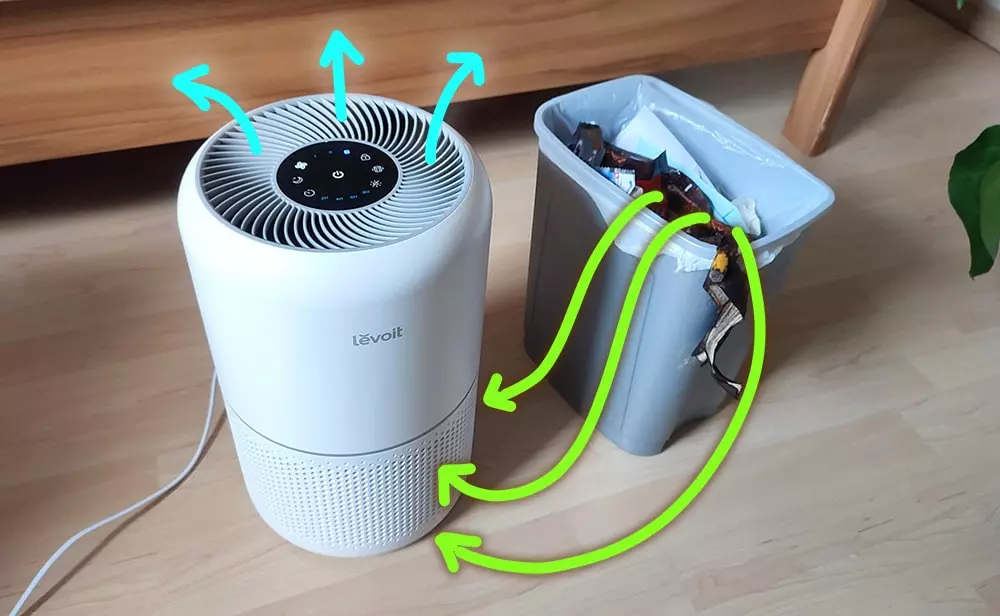
- ✦ Keep filters on schedule
Use the manufacturer’s replacement schedule and check the filter more often when the room has smoke, pets, heavy cooking, or high dust levels.
- ✦ Keep the unit dry
Avoid placing the purifier where splashes, condensation, or direct steam can reach it.
- ✦ Give it clear airflow
Do not block the intake or outlet with furniture, curtains, bedding, or other objects.
- ✦ Control the source
Remove smoke, damp materials, spoiled food, trash, and other odor sources instead of relying on filtration alone.
- ✦ Clean as directed
Follow the owner’s manual for prefilters, sensors, grilles, and other user-serviceable parts.
- ✦ Use the right purifier
For odors, choose a model with meaningful gas-removal media such as activated carbon. Particle filtration alone is not designed to remove most gaseous pollutants.
Does an air purifier remove odors completely?
No air purifier removes every odor. Performance depends on the pollutant, filter design, amount of carbon or other gas-removal media, airflow, room size, and how much odor enters the room.
The strongest approach combines source control, ventilation when appropriate, and filtration. An air purifier can be useful, but it should not be expected to fix a leak, mold problem, smoke source, or other ongoing cause.
- ✦ Think in layers
Remove the source first, use ventilation when safe and practical, then use filtration as an added control.
A simple troubleshooting checklist
If you still wonder why air purifier smells bad after basic cleaning, work through the problem in a fixed order. This keeps you from replacing parts before you know what caused the smell.
Start with the safest and easiest checks. If the smell suggests an electrical fault, skip the normal troubleshooting steps and stop using the unit.
- ✦ If it smells musty
Check for moisture, a damp filter, leaks, condensation, and mold near the unit. Replace an unsuitable or damaged filter and address the moisture source.
- ✦ If it smells dusty
Inspect the filter and prefilter. Clean or replace them according to the manual.
- ✦ If it smells like smoke
Look for cigarettes, fireplaces, cooking smoke, candles, or other sources. Check whether the carbon filter needs replacement.
- ✦ If it smells like plastic
Consider whether the purifier is new. Remove all shipping material and monitor the smell. Stop use if the smell is strong, worsening, or accompanied by heat or smoke.
- ✦ If it smells like chemicals
Check cleaning products, air fresheners, paints, adhesives, and other nearby sources. Review whether the purifier uses an electronic treatment that can create an odor.
- ✦ If it smells burnt
Stop the unit. Unplug it if safe and contact the manufacturer or a qualified service professional.