
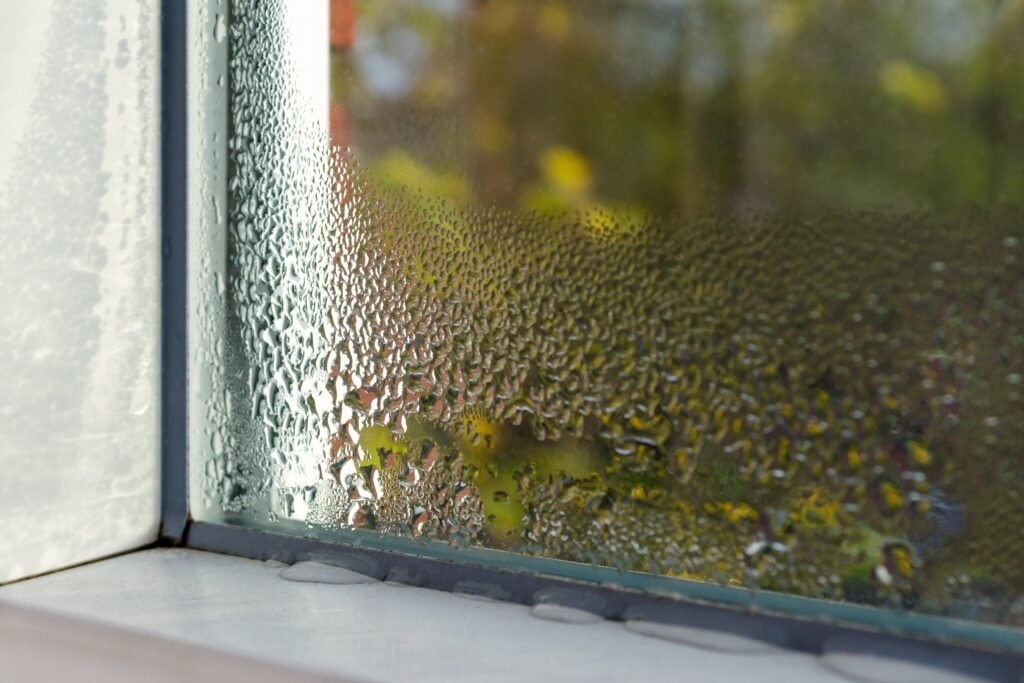
If you wake up on a cold morning and see water on your windows, you are seeing **condensation**, not the window producing sweat. This is a common winter problem in U.S. homes, especially when indoor air holds a lot of moisture. Cooking, showers, laundry, houseplants, and even normal breathing all add water vapor to the air.
The key to understanding **why windows sweat in winter** is the link between indoor humidity and glass temperature. Warm air can hold more water vapor than cold air. When that warm air touches cold glass, it cools. If it cools enough, the water vapor changes into liquid water on the window.
In homes I have seen with winter condensation, the window is often only part of the story. A damp bathroom, a busy kitchen, poor air flow, or a humidifier set too high can raise moisture levels across the home. Once you find the source, the fix is often much simpler than replacing every window.
This guide explains **why windows sweat in winter**, how to tell normal condensation from a warning sign, and what you can do before moisture causes lasting damage.
What Causes Windows to Sweat in Winter?
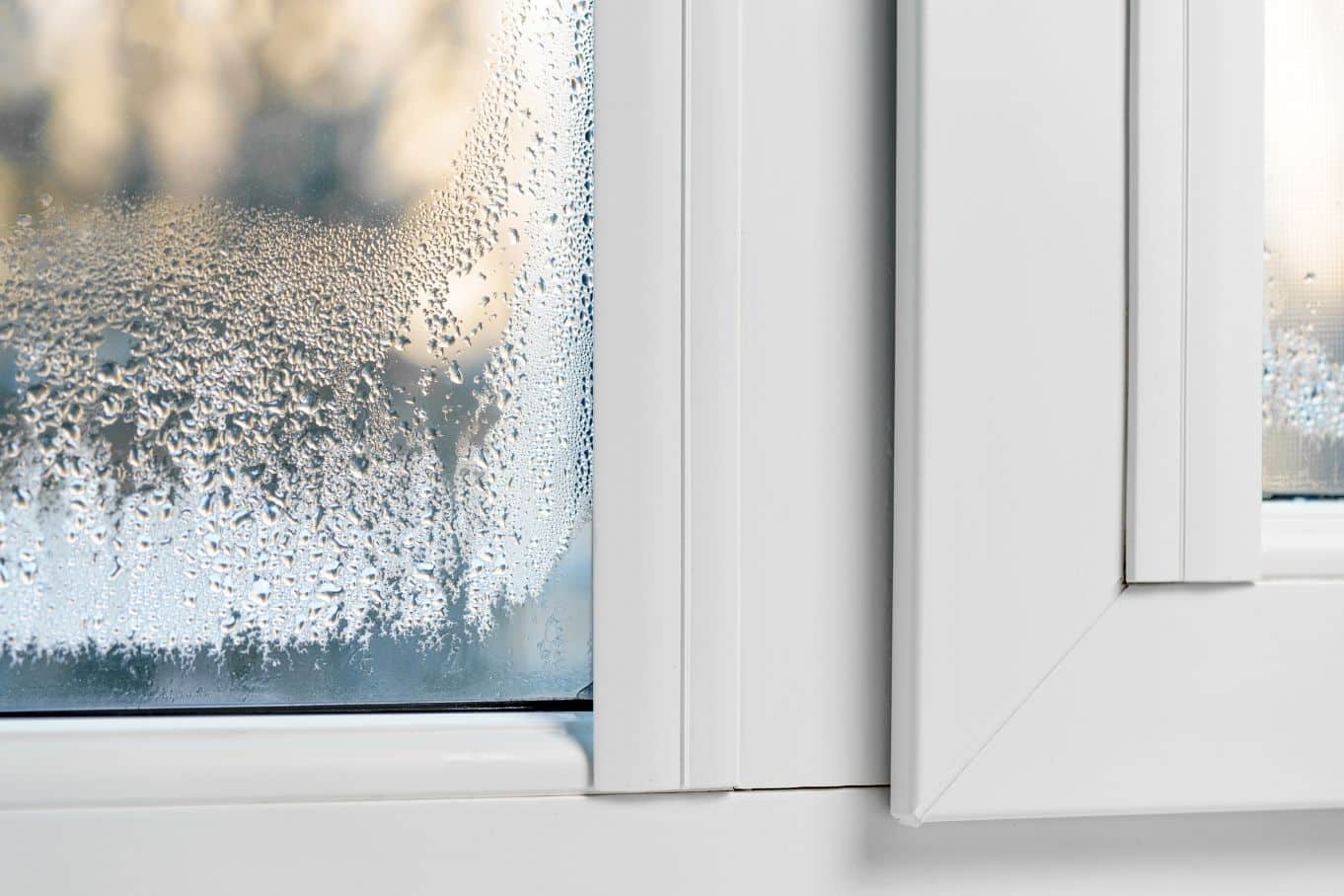
The main cause is simple: **moist indoor air meets a cold window surface**. The glass can become much colder than the air inside your home. When the air next to the glass cools enough, it can no longer hold all its water vapor.
That extra moisture then becomes tiny drops of liquid water. Those drops collect on the glass, frame, sill, or sash. This process explains most cases of **why windows sweat in winter**.
The problem becomes more likely when indoor humidity is high and the glass is very cold. Older single-pane windows often show more condensation because their inner glass surface can get quite cold. Newer windows may still sweat if the indoor air is too humid or if air cannot move around the glass.
A small amount of moisture on a cold window can happen during winter. Heavy water, dripping sills, ice, or daily puddles are different. These signs mean the moisture level or window conditions need a closer look.
- ✦ Warm indoor air
Heating warms the air inside your home, but it does not remove the water vapor already in that air.
- ✦ Cold glass
A cold window surface cools nearby air and can cause water vapor to turn into liquid.
- ✦ High humidity
More water vapor in the home gives condensation more moisture to work with.
- ✦ Limited air flow
Still air near a window can keep the glass cold and allow moisture to collect.
What Is the Dew Point?
The **dew point** is the temperature at which air becomes full of water vapor and condensation starts. You do not need to calculate it to understand window moisture. Just remember that warm, moist air can reach its dew point when it touches cold glass.
For example, your living room may feel warm and comfortable. The glass beside that room can still be cold enough to cause water to form. That difference between room air and glass temperature is a major part of why windows sweat in winter.
- ✦ Higher humidity means more risk
When indoor humidity rises, the air needs less cooling before condensation begins.
- ✦ Colder glass means more risk
The colder the inside surface of the window, the easier it is for nearby moist air to reach its dew point.
How Indoor Humidity Makes Window Condensation Worse
Indoor humidity is often the biggest factor behind **why windows sweat in winter**. Modern homes can hold moisture well because of tight doors, windows, insulation, and air sealing. That is good for energy use, but trapped moisture still needs a way out.
Everyday activities add moisture. A long shower can release water vapor into the air. Cooking without a range hood can do the same. Drying clothes indoors, running a humidifier, and even having many people in a small room can raise indoor humidity.
A basic digital hygrometer can help you check your indoor relative humidity. This gives you a better starting point than guessing from the glass alone. Your home’s ideal level can vary with outdoor temperature, window type, and building design, so avoid treating one humidity number as right for every home.
If condensation appears mainly on cold mornings, humidity may be the first thing to check. If it stays heavy even when indoor humidity is moderate, the window itself, air flow, or another building issue may also need attention.
- ✦ Showers
Use the bathroom exhaust fan during showers and keep it running for a short time after the shower ends.
- ✦ Cooking
Use a vented range hood when possible to move steam and moisture outdoors.
- ✦ Indoor laundry
Drying wet clothes indoors can add a large amount of moisture to the air.
- ✦ Humidifiers
A humidifier can help in very dry weather, but too much added moisture can increase window condensation.
- ✦ Houseplants
Plants release moisture into indoor air, so many plants in a small space can contribute to higher humidity.
How to Check Indoor Humidity
Place a hygrometer in the room where condensation is worst. Check it at different times of day, since cooking, bathing, and sleeping can change humidity.
If humidity is high, reduce moisture at the source before buying new windows. If humidity looks reasonable but one window stays wet, inspect that window and the air flow around it.
- ✦ Check more than one room
Comparing rooms can show whether the issue is home-wide or limited to one space.
- ✦ Watch morning readings
Bedroom humidity can rise overnight, which may explain wet glass in the morning.
Why Some Windows Sweat More Than Others
Not every window in a home will show the same amount of moisture. One room may have dry glass while another has water running down the sill. That difference can come from window design, room temperature, air flow, or local humidity.
Single-pane glass tends to get colder on the inside than better-insulated window systems. Double-pane and triple-pane windows can keep the inner glass warmer, which can reduce condensation. However, even efficient windows can collect moisture when indoor humidity is high.
Window frames matter too. Metal frames can become cold and may collect moisture under the right conditions. Wood frames can also absorb water if condensation continues for long periods. Vinyl frames resist some moisture damage, but the surrounding wall and sill can still be affected.
Curtains and blinds can also change the air near the glass. If they block warm room air from reaching the window, the inner surface may stay colder. This can make **why windows sweat in winter** seem like a window problem when air flow is part of the cause.

- ✦ Single-pane windows
The inside glass can become very cold, so condensation is more likely when indoor humidity rises.
- ✦ Double-pane windows
The air or gas space between panes improves insulation and can keep the inner pane warmer.
- ✦ Triple-pane windows
An extra pane and insulating space can further reduce heat loss and help keep the inside glass warmer.
- ✦ Cold window frames
Frames and spacers can create cold spots where moisture forms before or instead of appearing on the center of the glass.
Could a Failed Window Seal Cause Condensation?
Yes, but the location matters. If moisture appears **between the panes of insulated glass**, the sealed glass unit may have lost its seal. That is different from moisture on the room-facing surface.
A failed seal can allow the insulating space between panes to become less effective. If you see fog, haze, or droplets trapped between the panes, have the unit inspected rather than wiping the inside surface.
- ✦ Moisture on the room side
This usually points to indoor humidity, cold glass, or air flow.
- ✦ Moisture between panes
This can point to a failed insulated-glass seal and may need window repair or glass-unit replacement.
Is Condensation on Windows Normal in Winter?
Some winter condensation can be normal. Cold weather lowers the temperature of window glass, so even a comfortable home can develop a little moisture. A light film that appears during very cold weather is not automatically a sign that the window is defective.
The amount and pattern matter. A little moisture that dries as the home warms is less concerning than water that pools on the sill every day. Repeated heavy condensation can point to excess indoor moisture, poor air flow, very cold glass, or a window problem.
Look at where the moisture forms. Condensation on the room side usually involves indoor air and surface temperature. Condensation between panes suggests a different issue, while water around the frame or wall may point to air leakage, a plumbing problem, or water entering from outside.
This distinction is important because the wrong fix can waste money. Replacing a sound window will not solve high indoor humidity. Lowering humidity will not repair a failed glass seal.

- ✦ Light surface moisture
A small amount of moisture during very cold weather can occur when indoor air meets cold glass.
- ✦ Heavy dripping
Water that runs down the glass or pools on the sill deserves attention.
- ✦ Moisture between panes
Fog or droplets trapped inside an insulated glass unit can indicate a failed seal.
- ✦ Moisture on nearby walls
Water around the window opening can signal a building or water-entry problem that needs inspection.
When Window Condensation Needs Attention
Take repeated condensation seriously when it leaves wet wood, peeling paint, stained drywall, or a musty smell. Long-term moisture can support mold growth and can damage materials around the window.
If one window is much wetter than similar windows, compare its location and air flow. A cold corner, blocked heat source, damaged seal, or air leak may explain the difference.
- ✦ Watch for damage
Check the sill, frame, trim, and nearby wall for swelling, staining, peeling paint, or soft wood.
- ✦ Check for mold
Dark spots or a musty odor near a persistently damp window should be investigated and addressed.
How to Stop Windows From Sweating in Winter
The best way to stop window condensation is to control both **indoor moisture and window temperature**. Start with simple steps before considering a major window project. In many homes, better ventilation and lower humidity can make a clear difference.
Use bathroom and kitchen exhaust fans when moisture is produced. Keep warm air moving toward windows when possible, and avoid blocking the glass with tightly closed curtains for long periods. Wipe away heavy condensation so water does not sit on wood or other moisture-sensitive surfaces.
If you use a humidifier, check whether you need it during the coldest part of winter. A humidifier can make dry indoor air more comfortable, but too much humidity can create a new problem. Adjust it based on actual indoor conditions rather than running it at a fixed setting all season.
If condensation remains after you manage humidity and air flow, inspect the windows. Look for damaged weatherstripping, gaps, failed seals, or unusually cold areas. An experienced window or building professional can help separate a window defect from a whole-home moisture issue.

- ✦ Reduce indoor moisture
Use exhaust fans, vent cooking moisture outdoors, and avoid unnecessary sources of indoor humidity.
- ✦ Improve air flow
Keep warm air moving near the window and avoid blocking the glass with curtains or furniture.
- ✦ Use a hygrometer
Measure indoor relative humidity so you can make changes based on real conditions.
- ✦ Dry wet surfaces
Wipe heavy condensation from the glass, sill, and frame to limit long-term moisture exposure.
- ✦ Check ventilation
Make sure bathroom and kitchen fans work well and vent outdoors when the system is designed to do so.
- ✦ Inspect the window
Check seals, weatherstripping, frames, and surrounding trim if one window remains unusually wet.
Should You Replace the Windows?
Window replacement can help when the glass is poorly insulated, the unit has a failed seal, or the window has other serious performance problems. But replacement should not be the first answer to every case of **why windows sweat in winter**.
If high indoor humidity is the main cause, new windows may still develop condensation. Solve the moisture problem first when practical. Then consider window upgrades if the existing windows remain too cold or have clear defects.
- ✦ Consider repair
Repair may make sense when the frame, weatherstripping, hardware, or glass unit has a limited defect.
- ✦ Consider replacement
Replacement may be appropriate when windows are badly deteriorated, poorly insulated, or have repeated problems that repair cannot solve.
Common Mistakes That Make Winter Window Condensation Worse
Many homeowners focus only on the water they can see. But the water is often the final result of a moisture problem that started somewhere else. Treating the glass without treating the cause can lead to the same issue every winter.
One common mistake is sealing every opening without thinking about ventilation. Air sealing can improve comfort and energy use, but homes still need suitable moisture control and ventilation. The right balance depends on the home, climate, heating system, and ventilation design.
Another mistake is keeping a humidifier running because the air feels dry. Dry skin or static can make you want more humidity, but visible condensation is a useful warning that the air may already contain too much moisture for the current window temperature.
It is also easy to assume that condensation means the windows are bad. Sometimes they are. But **why windows sweat in winter** is usually a combination of moisture, temperature, and air movement. A careful check helps you avoid paying for a repair that will not address the real cause.

- ✦ Only wiping the glass
Wiping removes water for the moment but does not reduce the moisture that causes condensation.
- ✦ Adding more humidity
A humidifier can increase condensation if the home already has enough moisture.
- ✦ Blocking the window
Closed curtains or furniture can limit warm air movement and keep the glass colder.
- ✦ Replacing windows too soon
New windows may not solve condensation caused mainly by high indoor humidity.
- ✦ Ignoring repeated moisture
Persistent water can damage trim, wood, paint, and nearby drywall over time.
A Simple Winter Troubleshooting Check
Start by asking three questions: **How humid is the room? How cold is the glass? Can warm air reach the window?** These questions cover many of the common reasons behind winter condensation.
Next, compare several windows. If all windows have similar moisture, look at indoor humidity and ventilation. If only one window has a problem, inspect that window and its surrounding area more closely.
- ✦ Step 1: Measure humidity
Use a hygrometer in the affected room and note readings at different times.
- ✦ Step 2: Check air flow
Make sure heat can reach the glass and that curtains or furniture do not trap cold air.
- ✦ Step 3: Inspect the window
Look for fog between panes, damaged seals, gaps, and signs of water damage.
- ✦ Step 4: Track the pattern
Note whether condensation appears after showers, cooking, overnight, or during very cold weather.
Can Window Condensation Damage Your Home?
A few drops of water will not ruin a window. Repeated wetting can cause problems, though. Water that stays on a sill or frame can soak into wood and damage paint or finishes.
Long-term moisture can also affect nearby drywall and trim. Persistent damp areas may support mold growth when other conditions are right. This is why it is useful to act when **why windows sweat in winter** becomes a daily problem rather than waiting for visible damage.
The risk depends on the amount of water, how long surfaces stay wet, the materials around the window, and the home’s overall moisture level. A damp sill that dries quickly is different from a sill that stays wet for days.
If you see staining, soft wood, peeling paint, mold-like growth, or a musty odor, find the source of the moisture. If the source is not clear, a qualified home or building professional can inspect the area.
- ✦ Wood damage
Repeated moisture can cause wood to swell, stain, soften, or lose its finish.
- ✦ Paint and trim damage
Persistent dampness can lead to peeling, bubbling, staining, or other finish problems.
- ✦ Drywall damage
Water around a window can affect nearby drywall if the area stays damp.
- ✦ Mold concerns
Persistent moisture can create conditions that support mold growth, so damp areas should be dried and the moisture source addressed.
When to Call a Professional
Consider professional help when moisture continues despite reasonable humidity control, when water appears between glass panes, or when you see damage around the window. A professional can inspect the window, frame, air leakage, and surrounding wall.
Professional help is also useful when the cause may involve the building envelope, ventilation system, or hidden water entry. Finding the source early can prevent a small moisture issue from becoming a larger repair.
- ✦ Persistent condensation
Repeated heavy moisture that does not improve after basic moisture and air-flow changes deserves further inspection.
- ✦ Visible damage
Soft wood, stains, peeling finishes, or damaged drywall are reasons to investigate promptly.
- ✦ Fog between panes
Persistent fog or water inside insulated glass may indicate a failed seal.