Dust is hard to avoid. It comes from skin flakes, fabric fibers, soil, outdoor particles, and other small bits that enter or form inside a home. The goal is not to make a house perfectly dust-free. The goal is to keep dust from building up and spreading.
If you want to know how to reduce dust in home, start with the places that collect the most dust: floors, rugs, bedding, upholstery, shelves, and air filters. A steady routine works better than one long cleaning day. In a typical U.S. home, simple habits such as taking off shoes at the door and washing bedding can make a clear difference.
A useful lesson from home-cleaning work is that technique matters as much as frequency. A dry cloth can send fine dust back into the air. A damp microfiber cloth traps it better. The same idea applies to floors: vacuum first, use the right attachments, and avoid methods that simply push dust from one spot to another.
Why Does My House Get So Dusty?
Before learning how to reduce dust in home, it helps to know where dust comes from. Some dust enters through doors, windows, shoes, pets, and outdoor air. Other dust forms indoors from skin flakes, hair, fabric fibers, paper, and small particles from everyday activity.
Soft items can hold dust for a long time. Rugs, carpets, curtains, mattresses, pillows, sofas, and blankets can act as dust reservoirs. When people walk, sit, shake bedding, or move furniture, some of that dust can become airborne again.

- ✦ Outdoor soil and debris
Shoes can bring soil and fine outdoor particles indoors. Entry mats and a no-shoes rule can help reduce this source.
- ✦ Fabric fibers
Clothes, bedding, towels, curtains, rugs, and upholstery can release tiny fibers as they are used and washed.
- ✦ People and pets
Skin flakes, hair, pet dander, and fur can add to household dust. Regular grooming and cleaning can help control the buildup.
- ✦ Air movement
Heating, cooling, fans, and foot traffic can move settled dust from floors and furniture back into the air.
Is All House Dust the Same?
No. House dust is a mix of many materials. Its makeup depends on the home, season, location, pets, people, building materials, and outdoor conditions.
This is why one cleaning trick may not solve every dust problem. If outdoor dirt is the main issue, focus on entrances. If fabric fibers are the main issue, focus on bedding, rugs, upholstery, and laundry.
15 Practical Ways to Reduce Dust in Your Home
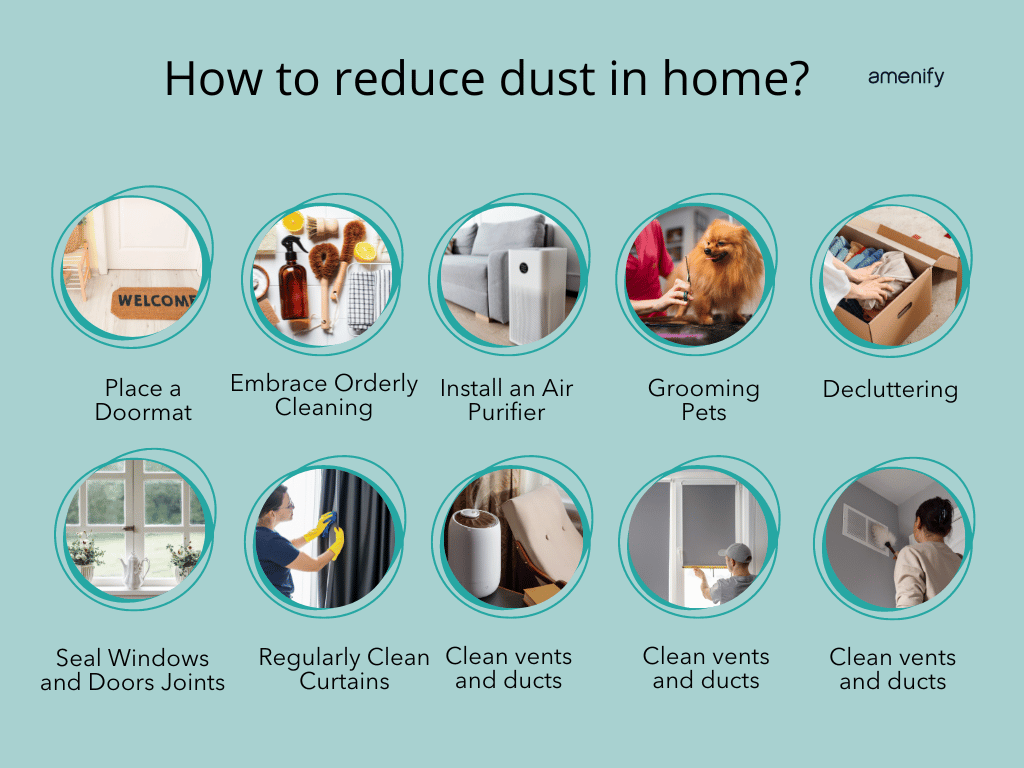
The best way to reduce dust is to use several small controls at the same time. You do not need to clean every surface every day. Instead, target the places where dust enters, settles, and gets stirred up.
The following steps explain how to reduce dust in home without turning cleaning into an all-day task.

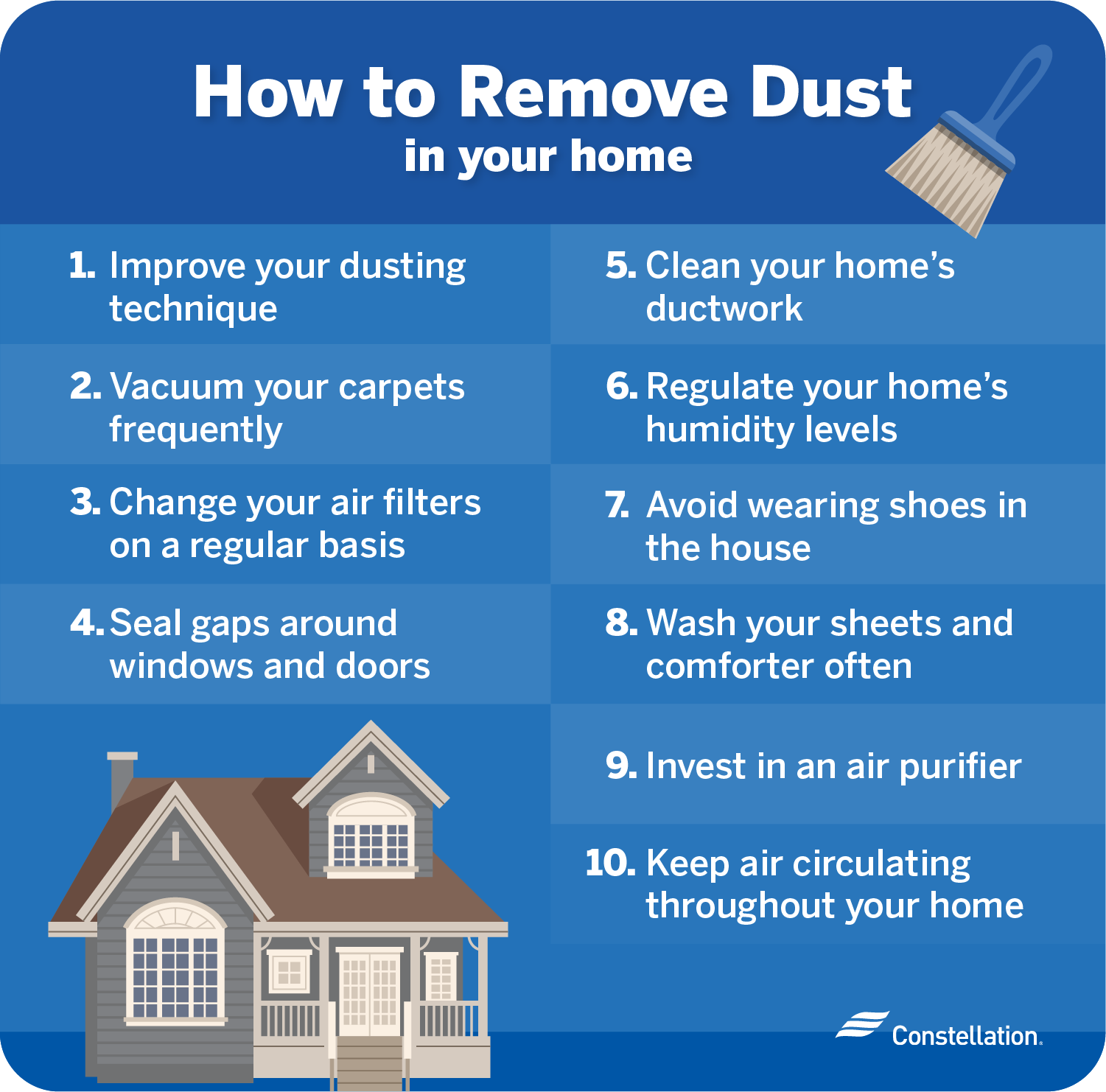
- ✦ 1. Use a damp microfiber cloth
Wipe hard surfaces with a slightly damp microfiber cloth. It helps trap dust instead of sending it into the air.
- ✦ 2. Vacuum floors often
Vacuum carpets, rugs, and hard floors on a regular schedule. Pay extra attention to high-traffic areas and edges.
- ✦ 3. Choose a vacuum with good filtration
A vacuum with a well-sealed system and HEPA filtration can help capture fine particles. Replace or clean filters as the manufacturer directs.
- ✦ 4. Wash bedding regularly
Wash sheets, pillowcases, blankets, and other washable bedding on a regular schedule. Follow the care label for the right wash method.
- ✦ 5. Use entry mats
Place sturdy mats at entrances. A mat can catch some soil before it reaches the rest of the home.
- ✦ 6. Take outdoor shoes off
Keep a shoe area near the door. Removing outdoor shoes can reduce the amount of soil and debris tracked across floors.
- ✦ 7. Clean upholstery
Vacuum sofas, chairs, cushions, and other fabric furniture with the correct attachment. Follow the furniture maker’s care instructions.
- ✦ 8. Wash or clean curtains
Curtains can collect dust. Wash them when the care label allows, or vacuum them gently with a suitable attachment.
- ✦ 9. Reduce clutter
Fewer objects on open shelves mean fewer surfaces where dust can settle. Store small items in closed bins or cabinets when practical.
- ✦ 10. Clean air vents and returns
Dust can gather around HVAC vents and return grilles. Clean accessible covers carefully and replace HVAC filters on the schedule recommended for your system.
- ✦ 11. Groom pets regularly
Regular brushing can help manage loose fur and dander before they spread through the home. Brush pets in an easy-to-clean area when possible.
- ✦ 12. Wash washable rugs
Follow the care instructions for area rugs and runners. Vacuum them often and clean them when needed.
- ✦ 13. Keep windows closed when outdoor dust is high
If outdoor air carries a lot of dust, pollen, or smoke, keeping windows closed can reduce the amount that enters the home.
- ✦ 14. Clean from high to low
Start with higher surfaces and work downward. This lets falling dust land on areas that you have not cleaned yet.
- ✦ 15. Keep a steady cleaning routine
Short, regular cleaning sessions often work better than waiting until every surface has a thick layer of dust.
A Simple Weekly Dust Routine
For many homes, a simple weekly routine is enough to keep dust under control. Dust higher surfaces first, clean furniture, vacuum floors, and finish with any needed spot cleaning.
Focus more often on rooms with heavy traffic, pets, rugs, or lots of fabric. A low-traffic guest room may need less attention than a busy living room.
- ✦ Start high
Dust shelves, tables, ledges, and other higher surfaces before cleaning the floor.
- ✦ Clean soft surfaces
Vacuum rugs, sofas, chairs, and other fabric surfaces that collect dust.
- ✦ Finish with floors
Vacuum or clean floors after dusting so loose particles end up in the final cleaning step.
How to Dust Without Spreading It Around
A common cleaning mistake is moving dust instead of removing it. Dry dusting can disturb fine particles, especially on large or very dusty surfaces. A slightly damp microfiber cloth is often a better choice for hard surfaces.
Use gentle strokes and fold the cloth as one side becomes dirty. Wash reusable cloths after use. Do not shake a dusty cloth indoors, because that can put captured particles back into the room.

- ✦ Use a clean cloth
A dirty cloth can spread residue from one surface to another. Start with a clean microfiber cloth.
- ✦ Work from top to bottom
Clean shelves and other high surfaces first. Then move toward tables and floors.
- ✦ Avoid aggressive shaking
Do not shake dusty rugs, bedding, or cloths inside the house. Move them outside or use a suitable cleaning method.
- ✦ Clean small areas at a time
Short sections are easier to clean well. They also make it easier to notice missed spots.
Why Microfiber Helps
Microfiber cloths have very fine fibers that can pick up small particles from many hard surfaces. They work best when used correctly and washed after use.
Do not soak the cloth. A slightly damp cloth is usually enough for ordinary household dust on suitable surfaces.
How to Reduce Dust With Better Vacuuming
Vacuuming is one of the most useful steps when learning how to reduce dust in home. It removes dust from floors and many soft surfaces before normal activity can stir it up.
Use the right attachment for each surface. Move slowly enough for the vacuum to pick up debris, and pay attention to corners, edges, under furniture, and other places where dust collects.

- ✦ Vacuum high-traffic areas first
Entryways, hallways, living rooms, and other busy areas often collect more soil and dust.
- ✦ Clean under furniture
Dust can collect under beds, sofas, tables, and cabinets. Use an attachment that fits the space.
- ✦ Do not ignore edges
Baseboards and floor edges can hold dust that a quick pass through the middle of the room misses.
- ✦ Maintain the vacuum
Empty the bin or replace bags before they become too full. Clean or replace filters as directed by the manufacturer.
Do HEPA Vacuums Help With Dust?
HEPA stands for high-efficiency particulate air. A properly designed and maintained HEPA vacuum can capture very small particles from the air that passes through its filter.
The filter is only one part of the system. Seals, airflow, the dust container, and regular maintenance also matter. Follow the manufacturer’s instructions for filter care and replacement.
Improve Air Filtration to Control Dust
Air filtration can help reduce airborne particles, but it should support cleaning rather than replace it. An air cleaner can capture particles that remain suspended in the air. It cannot remove dust that has already settled on a shelf or floor.
If your home has central heating or cooling, use the filter type and size recommended for the system. A filter that is too restrictive for a particular system may reduce airflow, so check the equipment maker’s guidance.

- ✦ Change HVAC filters on schedule
Use the replacement schedule given by the HVAC or filter manufacturer. Homes with pets or unusual dust loads may need a different schedule.
- ✦ Keep return grilles clean
Dust around return grilles can build up over time. Clean accessible surfaces carefully and follow HVAC safety instructions.
- ✦ Consider a portable air cleaner
A portable unit with appropriate particle filtration can help in a room where airborne particles are a concern. Choose a unit sized for the room.
- ✦ Do not block airflow
Keep vents and returns clear of furniture and other items so the system can move air as designed.
Can an Air Purifier Remove All Dust?
No air purifier can make a home completely dust-free. Air cleaners work on particles that pass through the device, while much of household dust settles on surfaces before it reaches the filter.
For better dust control, combine air filtration with source control, regular cleaning, and good vacuuming.
Keep Bedrooms Cleaner and Reduce Dust Mites
Bedrooms deserve special attention because mattresses, pillows, blankets, and upholstered furniture can hold dust and skin flakes. Regular washing and vacuuming can help keep these areas cleaner.
Dust mites are microscopic organisms that feed on shed skin. They are different from ordinary dust, but they can live in dusty bedding and soft furnishings. Keeping bedding clean and controlling indoor moisture can help manage them.

- ✦ Wash sheets regularly
Use the hottest wash setting that the fabric care label allows. Dry bedding fully before putting it back on the bed.
- ✦ Clean pillows and blankets
Follow care labels for washing or other cleaning methods. Replace items when they are worn or cannot be cleaned well.
- ✦ Vacuum mattresses carefully
Use a suitable upholstery attachment and follow the mattress maker’s cleaning advice.
- ✦ Manage indoor moisture
Use ventilation or a dehumidifier when needed to keep indoor humidity at a comfortable level and reduce conditions that can support dust mites and mold.
Does Humidity Affect Dust?
Humidity does not simply make dust disappear. However, indoor moisture affects many parts of the indoor environment, including dust mites and mold growth.
Aim for a comfortable indoor humidity level and avoid excess moisture. A simple humidity meter can help you understand conditions in your home.
Reduce Dust From Floors, Rugs, and Carpets
Floors receive dust from almost every room. Carpet and rugs can hold particles deep in their fibers, while hard floors allow dust to remain visible until it is removed.
Use a vacuum suited to your floor type. For hard floors, follow the manufacturer’s instructions and choose a cleaning method that does not simply push fine dust into corners.

- ✦ Vacuum rugs often
Give rugs regular attention, especially in entryways and living areas. Use the correct setting for the rug.
- ✦ Clean hard floors after dusting
Dust surfaces first, then clean the floor. This prevents loose particles from settling on a freshly cleaned floor.
- ✦ Clean beneath rugs
Lift washable or movable rugs from time to time and clean the floor underneath.
- ✦ Use washable mats
Wash entry mats as allowed by their care instructions. A dirty mat can become a source of tracked debris.
Habits That Stop Dust Before It Spreads
The easiest dust to clean is the dust that never gets inside. Small entryway habits can cut down on soil and debris before they reach carpets and floors.
These habits also make your normal cleaning routine easier. The aim is not perfection. It is to reduce the amount of material that needs to be cleaned later.
- ✦ Create a shoe station
Place shoes, slippers, and a washable mat near the main entrance. This makes the no-shoes habit easier to follow.
- ✦ Clean pet paws
After outdoor walks, check paws for soil and debris. Use a pet-safe cleaning method when needed.
- ✦ Keep windows clean
Clean window screens and frames when they collect visible dirt. This can help reduce debris near open windows.
- ✦ Store loose items
Closed storage can reduce the number of exposed surfaces that collect dust.
Should You Keep Windows Open?
Opening windows can bring fresh outdoor air into a home, but it can also bring in outdoor particles. On days with high dust, pollen, smoke, or poor outdoor air, keeping windows closed may reduce particle entry.
Use local outdoor air conditions and your home’s ventilation needs to guide the choice. Good ventilation matters, so do not treat closed windows as a universal rule.
A Simple Dust-Cleaning Schedule for Busy Homes
You do not need to deep-clean your whole house every day. A better plan is to give the most-used areas regular attention and schedule deeper tasks at longer intervals.
Adjust the routine for your home. Pets, children, carpet, construction nearby, allergies, and high outdoor dust can all change how often you need to clean.
- ✦ Daily or as needed
Deal with visible spills, heavy entryway dirt, pet messes, and high-traffic debris.
- ✦ Several times per week
Vacuum busy floors and check entryways, living areas, and other rooms that collect dust quickly.
- ✦ Weekly
Dust hard surfaces, vacuum soft furniture, clean floors, and wash bedding according to your normal household routine.
- ✦ Monthly or as needed
Check less-used areas, under furniture, vents, screens, curtains, and other dust-catching spots.
- ✦ On the manufacturer’s schedule
Replace or clean HVAC and vacuum filters according to the equipment instructions rather than guessing at a single schedule.
How to Make the Routine Easier
Keep basic cleaning tools where you use them. A microfiber cloth near the living room and a vacuum that is easy to reach can remove friction from the routine.
Clean one room at a time when you are short on time. Ten focused minutes can be more useful than waiting for a free afternoon that never comes.
- ✦ Keep tools ready
Store cloths, a vacuum, and suitable cleaners where they are easy to reach.
- ✦ Use a room-by-room plan
Finish one small area before moving to the next. This keeps the task simple and visible.
Common Dust-Control Mistakes to Avoid
Knowing how to reduce dust in home also means knowing what can make cleaning less effective. Some methods look fast but only move particles around.
Small changes in technique can make routine cleaning more useful and help keep dust under control for longer.
- ✦ Dry dusting very dusty surfaces
A dry cloth can disturb fine particles. Use a suitable damp microfiber cloth for surfaces that can safely tolerate moisture.
- ✦ Ignoring filters
A full or poorly maintained filter can reduce the effectiveness of a vacuum or HVAC system. Follow the maker’s maintenance instructions.
- ✦ Cleaning only visible areas
Dust also collects under furniture, along edges, on soft furnishings, and in less-used rooms.
- ✦ Using too much cleaner
More product does not always mean a cleaner surface. Follow the product label and use only what the surface needs.
- ✦ Forgetting source control
Cleaning cannot solve every dust problem if outdoor soil keeps entering through doors or shoes.
When Excessive Dust May Need More Investigation
A sudden increase in dust can have a simple cause, such as home remodeling, a new pet, open windows, or a change in cleaning habits. But persistent heavy dust may also point to an issue with ventilation, filters, building materials, or a source outside the normal living area.
If dust appears soon after cleaning, look for the source instead of simply cleaning more often. Check vents, filters, crawl spaces or unfinished areas that you can safely inspect, window screens, and areas near construction or repair work.
- ✦ After remodeling
Construction can create large amounts of fine dust. Use proper containment and cleanup methods, and consider professional help for major projects.
- ✦ Around HVAC equipment
If you see unusual dust around vents or equipment, have the system checked by a qualified professional.
- ✦ Visible moisture or mold
Persistent moisture needs attention. Do not rely on dust cleaning alone when there is a moisture or mold problem.
- ✦ Strong or unusual indoor air problems
If indoor air quality seems poor despite normal cleaning, consider professional assessment rather than repeatedly increasing your cleaning workload.