Your home can look clean and still have poor indoor air quality. Cooking, dust, smoke, cleaning products, moisture, pet dander, building materials, and outdoor pollution can all affect the air you breathe. The good news is that many useful steps are simple and low cost.
When people ask how to improve indoor air quality, I start with the same basic lesson: do not rely on an air purifier alone. **Source control comes first.** Then improve ventilation and add filtration where it helps. This approach fits the core guidance used by the U.S. Environmental Protection Agency for residential indoor air quality.
Indoor air quality can change from room to room and from hour to hour. A kitchen may have high particle levels while cooking, while a damp basement may have a moisture and mold problem. The right fix depends on the pollutant, so this guide covers both everyday habits and problems that need professional help.
1. Start With the Main Sources of Indoor Air Pollution
The first step in learning how to improve indoor air quality is finding what is making the air dirty. Common indoor sources include tobacco smoke, cooking fumes, dust, pet dander, cleaning products, paints, solvents, fragrances, damp materials, and combustion from fuel-burning appliances.
Source control often works better than trying to clean polluted air after the fact. If smoke enters a room every day, a filter may reduce some particles, but removing the smoke source is far more direct. The same idea applies to moisture, strong chemical products, and other pollutants.
Walk through your home and look for repeat sources. Notice when odors, haze, dust, or irritation appear. The timing can help you link the problem to cooking, cleaning, a furnace, a damp area, a garage, or another source.

- ✦ Keep tobacco smoke outside
Do not smoke or vape inside the home. Smoke can spread through rooms and leave pollutants on indoor surfaces.
- ✦ Use low-emission products
Choose products with fewer fragrances and lower emissions when practical. Follow label directions and provide ventilation during use.
- ✦ Store chemicals safely
Keep paints, solvents, fuels, pesticides, and strong cleaners in suitable storage areas outside living spaces when possible.
- ✦ Fix combustion problems
Have fuel-burning appliances, chimneys, and vents checked when needed. Never ignore signs of backdrafting or exhaust entering the home.
Why Source Control Matters
Filtration can remove many airborne particles, but no common home filter removes every pollutant. Some gases and vapors need different controls. If you remove the source first, you reduce the amount of pollution that must be filtered or diluted.
- ✦ Find the source before buying equipment
A new purifier may not solve a leaking pipe, smoky stove, mold problem, or radon issue. Identify the cause before choosing a device.
2. Improve Ventilation With Clean Outdoor Air
Ventilation lowers indoor pollutant levels by replacing stale indoor air with outdoor air. When outdoor air is clean and conditions allow, opening windows or doors can help. Exhaust fans can also remove pollutants at the point where they are produced.
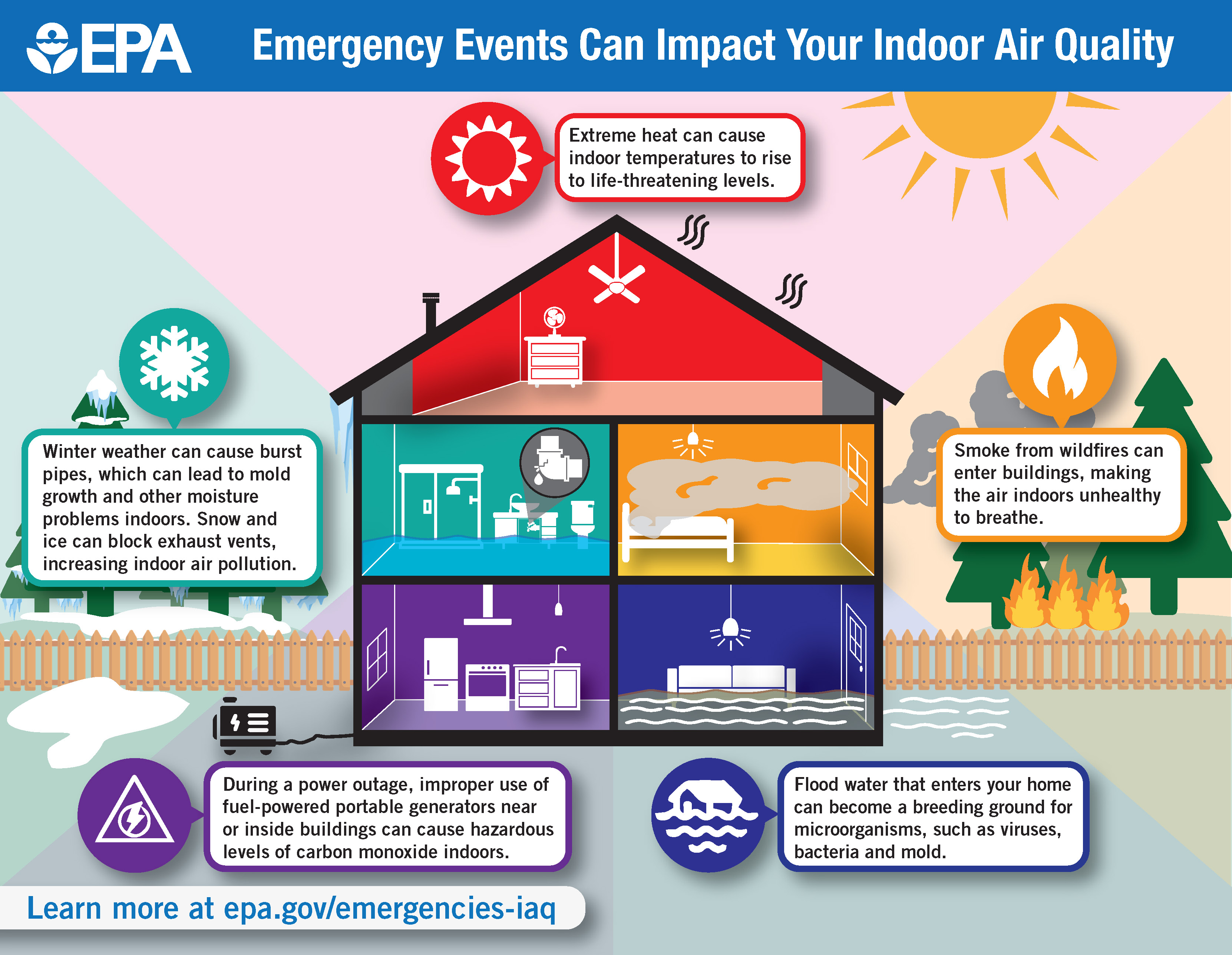
Use ventilation carefully when outdoor air is polluted. Wildfire smoke, high outdoor ozone, heavy traffic pollution, and extreme weather can make open windows a poor choice. In those cases, keep polluted outdoor air out and rely more on filtration and properly designed mechanical ventilation.
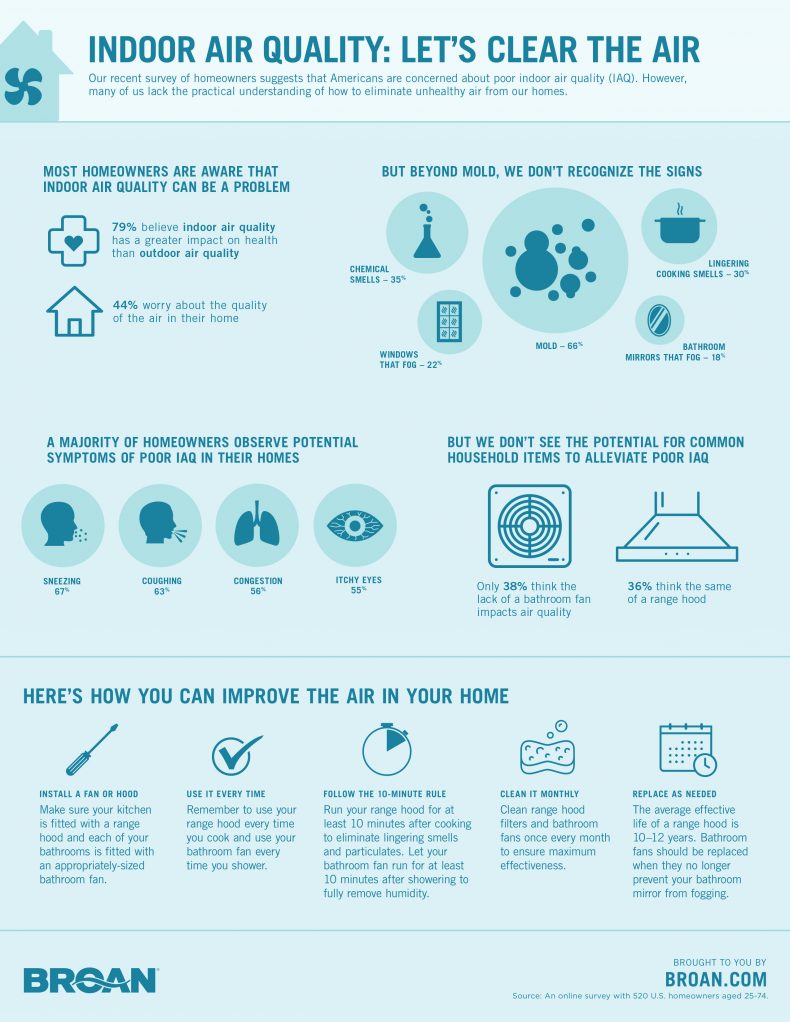
Bathrooms and kitchens deserve special attention. Run the bathroom fan during and after showers, and use a range hood that vents outdoors when possible. These simple actions can remove moisture, odors, and cooking pollutants before they spread through the home.
- ✦ Use kitchen exhaust
Turn on an exhaust hood while cooking and leave it running for a short time after cooking to help remove particles and gases.
- ✦ Vent bathrooms
Use a bathroom exhaust fan during showers and for a while afterward to reduce moisture and lower the risk of mold growth.
- ✦ Vent during suitable outdoor conditions
Open windows when outdoor air is clean and weather conditions make it practical. Check local air quality during smoke or pollution events.
- ✦ Maintain mechanical ventilation
Keep ventilation equipment clean and serviced so it can move the amount of air the system was designed to handle.
When You Should Not Open the Windows
Fresh outdoor air is not always clean air. During wildfire smoke events or other pollution episodes, opening windows can increase indoor particle levels. In these situations, close windows and doors, limit indoor pollution sources, and use properly sized particle filtration.
- ✦ Check local air quality
Use a reliable local air quality report before increasing outdoor air during smoke or other pollution events.
3. Use the Right HVAC Filter and Change It on Time
Your heating and cooling system can help improve indoor air quality when it uses an appropriate filter and runs correctly. A filter traps particles as air passes through it. It does not solve every indoor pollution problem, but it can reduce airborne dust and other particles.
For many residential HVAC systems, the EPA advises choosing a filter rated MERV 13, or the highest rating the system can handle properly. A filter that is too restrictive for a system may reduce airflow or create equipment problems. Check the equipment manual or ask a qualified HVAC professional before making a major filter change.
A filter only works when air passes through it. Replace it based on the manufacturer’s instructions and your home’s conditions. Homes with pets, smoke, renovation dust, or heavy particle loads may need more frequent changes.
- ✦ Check the MERV rating
MERV is a filter efficiency rating. A higher rating generally means better particle capture, but the HVAC system must be able to handle the filter.
- ✦ Inspect the filter
Look at the filter regularly. If it is visibly loaded with dust or reaches the replacement interval, replace it.
- ✦ Do not block air returns
Keep supply vents and return grilles clear. Blocked airflow can reduce system performance and filtration.
- ✦ Maintain the whole HVAC system
Clean and service the system as needed. A filter cannot correct every problem caused by poor airflow, leaks, moisture, or dirty equipment.
MERV vs. HEPA: What Is the Difference?
MERV describes the particle-filtering performance of HVAC filters across a range of particle sizes. HEPA refers to a very high-efficiency type of mechanical air filter. A home HVAC system and a portable HEPA air cleaner serve different roles, so one is not automatically a replacement for the other.
- ✦ Choose for the system
For a central HVAC system, use a filter that fits the equipment and supports safe airflow. For a portable unit, focus on room size, particle performance, and CADR.
4. Choose and Use an Air Purifier Wisely
A portable air cleaner can be useful when you need extra particle removal in a bedroom, living room, office, or other occupied space. The key is to match the cleaner to the room and run it long enough to filter a useful amount of air. Bigger is not always necessary, but a unit that is too small may not move enough filtered air.
For particle pollution, look for a strong Clean Air Delivery Rate, or CADR, and a unit sized for the room. HEPA filtration can also be a useful feature. For gases and some odors, an activated carbon filter can help, but the amount and quality of carbon matter.
Do not treat an air purifier as a cure for mold, radon, carbon monoxide, or an ongoing smoke source. Air cleaning is a supplement to source control and ventilation. It works best as one part of a broader indoor air quality plan.

- ✦ Match CADR to room size
A higher CADR can move more filtered air. Use the manufacturer’s room-size guidance and consider a larger unit for high ceilings or open spaces.
- ✦ Consider HEPA filtration
Mechanical HEPA filtration is designed to capture fine particles. It does not remove every gas or vapor.
- ✦ Use activated carbon for gases
Activated carbon can help with some gases and odors. More carbon and adequate contact with the air can improve performance.
- ✦ Avoid ozone generators
Do not use ozone-generating air cleaners in occupied spaces. Ozone can irritate the lungs and is not a reliable solution for common indoor pollution.
How Long Should an Air Purifier Run?
Longer operation generally means more air passes through the filter. Higher fan speeds also increase filtered airflow, although they may create more noise and use more energy. A practical approach is to use the unit consistently when particle levels are high, such as during cooking or wildfire smoke, and follow the manufacturer’s maintenance instructions.
- ✦ Place it where people spend time
A portable cleaner is usually most useful in the room where people spend the most time, especially when the unit is sized for that room.
5. Control Moisture, Mold, and Humidity
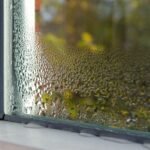
Moisture is one of the most important parts of indoor air quality. Leaks, condensation, floods, damp basements, and high indoor humidity can create conditions that support mold growth. Fixing the water problem matters more than simply cleaning the air.
Keep an eye on areas that often stay damp. Look under sinks, around windows, near plumbing, in basements, and around heating and cooling equipment. A musty smell, visible mold, peeling paint, or repeated condensation can signal a moisture problem.
A useful target for many homes is indoor relative humidity around 30% to 50%. A simple hygrometer can show whether your home is too damp or too dry. In humid areas, an air conditioner or dehumidifier can help, while proper ventilation can remove moisture from bathrooms and kitchens.

- ✦ Fix leaks quickly
Repair plumbing leaks, roof leaks, and other water entry points before they create a larger moisture problem.
- ✦ Dry wet materials
Dry water-damaged areas promptly. Persistent damp materials can support mold growth.
- ✦ Use a hygrometer
Measure relative humidity rather than guessing. This makes it easier to spot conditions that may support mold.
- ✦ Clean mold safely
Small areas may be manageable with suitable cleaning methods, but extensive mold, hidden growth, or major water damage may require qualified professional help.
Why an Air Purifier Does Not Fix Mold
A filter may capture some airborne mold particles, but it does not stop mold from growing on a wet surface. The lasting fix is to remove the moisture source and address the affected material. If water keeps entering the building, the mold problem can return.
- ✦ Fix water first
Find and correct the moisture source before relying on air cleaning.
6. Reduce Indoor Particles From Cooking, Cleaning, and Dust
Everyday activities can create short bursts of indoor pollution. Cooking can release fine particles, especially when food is fried, grilled, or burned. Cleaning, sweeping, and moving textiles can also stir up dust and other particles.
One of the simplest ways to improve indoor air quality is to control these sources as they happen. Use your range hood, avoid burning food, clean with methods that trap dust, and keep high-traffic areas tidy. A portable air cleaner can provide extra particle removal when needed.
Fragrance products also deserve attention. Air fresheners, scented candles, sprays, and some cleaning products can add gases or particles to indoor air. You do not need to remove every scented product from your home, but reducing unnecessary use can lower indoor emissions.
- ✦ Cook with ventilation
Use an exhaust hood that vents outdoors when possible. This can remove cooking pollutants before they spread.
- ✦ Avoid burning food
Burned food can create a sharp increase in indoor particles. Turn on ventilation and clean the source after an incident.
- ✦ Clean without spreading dust
Use a vacuum with good particle filtration and damp cleaning methods that capture dust instead of sending it back into the air.
- ✦ Limit unnecessary sprays
Use cleaning products as directed and avoid spraying more product than needed. Ventilate when the product label calls for it.
Pets, Allergens, and Dust
Pet dander, dust mites, pollen, and other allergens can become airborne or collect on surfaces. Regular vacuuming, washing bedding, controlling humidity, and keeping pets away from bedrooms can reduce exposure for some households. A well-sized particle air cleaner can add another layer of control.
- ✦ Wash bedding regularly
Regular washing can reduce the buildup of dust and allergens in sleeping areas.
- ✦ Keep floors clean
Use cleaning methods that capture dust rather than simply moving it from one surface to another.
7. Test for Radon and Protect Against Carbon Monoxide
Some indoor air hazards cannot be seen or smelled. Radon is a naturally occurring radioactive gas that can enter homes from the soil. It can build up indoors, so testing is the practical way to learn whether your home has elevated radon levels.
Carbon monoxide is another serious concern. It can come from fuel-burning appliances, fireplaces, generators, vehicles, and other combustion sources. Because carbon monoxide has no color or smell, every home that uses fuel-burning equipment should have working carbon monoxide alarms in appropriate locations.
These hazards show why knowing how to improve indoor air quality is more than buying filters. A purifier cannot remove carbon monoxide in a way that makes an unsafe combustion source safe. Likewise, an air cleaner does not solve a radon entry problem. Test, prevent, and repair the source when needed.

- ✦ Test your home for radon
Use an appropriate radon test and follow U.S. EPA or state guidance if the result is elevated.
- ✦ Install carbon monoxide alarms
Use working carbon monoxide alarms near sleeping areas and follow the manufacturer’s placement and replacement guidance.
- ✦ Service fuel-burning equipment
Have furnaces, boilers, water heaters, fireplaces, and other fuel-burning systems inspected when needed.
- ✦ Never run a generator indoors
Keep portable generators outdoors and well away from doors, windows, and vents so exhaust cannot enter the home.
When to Call a Professional
Get professional help when you have persistent mold, major water damage, suspected combustion problems, elevated radon, repeated carbon monoxide alarms, or an indoor air problem you cannot identify. A qualified professional can help find the source instead of treating only the symptoms.
- ✦ Take alarms seriously
If a carbon monoxide alarm sounds, move to fresh air and follow emergency guidance. Do not assume the alarm is a nuisance without checking the cause.
8. Build a Simple Indoor Air Quality Routine
The easiest way to maintain good indoor air quality is to turn the best practices into habits. You do not need to monitor every pollutant every day. Instead, focus on the sources and conditions that matter most in your home.
A useful routine combines cleaning, ventilation, moisture control, filter care, and safety checks. During wildfire smoke or other outdoor pollution events, change the routine by keeping polluted outdoor air out and increasing particle filtration.
One practical lesson is to avoid chasing a single perfect product. Good indoor air quality usually comes from several small controls working together. The strongest plan is the one that fits your home and that you can maintain over time.
- ✦ Daily
Ventilate when outdoor air is suitable, use kitchen and bathroom exhaust, avoid indoor smoke, and control obvious pollution sources.
- ✦ Weekly
Clean high-dust areas, check damp spots, and inspect rooms where odors or condensation often appear.
- ✦ Monthly
Check HVAC filters, inspect air cleaner filters, review indoor humidity, and make sure vents and returns are not blocked.
- ✦ Periodically
Test for radon as appropriate, check carbon monoxide alarms, service combustion equipment, and address leaks or water damage.
A Simple 15-Minute Home Air Check
Walk through the kitchen, bathrooms, bedrooms, basement, and HVAC areas. Look for smoke, strong odors, condensation, visible mold, water leaks, dirty filters, and blocked vents. If you find a problem, fix the source first and then decide whether ventilation or filtration can provide extra support.
- ✦ Ask one key question
What is adding pollution to this room, and can I remove or reduce that source?
- ✦ Then ask what needs filtering
After source control and ventilation, decide whether a portable air cleaner or better HVAC filtration can reduce remaining particles.
9. Common Indoor Air Quality Mistakes to Avoid
Some popular air-cleaning habits sound helpful but can miss the real problem. The biggest mistake is treating every indoor air issue as a particle problem. Different pollutants need different controls.
Another common mistake is using equipment without checking its limits. A small air cleaner may not provide enough filtered air for a large room. A high-efficiency HVAC filter may not be suitable for every system. Good results come from matching the solution to the problem.
Finally, do not create a new hazard while trying to remove an old one. Ozone-generating air cleaners can add a lung irritant to indoor air. Cleaning products can also create unnecessary exposure when they are overused or mixed incorrectly.
- ✦ Do not use ozone generators in occupied spaces
Ozone can irritate the lungs and is not a dependable way to control common indoor pollutants.
- ✦ Do not ignore moisture
A purifier may capture some particles, but it will not stop mold growth caused by an ongoing water problem.
- ✦ Do not assume odor means danger or no odor means safety
Some pollutants have noticeable smells, while others, such as radon and carbon monoxide, cannot be detected by smell.
- ✦ Do not skip maintenance
Dirty filters, blocked vents, and neglected equipment can reduce the value of an indoor air quality plan.
The Three-Part Strategy That Works Best
Think of indoor air quality as a three-part system: **control the source, ventilate with clean outdoor air, and filter when useful**. Source control reduces pollution at its origin. Ventilation dilutes pollutants. Filtration captures particles that remain in the air.
No single method works for every pollutant. That is why a balanced plan is more useful than simply buying the most expensive air cleaner. Start with the problem, then choose the control that fits it.
- ✦ Source control
Remove, reduce, or contain the pollutant where it starts.
- ✦ Ventilation
Bring in clean outdoor air and exhaust indoor pollutants when outdoor conditions allow.
- ✦ Filtration
Use HVAC filters or portable air cleaners to reduce airborne particles when additional control is needed.