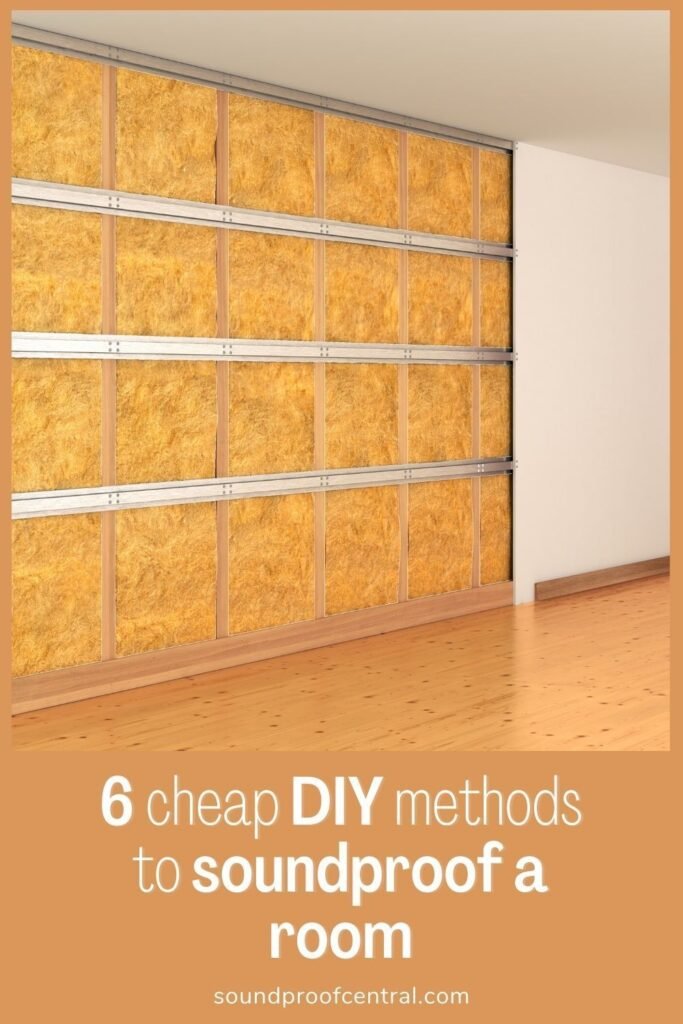
If you want to learn how to soundproof a room cheaply, start with the weak points, not expensive panels. In most homes, sound finds its way through doors, windows, vents, thin walls, and small gaps. Fixing those paths can give you more value than covering every wall with foam.
A useful rule is simple: **stop air leaks, add mass, reduce vibration, and soften echoes**. These are four different jobs. A cheap project works best when you match the fix to the type of noise you hear.
For example, a bedroom beside a busy living room needs a different approach from a home office beside a street. In my experience with room soundproofing projects, the biggest gains often come from small fixes that people skip. A door sweep, a tight seal, and a thick rug can matter more than a wall covered in decorative foam.
This guide explains how to soundproof a room cheaply with common materials and simple DIY work. It also explains what each fix can and cannot do, so you can spend your money where it matters.

What Does Soundproofing Really Mean?
Before you learn how to soundproof a room cheaply, it helps to know what soundproofing means. Soundproofing aims to **reduce sound moving into or out of a room**. It is not the same as making a room silent.
Sound can travel through air, solid building parts, and small openings. A loud voice may pass through a hollow door. Bass from a speaker may shake a wall or floor. Outside traffic may enter through a thin window. Each path needs a different fix.
Sound absorption is another idea. Absorbing materials, such as rugs and curtains, reduce reflections inside a room. They can make a room sound less echoey, but they do not fully block sound from a neighbor or the street.

- ✦ Airborne sound
Voices, TVs, music, and traffic can travel through air and gaps. Sealing openings and adding mass can help.
- ✦ Impact sound
Footsteps, dropped items, and moving furniture can create vibration. Rugs and underlay can reduce some of this noise.
- ✦ Echo
Hard surfaces can reflect sound around the room. Curtains, rugs, furniture, and fabric can reduce these reflections.
- ✦ Structure-borne sound
Low bass and strong vibration can move through walls, floors, and ceilings. Cheap fixes have limits with this type of noise.
Soundproofing vs. Sound Absorption
Soundproofing tries to stop sound from crossing a barrier. Sound absorption tries to reduce sound reflections within a space. A thick curtain may help with echo and some window noise, but it will not replace a properly built sound barrier.
This difference matters when choosing cheap materials. Acoustic foam is often sold as a soundproofing product, but its main job is to absorb reflections. It can improve the sound inside a room while doing little to block a loud neighbor.
- ✦ For blocking sound
Focus on sealing gaps, adding mass, improving doors and windows, and separating vibrating surfaces.
- ✦ For reducing echo
Use rugs, curtains, furniture, fabric, and acoustic panels where needed.
Start With the Cheapest Fix: Seal Every Gap
If you want to know how to soundproof a room cheaply, inspect the door first. Sound can pass through even a small gap under or around a door. A solid door with poor seals may perform worse than expected.
Close the door and look for visible light around its edges. If you can see light, air can move through the same path. That makes the gap an easy target for a low-cost soundproofing upgrade.
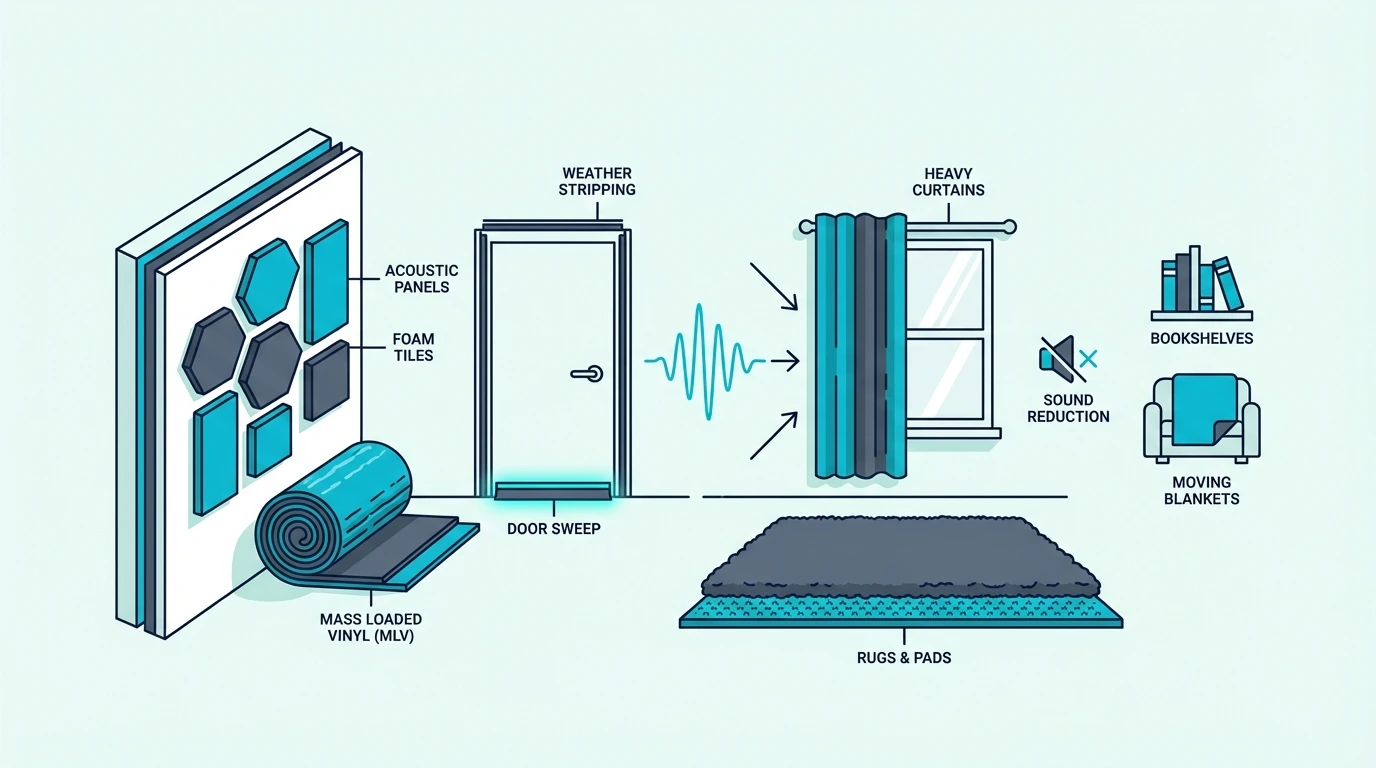
Use weatherstripping around the frame and a door sweep or draft stopper at the bottom. For a rental, choose removable products that do not damage the door. For a permanent home project, you can use a better door seal and a tight threshold.

- ✦ Add weatherstripping
Apply adhesive foam, rubber, or silicone weatherstripping around the door frame. Press the door shut and check that the seal remains tight.
- ✦ Block the bottom gap
Use a door sweep or draft stopper. This is often one of the simplest low-cost upgrades for a noisy bedroom or office.
- ✦ Seal small cracks
Use an appropriate acoustic or flexible sealant around fixed gaps. Do not seal vents or required fire-safety openings.
- ✦ Check outlets and wall edges
Gaps around electrical boxes, trim, and other openings can create sound paths. Only work on electrical areas when power is safely off and you know the work is appropriate.
Why Door Seals Matter So Much
A door is often one of the weakest barriers in a room. A hollow interior door also has less mass than a heavy solid-core door. If replacing the door is not in your budget, sealing its edges is a good first step.
For a very cheap project, start with the door sweep and weatherstripping. Test the room before buying more materials. If the door is still the main weak point, then consider a heavier curtain or a future solid-core door.
- ✦ Best low-cost order
Seal the sides, seal the top, block the bottom, then consider adding a heavy curtain.
Use Rugs, Carpets, and Underlay to Cut Noise
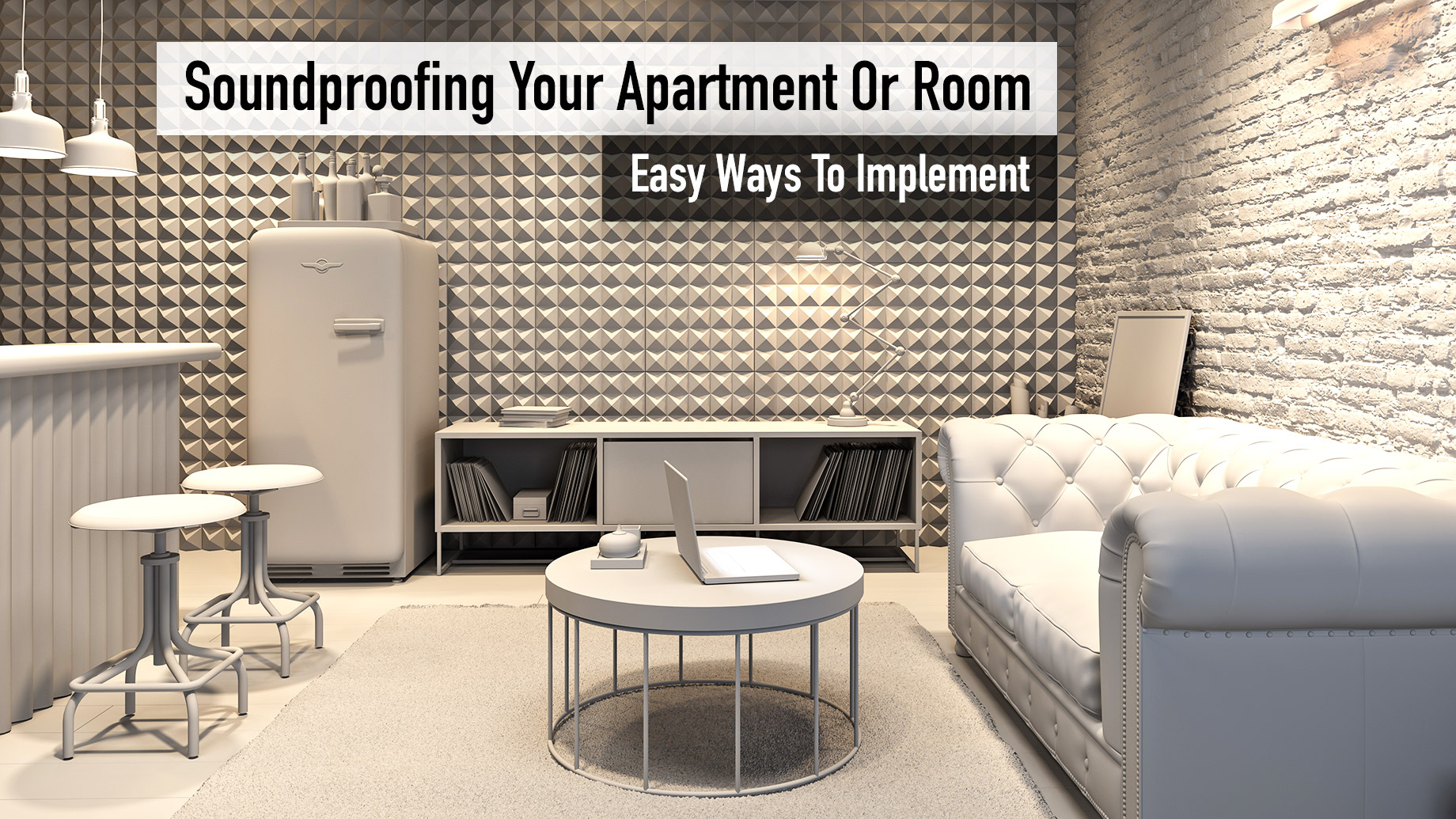
Hard floors can make a room loud and reflective. A thick rug adds a soft layer and can reduce reflected sound. It may also soften footstep noise, especially when paired with a dense rug pad.
If you live in an apartment or upper-floor room, floor treatment can also help reduce the noise you create for people below. It will not fully block bass or heavy impacts, but it can make everyday movement quieter.
For the best cheap result, cover the area where people walk most. A large rug with a thick pad usually gives more useful coverage than several small decorative rugs.
- ✦ Use a thick rug
Place a dense rug over a hard floor. Larger coverage usually gives more benefit than a tiny accent rug.
- ✦ Add a rug pad
A dense pad adds another layer between the floor and the rug. It can improve comfort and reduce some impact noise.
- ✦ Treat bare corners
If the room still sounds sharp or echoey, add soft furniture or fabric near large hard surfaces.
- ✦ Do not expect full isolation
Rugs mainly help with reflections and some impact noise. They are not a substitute for a properly isolated floor.
Cheap Floor Ideas for Renters
Renters can often improve a room without changing the building. Use a removable rug pad, large area rug, fabric furniture, and soft storage. These changes can reduce echo without drilling into walls.
Avoid permanent floor changes if your lease does not allow them. In the United States, rental rules vary by property and local law, so check your lease before making alterations.
- ✦ Simple setup
Use a large area rug, a dense pad, and furniture with fabric surfaces. Keep the setup removable if you rent.
Improve Windows Without Spending Much
Windows can be a major weak point in a room. Thin glass and loose frames allow outside noise to enter. This is common in bedrooms near roads, apartment buildings, and busy neighborhoods.
Start by checking the window frame for air leaks. Replace worn weather seals when possible. A removable window insert can also create another barrier without replacing the whole window.
Heavy curtains can help reduce some outside noise and reflections. Choose curtains that are thick and wide enough to cover the whole window area. They work best when they close tightly around the window rather than leaving large gaps.

- ✦ Check window seals
Look for worn seals and small gaps around the frame. Fixing leaks can improve comfort and reduce some sound entry.
- ✦ Hang thick curtains
Use heavy curtains that extend beyond the sides and bottom of the window. More coverage creates a better soft barrier.
- ✦ Try a removable insert
A properly fitted insert can add another air space and barrier. This can be useful when replacing the window is not practical.
- ✦ Do not block emergency exits
Never install a soundproofing treatment that prevents a required bedroom or emergency window from opening.
What About Plastic Film?
Clear window film can reduce drafts, but ordinary thin film is not a strong sound barrier. It may help comfort while doing little for loud traffic or voices.
If noise reduction is the main goal, focus on sealing the frame, adding a heavy curtain, or creating a properly fitted secondary window layer.
- ✦ Best use
Treat basic window film as an air and comfort fix, not a complete soundproofing solution.
Add Mass to Walls With Cheap Furniture
If the noise comes through a shared wall, adding heavy objects can be a practical low-cost step. A full bookcase, wardrobe, cabinet, or other dense furniture can add mass and create more layers between you and the noise.
Place the furniture against the noisy wall when possible. Fill shelves instead of leaving them empty. Books and other dense items can add useful weight, while the furniture itself can help break up the wall surface.
This method is not equal to adding a new wall with insulation and drywall. Still, it can be a useful budget step when you cannot open the wall or make permanent changes.
- ✦ Use a full bookcase
Place a sturdy bookcase against the shared wall and fill it with books. A filled unit adds more mass than an empty shelf.
- ✦ Use large furniture
Wardrobes, cabinets, and storage units can create another layer in front of a thin wall.
- ✦ Leave no major gaps
Arrange furniture so the treated section covers the area where noise seems strongest.
- ✦ Keep furniture stable
Secure tall furniture when needed. Do not create a tip hazard while trying to reduce noise.
Can Moving a Bookcase Really Help?
Yes, but the result depends on the wall, the noise, and the furniture. A filled bookcase can add mass and reduce some sound transmission. It may also reduce reflections inside the room.
Think of it as one layer in a larger plan. If the sound enters through a door or window, moving a bookcase will not solve the main problem.
- ✦ Best approach
Find the loudest path first, then place dense furniture where it can cover that weak area.
Use Curtains and Fabric to Reduce Echo
Heavy curtains are useful beyond windows. You can also use thick fabric to soften hard surfaces and reduce reflections. This is especially helpful in bedrooms, home offices, gaming rooms, and small music spaces.
A thick curtain across a wall will not turn a thin wall into a soundproof barrier. It can, however, make the room less reflective. That can make speech clearer and reduce the harsh sound that comes from many hard surfaces.
If you have a very small budget, use what you already own. A full bookcase, sofa, fabric chair, thick blanket, or filled clothing rack can help break up reflections.

- ✦ Use thick curtains
Hang heavy curtains over large reflective areas. Make sure the curtain is safely supported by a suitable rod or track.
- ✦ Add soft furniture
Sofas, upholstered chairs, bedding, and fabric storage can reduce hard reflections.
- ✦ Cover large hard areas
Focus on bare walls, windows, and hard floors that create strong echoes.
- ✦ Avoid thin decorative fabric as a cure
A light sheet may soften reflections slightly, but it does not provide the mass needed for strong sound blocking.
What About Moving Blankets?
Moving blankets are popular for cheap DIY sound treatment because they are thick and easy to hang. They can absorb some sound reflections and provide a temporary soft layer over a door or wall.
They should not be treated as a complete soundproofing wall. Use them as part of a larger setup, especially when the main goal is to reduce echo or improve a temporary workspace.
- ✦ Good temporary use
Hang a thick moving blanket over a door or reflective wall when you need a removable solution.
Treat the Ceiling and Floor When Noise Comes From Above or Below
Noise from upstairs or downstairs can be harder to fix than noise through a door. Footsteps, furniture movement, and bass can travel through the building structure. Cheap surface treatments may reduce some sound, but they cannot fully stop structural vibration.
If you hear footsteps from above, identify whether the noise is impact sound or airborne sound. A rug in the room above can help with some impact noise, but a ceiling treatment in your room may have limited effect if the structure carries the vibration.
For a room below a noisy space, a suspended ceiling with proper isolation and insulation can work much better than simply attaching foam to the ceiling. However, that is a larger project and may not fit a tight budget or rental situation.

- ✦ For upstairs footstep noise
A thick rug and dense rug pad in the room above can help reduce some impact noise.
- ✦ For downstairs noise
Use rugs and soft floor layers in the room above when you control that space.
- ✦ For a rental
Start with removable floor and furniture treatments. Ask the landlord before making ceiling or structural changes.
- ✦ For major structural noise
Consider professional advice. Low-cost surface treatments have clear limits when vibration travels through framing.
Why Acoustic Foam Is Not a Full Soundproofing Fix
Acoustic foam is designed mainly to absorb sound reflections. It can help control echo in a recording space, office, or gaming room. It does not add enough mass to a wall to block strong outside noise.
If your goal is to keep voices from leaving the room or traffic from entering, spend your first dollars on seals, mass, and weak openings. Add foam later if you also need better room acoustics.
- ✦ Use foam for acoustics
Choose acoustic foam when the main problem is echo or room reflections.
- ✦ Use barriers for isolation
Use mass, airtight layers, and proper separation when the main problem is sound moving through a wall.
A Cheap Soundproofing Plan for Different Budgets
The best answer to how to soundproof a room cheaply depends on how much you can spend. You do not need to buy every product at once. Start with the weakest path, test the result, and then add the next layer.
A small budget can still make a room quieter. The key is to spend money on changes that address the actual noise path. Avoid buying products simply because they are labeled acoustic or soundproof.
For most DIY projects, a staged plan works well. Fix air gaps first, then add soft layers and mass. If noise remains strong, move toward more serious building work only when the budget and property allow it.
- ✦ Under $25
Start with door weatherstripping, a basic door sweep, draft blocking, or other small gap-sealing materials.
- ✦ $25 to $75
Add a thicker rug pad, heavy curtain, moving blanket, or more complete door seal.
- ✦ $75 to $200
Consider a larger rug, better window treatment, several dense curtains, or a removable window insert.
- ✦ $200 and up
You can begin considering heavier doors, better window inserts, larger sound barriers, or professional design advice.
The Best Order of Attack
If you are starting from scratch, use this order: **find the noise path, seal gaps, treat the door, treat windows, add floor coverage, add furniture mass, then consider wall or ceiling construction**. This keeps the early work cheap and easy to test.
Do not assume the loudest surface is the source. Sound can bend around barriers and travel through connected building parts. Walk around the room while someone makes the noise outside, if you can do so safely, and listen near doors, windows, vents, and shared walls.
- ✦ Step 1
Identify whether the main noise is airborne, impact, echo, or structural vibration.
- ✦ Step 2
Seal visible gaps and improve the door.
- ✦ Step 3
Treat windows and large reflective surfaces.
- ✦ Step 4
Add rugs, pads, curtains, and dense furniture.
- ✦ Step 5
Only then consider larger wall, ceiling, or door upgrades.
Cheap Soundproofing Mistakes to Avoid
One common mistake is covering a wall with thin foam and expecting outside noise to disappear. Another is spending money on decorative panels while leaving a large gap under the door. These choices treat the wrong problem.
Another mistake is adding lots of soft material without fixing vibration. Soft materials can make a room sound better inside, but they cannot replace mass and airtight construction when strong noise travels through a wall.
Safety matters too. Do not cover required vents, fire exits, smoke alarms, or electrical equipment with soundproofing materials. Keep curtains and blankets away from heat sources, and follow product instructions for mounting and fire safety.
- ✦ Do not chase labels
A product called acoustic or soundproof is not automatically right for your problem. Check what the material is designed to do.
- ✦ Do not ignore gaps
A small opening can undermine a much heavier barrier around it.
- ✦ Do not expect silence
Cheap room treatments reduce noise. They rarely create complete isolation.
- ✦ Do not create a safety issue
Keep exits, vents, heaters, sprinklers, alarms, and electrical equipment clear.