Learning how to reduce indoor humidity starts with one simple idea: **remove moisture at its source**. Cooking, showers, laundry, leaks, damp basements, and humid outdoor air can all raise the moisture level inside a home. When that moisture has nowhere to go, rooms can feel warm, sticky, and stale.
A practical first step is to measure the air with a small hygrometer. For most homes, a relative humidity level of about 30% to 50% is a useful target. If readings stay high, focus on the cause instead of only treating the symptoms. In my experience with home comfort guidance, the best results come from combining small daily habits with the right mechanical system.

What Is Indoor Humidity?
Indoor humidity is the amount of water vapor in the air inside your home. Relative humidity tells you how much moisture the air holds compared with the maximum amount it could hold at that temperature. Warm air can hold more water vapor than cold air.
High indoor humidity often makes a room feel warmer than it is. It can also lead to condensation on windows, musty smells, damp surfaces, and conditions that support mold growth. That is why knowing how to reduce indoor humidity matters for both comfort and home care.
- ✦ Low humidity
Very dry air can cause dry skin, static, irritated eyes, and other comfort issues.
- ✦ Moderate humidity
A relative humidity level near 30% to 50% is a common indoor comfort target.
- ✦ High humidity
Persistent levels above 50% can increase condensation and create a better setting for mold and other moisture-related problems.
How to Check Humidity at Home
Use a digital hygrometer to check relative humidity. These small devices are easy to place in bedrooms, living rooms, basements, and other problem areas. Check the reading at different times of day because humidity can rise after showers, cooking, or laundry.
If one room has a much higher reading than the rest of the home, look for a local moisture source. A damp wall, poor bathroom ventilation, plumbing leak, or wet crawl space may be the real cause.
- ✦ Track the trend
Take readings for several days rather than relying on one measurement.
- ✦ Check problem rooms
Pay close attention to bathrooms, kitchens, basements, laundry rooms, and rooms with condensation.
Why Is My House So Humid?
Before deciding how to reduce indoor humidity, find out where the moisture comes from. A home can become humid because of outdoor air, daily household activities, poor ventilation, water leaks, or a cooling system that does not remove enough moisture.
In hot and humid parts of the United States, summer outdoor air can add a large amount of moisture whenever doors or windows stay open. In colder areas, indoor moisture may come more from showers, cooking, drying clothes, and normal household activity.

- ✦ Showers and baths
Hot water releases water vapor into the bathroom. Without good exhaust, that moisture can spread through the home.
- ✦ Cooking
Boiling water, simmering food, and dishwashers can add moisture to indoor air.
- ✦ Laundry
Wet clothes release a large amount of moisture while they dry, especially when drying indoors.
- ✦ Leaks
Roof, plumbing, foundation, and appliance leaks can add hidden moisture to walls, floors, ceilings, or crawl spaces.
- ✦ Poor ventilation
Without a way to move moist air outside, water vapor can build up indoors.
- ✦ Oversized air conditioner
An air conditioner that cools a space very quickly may not run long enough to remove as much moisture as a properly sized system.
Signs That Humidity Is Too High
Look for signs rather than relying only on how the air feels. Foggy windows, damp spots, peeling paint, musty odors, and recurring condensation can point to excess moisture. A hygrometer gives you a clearer way to confirm the problem.
If moisture keeps returning after cleaning, do not simply wipe the surface again. Find the source. Repeated dampness can signal a leak, drainage issue, poor ventilation, or moisture entering through the building structure.
- ✦ Condensation
Water on windows, pipes, or other cool surfaces can show that moist air is reaching its dew point.
- ✦ Musty odor
A persistent musty smell can point to damp materials or hidden moisture.
- ✦ Damp rooms
Basements, bathrooms, closets, and rooms with poor airflow often show humidity problems first.
How to Reduce Indoor Humidity: The Most Effective Methods
The most reliable way to reduce humidity is to control both the moisture source and the indoor air. One solution may help, but several simple steps often work better together.
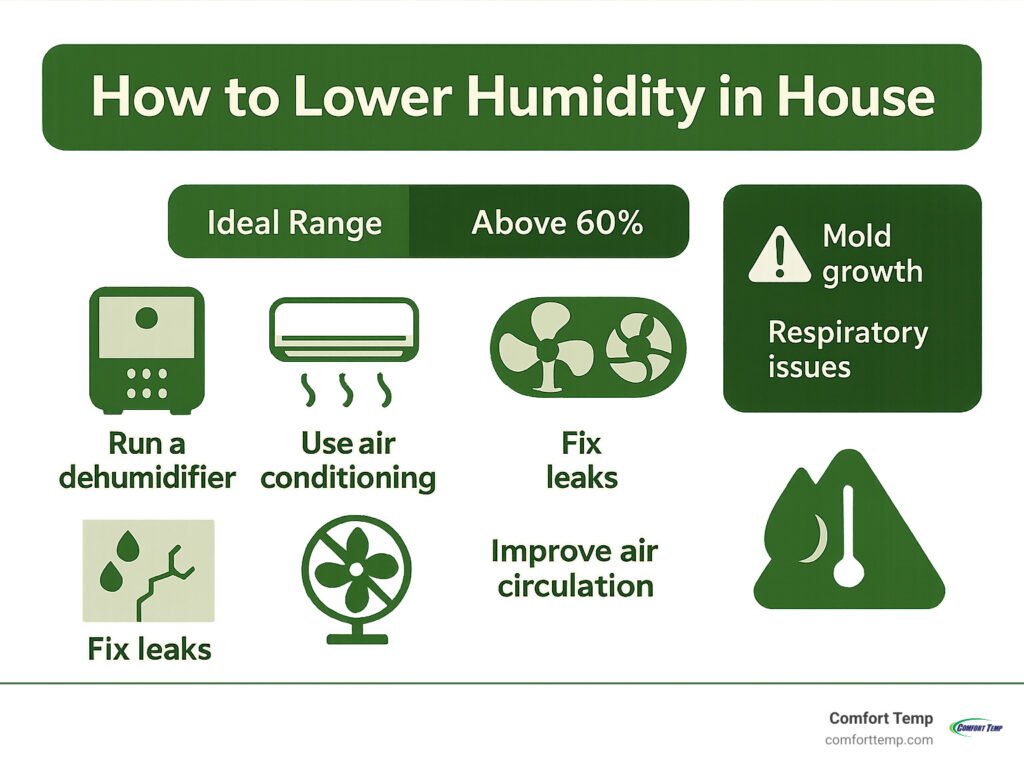
Start with the easiest changes. Use exhaust fans, run your air conditioner when needed, improve airflow, dry clothes correctly, and repair leaks. If those steps do not keep humidity in range, add a dehumidifier or have the HVAC system checked.
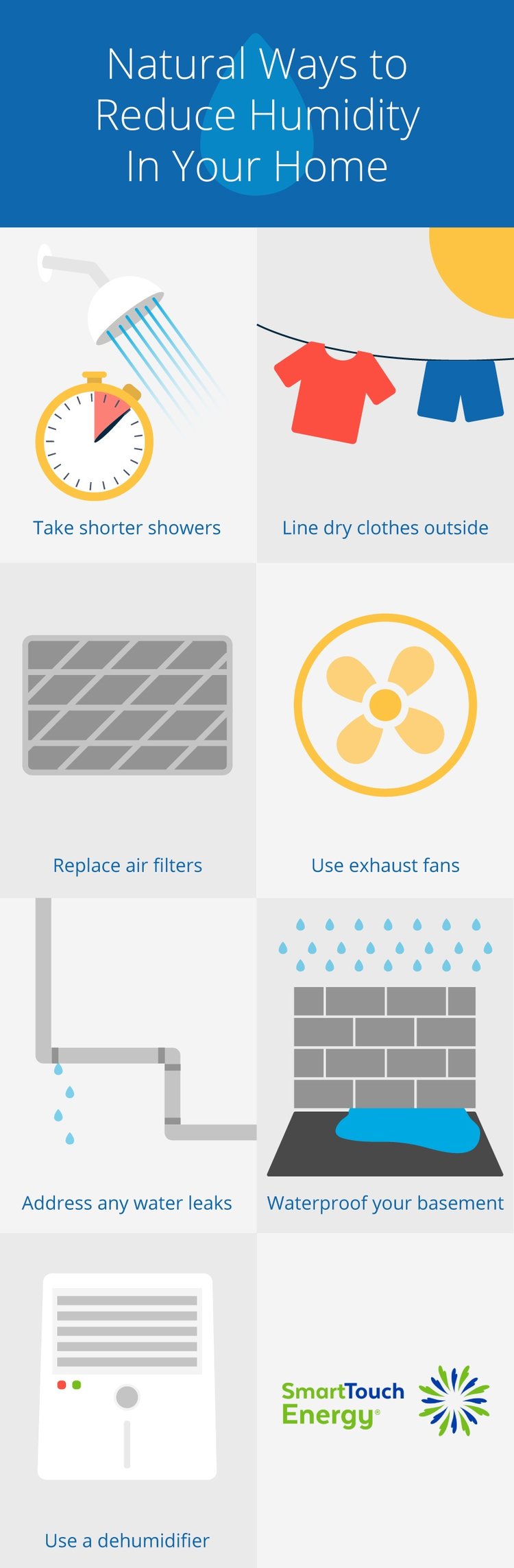
- ✦ 1. Run bathroom exhaust fans
Turn the fan on during a shower and keep it running for a while after you finish. Make sure it vents outdoors rather than into an attic or another enclosed space.
- ✦ 2. Use the kitchen exhaust fan
Use a range hood when boiling, steaming, or cooking foods that create lots of vapor. A hood that vents outdoors can remove moist air at the source.
- ✦ 3. Use air conditioning
An air conditioner can remove water from indoor air as it cools. Keep filters clean and make sure the system is properly sized and maintained.
- ✦ 4. Add a dehumidifier
A portable or whole-home dehumidifier can help when humidity stays high despite normal cooling and ventilation.
- ✦ 5. Improve air movement
Use fans and keep interior air moving through problem areas. Better circulation can reduce stagnant pockets of humid air.
- ✦ 6. Dry clothes outside or in a vented dryer
Avoid drying wet clothes inside unless the room has strong ventilation and moisture control. Make sure a dryer vents outdoors.
- ✦ 7. Repair water leaks
Fix dripping pipes, roof leaks, damaged seals, and appliance leaks as soon as possible. Dry wet materials quickly.
- ✦ 8. Keep doors and windows closed during humid outdoor weather
Opening windows can help on dry days but can make indoor humidity worse when outdoor air is hot and damp.
- ✦ 9. Improve basement and crawl-space moisture control
Use proper drainage, vapor control, sealing, and dehumidification where needed. A damp foundation or crawl space can keep the whole home humid.
- ✦ 10. Cover pots while cooking
Lids reduce steam released into the room. This small habit can help lower moisture from everyday cooking.
- ✦ 11. Shorten hot showers
Hot showers add water vapor quickly. A shorter shower plus a working exhaust fan can reduce the moisture load.
- ✦ 12. Keep gutters and downspouts working
Move rainwater away from the foundation. Good drainage helps reduce moisture that can enter basements and crawl spaces.
Use a Dehumidifier the Right Way
A dehumidifier is often one of the simplest answers to how to reduce indoor humidity when moisture remains high. Choose a unit that matches the room or home size and the amount of moisture present. Empty the tank as needed or connect a drain hose if the model supports continuous drainage.
Place a portable unit where humidity is highest, such as a basement. Keep doors and windows closed while it runs so the machine is not constantly trying to dry incoming humid air. Clean the filter and follow the maker’s care instructions.
- ✦ Portable dehumidifier
Useful for one room, a basement, or another localized moisture problem.
- ✦ Whole-home dehumidifier
Useful when several rooms stay humid and the HVAC system needs added moisture control.
- ✦ Avoid over-drying
Do not aim for extremely low humidity. Very dry air can create its own comfort problems.
Use Your HVAC System for Moisture Control
Air conditioning does more than cool a home. As warm air passes over the cold indoor coil, some water vapor condenses and drains away. This is one reason a properly maintained AC system can help control humidity during warm weather.
If your home feels cool but still damp, ask an HVAC professional to inspect the system. The issue may involve sizing, airflow, drainage, refrigerant problems, or controls. Avoid changing system settings blindly because the right fix depends on the equipment and home.
- ✦ Check the filter
A dirty filter can restrict airflow and reduce system performance.
- ✦ Check the condensate drain
A blocked drain can cause water problems and should be handled promptly.
- ✦ Schedule maintenance
Routine HVAC service can help keep cooling and moisture removal working as designed.
How to Reduce Humidity Naturally
Natural methods can help, but they have limits. Good airflow, smart cooking habits, outdoor clothes drying, and careful window use can lower moisture without adding another appliance.
Plants are often promoted as a way to reduce indoor humidity, but they should not be treated as a replacement for ventilation or dehumidification. Watering plants adds moisture, and the overall effect depends on the number of plants, room conditions, and airflow.
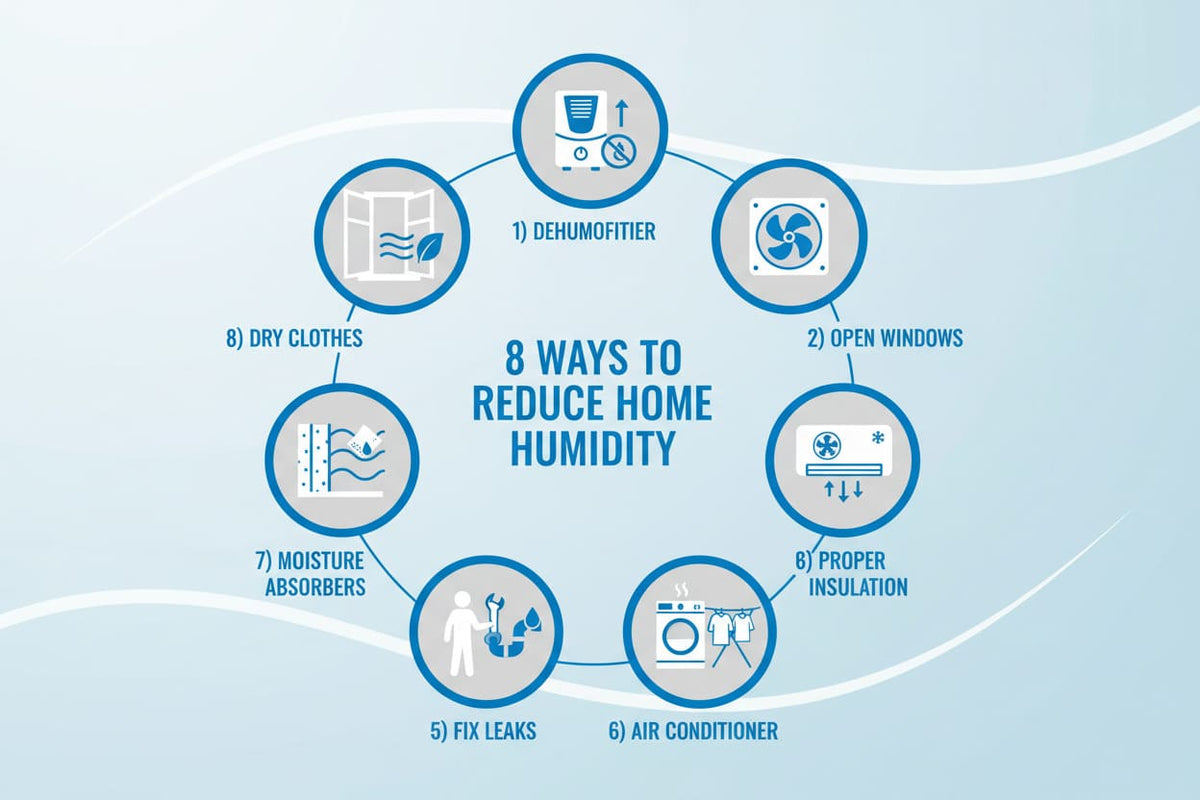
- ✦ Ventilate when outdoor air is dry
Open windows when outdoor conditions are suitable and close them when outdoor humidity is high.
- ✦ Create cross-ventilation
When weather allows, opening suitable windows on opposite sides of a home can improve air exchange.
- ✦ Use cooler cooking methods
Cover pots and reduce unnecessary boiling or steaming to limit moisture released into the room.
- ✦ Dry laundry outdoors
Outdoor drying moves water vapor out of the living space.
- ✦ Keep wet items contained
Do not leave wet towels, bath mats, or damp clothing sitting indoors for long periods.
Do Salt, Baking Soda, or Houseplants Lower Humidity?
Small containers of absorbent materials may collect some moisture, but they usually cannot handle the moisture load of an entire room or home. They are not a practical replacement for a dehumidifier when humidity is consistently high.
The same caution applies to houseplants. They can add beauty and may affect local moisture through normal plant processes, but they are not a dependable whole-room humidity control method. If a hygrometer shows persistent high humidity, use ventilation, air conditioning, or dehumidification instead.
- ✦ Best for small tasks
Moisture-absorbing products may have a role in small enclosed spaces such as cabinets.
- ✦ Not a whole-home fix
They cannot replace proper moisture control when the source is a leak, damp foundation, or humid outdoor air.
How to Reduce Humidity in Specific Rooms
Different rooms create moisture in different ways. A bathroom needs fast exhaust, while a basement may need drainage and a dehumidifier. Matching the fix to the room often saves time and energy.
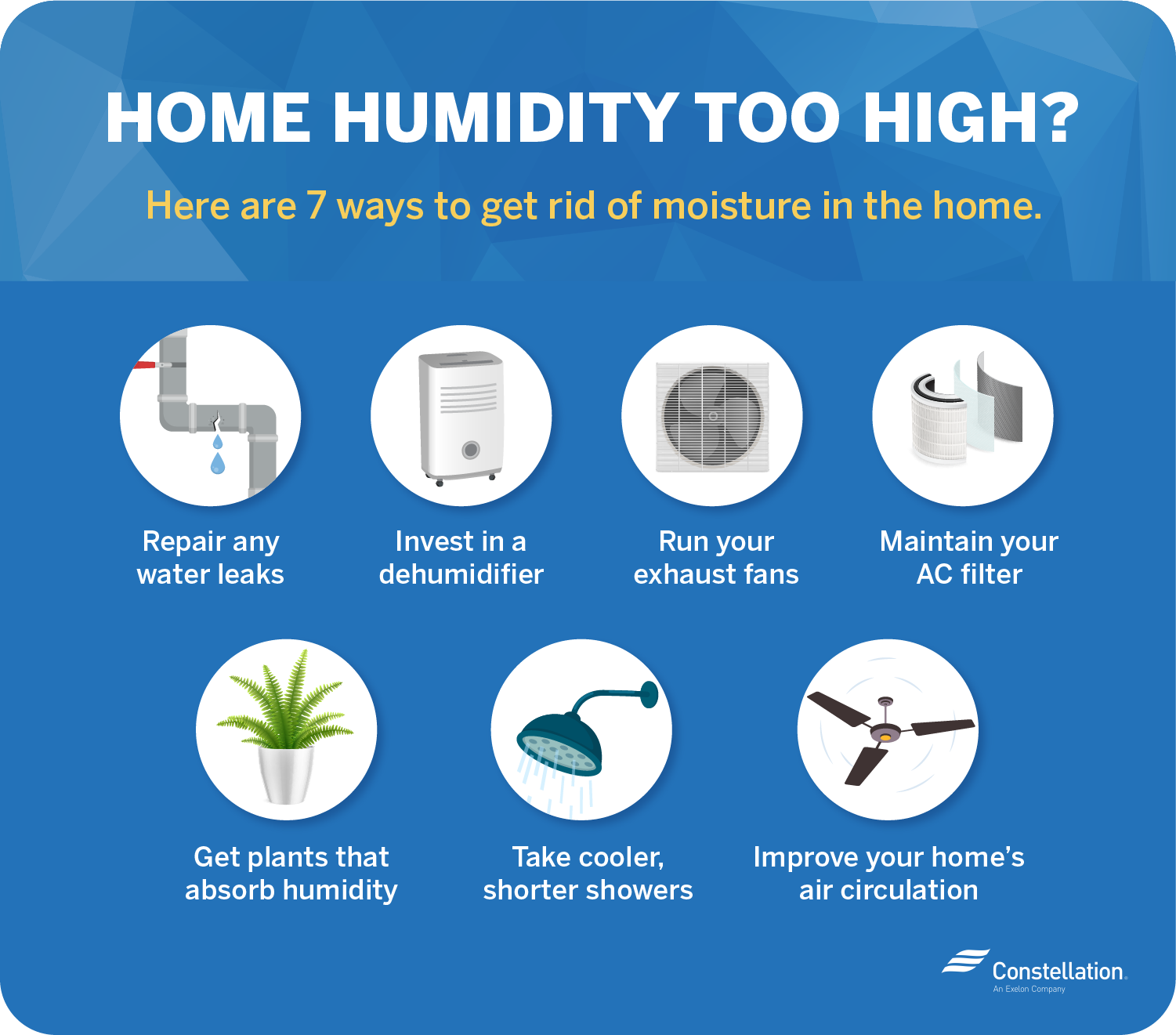
- ✦ Bathroom
Run the exhaust fan during showers and afterward. Wipe standing water and repair plumbing leaks.
- ✦ Kitchen
Use an outdoor-vented range hood, cover pots, and avoid letting steam spread through the home.
- ✦ Bedroom
Check for poor airflow, condensation, damp bedding, or nearby moisture sources. Keep furniture from blocking vents.
- ✦ Basement
Use a dehumidifier, improve drainage, inspect for leaks, and address moisture entering through walls or floors.
- ✦ Laundry room
Make sure the dryer vents outdoors and fix any hose or plumbing leaks. Avoid indoor clothes drying when possible.
- ✦ Closets
Improve air movement and avoid storing damp clothes, shoes, or textiles in closed spaces.
How to Reduce Humidity in a Basement
Basements often stay humid because they are cooler, have limited airflow, and can receive moisture from soil or foundation surfaces. Start by checking for plumbing leaks, foundation seepage, poor grading, and standing water.
A basement dehumidifier can help control indoor moisture, but it should not hide a serious water problem. If water enters after rain, address drainage or structural issues instead of relying only on a machine.
- ✦ Check after rain
Look for damp walls, puddles, stains, or new odors after heavy rain.
- ✦ Control drainage
Keep gutters clear and direct downspouts away from the foundation.
How to Reduce Humidity in a Bathroom
Bathrooms can create a large moisture spike in a short time. Use the exhaust fan during the shower and leave it on long enough to clear moist air. Keep the bathroom door closed during the shower when practical so moisture does not spread to nearby rooms.
If the mirror, walls, or ceiling stay wet for a long time, inspect the exhaust system. A fan that is too weak, blocked, or vented into an attic may not remove enough moisture.
- ✦ Vent outdoors
Bathroom exhaust should discharge outside the building rather than into an attic or wall cavity.
- ✦ Dry wet surfaces
Remove standing water from tubs, floors, and counters so it does not keep evaporating into the room.
How to Reduce Indoor Humidity Without a Dehumidifier
You can often lower humidity without buying a dehumidifier, especially when the problem comes from everyday moisture. The key is to stop adding unnecessary water vapor and give existing moisture a safe path outside.
Use bathroom and kitchen exhaust fans, vent the dryer outdoors, improve air movement, repair leaks, and limit window opening during humid weather. If these steps do not work, the moisture source may be too large for simple habits alone.

- ✦ Use exhaust fans
Remove moisture at the point where it is created.
- ✦ Use your AC
Air conditioning can remove moisture while it cools the home.
- ✦ Stop indoor clothes drying
Move wet laundry outdoors or use a properly vented dryer when possible.
- ✦ Seal obvious leaks
Repair dripping fixtures, damaged pipes, and other water sources.
- ✦ Control outdoor air
Keep humid outdoor air out when weather conditions would raise indoor moisture.
When Natural Methods Are Not Enough
If a hygrometer still shows high humidity after you improve ventilation and moisture habits, look for a deeper source. Persistent moisture can come from a crawl space, foundation, roof, plumbing system, or HVAC problem.
Do not keep adding small fixes without checking the cause. A professional inspection may be the safer choice when you see repeated water damage, hidden dampness, or strong musty odors.
- ✦ Persistent readings
Humidity that stays high day after day suggests that a larger moisture source may be present.
- ✦ Recurring damage
Repeated stains, peeling paint, or damp materials deserve a source check.
Humidity Control Mistakes to Avoid
Knowing what not to do is part of learning how to reduce indoor humidity. Some common fixes can make the problem worse or only hide the symptoms.
Focus on moisture control at the source. A clean, dry surface is useful, but it does not solve a leak or a ventilation problem behind that surface.

- ✦ Opening windows at the wrong time
Fresh air is not always dry air. In humid weather, open windows can raise indoor moisture.
- ✦ Running fans without an exit path
A fan may move air without removing moisture unless that moist air can leave the building.
- ✦ Ignoring leaks
A dehumidifier cannot fully solve a continuous water leak.
- ✦ Overusing a dehumidifier
Extremely dry air is not the goal. Set a reasonable humidity target instead.
- ✦ Venting dryers indoors
A dryer releases warm, moist air. It should vent outdoors according to local requirements and manufacturer instructions.
- ✦ Blocking HVAC vents
Blocked supply or return vents can interfere with airflow and comfort.
When to Call a Professional
Consider professional help when humidity remains high despite basic control steps, or when you find signs of water intrusion. HVAC technicians can check cooling performance, airflow, drainage, and system sizing. A qualified contractor can also assess building leaks, drainage, crawl spaces, or other structural moisture sources.
Get prompt help when water damage is extensive, electrical equipment has been exposed to water, or mold covers a large area. The right professional depends on the source of the moisture.
- ✦ HVAC issue
Call an HVAC professional when cooling equipment runs poorly, leaks, or fails to control humidity.
- ✦ Water intrusion
Contact a qualified contractor when rain or groundwater enters the home.
- ✦ Large mold problem
Seek appropriate remediation help when mold is widespread or keeps returning after moisture control.