Learning **how to maintain home appliances** is less about hard repair work and more about steady care. Most homes rely on refrigerators, ovens, dishwashers, washers, dryers, microwaves, and other machines every day. A few minutes of care can help keep them clean, safe, and ready to work.
In home maintenance work, one lesson comes up again and again: small signs matter. A dryer that takes longer to dry, a refrigerator that runs all day, or a washer that shakes more than usual may need attention. Do not wait for a full breakdown before you act.
This guide explains **how to maintain home appliances** in a simple way. It covers daily habits, monthly checks, appliance-specific care, safety steps, energy use, and signs that call for a qualified repair professional. The tips fit common U.S. homes and busy family routines.

Why Regular Home Appliance Maintenance Matters
Regular care helps an appliance do its job with less strain. Dust, grease, lint, food bits, hard-water scale, and worn seals can reduce performance. Cleaning these parts can also help you spot trouble early.
Good care may help extend the useful life of an appliance, but it cannot stop normal wear. Every appliance has parts that wear out over time. Maintenance works best when you combine good habits with timely repairs and proper use.
Knowing **how to maintain home appliances** also helps protect your home. A blocked dryer vent can create a safety risk. A leaking washer hose can damage floors. A damaged power cord can create an electrical hazard.

- ✦ **Better performance**
Clean filters, vents, seals, and moving parts help many appliances work as intended.
- ✦ **Fewer surprise problems**
Routine checks can reveal leaks, odd sounds, loose parts, and worn seals before they become larger issues.
- ✦ **Lower waste**
Keeping an appliance in good working order can reduce the need for early replacement and limit avoidable waste.
- ✦ **Safer use**
Maintenance helps you find hazards such as damaged cords, blocked vents, leaks, and unstable machines.
The Cost of Neglect
A dirty filter can make an appliance work harder. A clogged drain can cause water to back up. A dirty condenser area can affect cooling. These issues may start small but can place extra stress on key parts.
The best approach is simple: clean what the owner manual says to clean, inspect what you can safely inspect, and call for service when a task needs special tools or electrical work.
Create a Simple Appliance Maintenance Schedule
A schedule makes **how to maintain home appliances** much easier. You do not need to clean every machine every week. Instead, match each task to the amount of use, the type of appliance, and the maker’s care instructions.
Keep the owner’s manual for each appliance. If you no longer have it, look up the model number and find the correct manual from the manufacturer. Model-specific instructions matter because cleaning methods and service steps can vary.
A calendar reminder can help. Pick one day each month for quick checks and one day every few months for deeper tasks.

- ✦ **Daily or after use**
Wipe spills, remove food scraps, empty small waste containers, and leave parts that need to dry in a safe position.
- ✦ **Monthly**
Check seals, filters, hoses, cords, vents, and unusual sounds. Clean parts that the manual lists as routine care items.
- ✦ **Every few months**
Clean deeper areas such as accessible coils, dryer vent sections, dishwasher filters, and range hood filters when the manufacturer allows it.
- ✦ **Yearly**
Review the condition of major hoses, connections, seals, and appliance placement. Arrange professional service when the manual calls for it or when a problem persists.
Use the Owner’s Manual as Your Main Guide
Online tips can be useful, but the owner’s manual should guide model-specific care. It tells you which parts you can remove, which cleaners are safe, and which tasks need professional service.
Never guess when a manual says a part must be serviced by a qualified technician. Safe appliance care includes knowing what **not** to do.
How to Maintain a Refrigerator and Freezer
Your refrigerator runs around the clock, so simple care matters. Keep the inside clean, avoid blocking air vents, and make sure the doors close fully. A door that does not seal well can let warm air in and make the unit work harder.
Clean spills as soon as you see them. Food residue can create odors and support unwanted growth. Keep food in closed containers and avoid packing the refrigerator so tightly that cold air cannot move.
For models with accessible condenser coils or other serviceable areas, follow the manufacturer’s cleaning instructions. Turn off and unplug the appliance when the manual says this is required before cleaning any service area.

- ✦ **Check the door seal**
Look for cracks, gaps, dirt, or loose sections. Clean the gasket with a suitable mild cleaner if the manual permits.
- ✦ **Keep vents clear**
Do not block internal air paths with food containers. Good air flow helps the refrigerator cool evenly.
- ✦ **Clean spills quickly**
Wipe spills before they dry. This keeps the interior cleaner and helps reduce odors.
- ✦ **Watch for warning signs**
Persistent frost, poor cooling, water leaks, loud new sounds, or a refrigerator that runs far more than usual may need service.
Freezer Care
Keep the freezer organized so cold air can move around stored food. If frost builds up beyond what the appliance normally manages, check the manual for the correct defrost method.
Do not chip away heavy ice with a sharp tool. You could damage a cooling line or other internal part.
How to Maintain a Washing Machine and Dryer
Laundry appliances handle water, heat, weight, and motion. That mix makes regular care important. Before doing maintenance, follow the owner’s manual and disconnect power when the manual tells you to do so.
For a washer, check hoses for cracks, bulges, or signs of wear. Look around the machine for water after a load. A small leak can point to a loose connection, damaged hose, or seal problem.
For a dryer, lint control is one of the most important routine tasks. Clean the lint screen after each load. Keep the dryer vent system clear and have it inspected or cleaned when needed, especially if drying takes longer than it used to.

- ✦ **Do not overload the washer**
Use the load size recommended by the manufacturer. Too much weight can affect cleaning, balance, and machine movement.
- ✦ **Check washer hoses**
Inspect accessible hoses and connections for wear or leaks. Replace damaged parts with the correct parts for the machine.
- ✦ **Clean the washer gasket**
For front-load models, wipe the door seal and remove trapped debris. Follow the manual for any cleaning cycle or product it recommends.
- ✦ **Clean the dryer lint screen**
Remove lint after each load. A clean screen supports good air flow and drying performance.
- ✦ **Check dryer air flow**
If clothes take much longer to dry or the dryer feels unusually hot, stop and check the vent system according to the manufacturer’s instructions.
Prevent Washer Odors
A washer can develop an odor when moisture and residue stay trapped inside. Remove wet clothes soon after a cycle ends and keep the door or lid open when the manufacturer allows it.
Clean the detergent drawer and door seal as directed. Use only the cleaner and washer-cleaning method recommended for your model.
Keep the Dryer Safe
Never ignore a dryer that suddenly takes much longer to dry clothes. Reduced air flow can affect performance and may signal a vent problem. Follow the manual and seek professional help when the vent system needs service that you cannot safely perform.
How to Maintain an Oven, Range, and Microwave
Cooking appliances collect grease, food crumbs, and moisture. Clean spills after the appliance cools. Heavy grease can smoke or create unpleasant odors during later cooking.
For an oven, use only the cleaning method listed in the manual. Some ovens have special coatings or cleaning systems that can be damaged by the wrong product. Do not remove or scrub parts that the manual says should stay in place.
Keep the cooktop, burner areas, control panel, and oven door clean. For gas appliances, never block burner openings with grease or food debris. If a burner does not light normally or the flame looks unusual, stop using it and follow the manufacturer’s safety guidance.
- ✦ **Clean spills after cooling**
Remove food residue once surfaces are cool and safe to touch. This makes later cleaning easier.
- ✦ **Keep vents clear**
Do not cover appliance vents unless the manufacturer specifically allows it.
- ✦ **Use the right cleaner**
Check the manual before using abrasive pads, strong chemicals, or specialty cleaners.
- ✦ **Check the door seal**
A damaged oven door seal can affect heat retention. Replace it only with the correct part and method.
Microwave Care
Wipe the microwave cavity often, especially after splashes. Food left on the interior can become hard to remove and may create odors.
Do not run a microwave empty unless the manufacturer specifically says it is safe. Never use metal items unless the manual says that item is designed for microwave use.
How to Maintain a Dishwasher
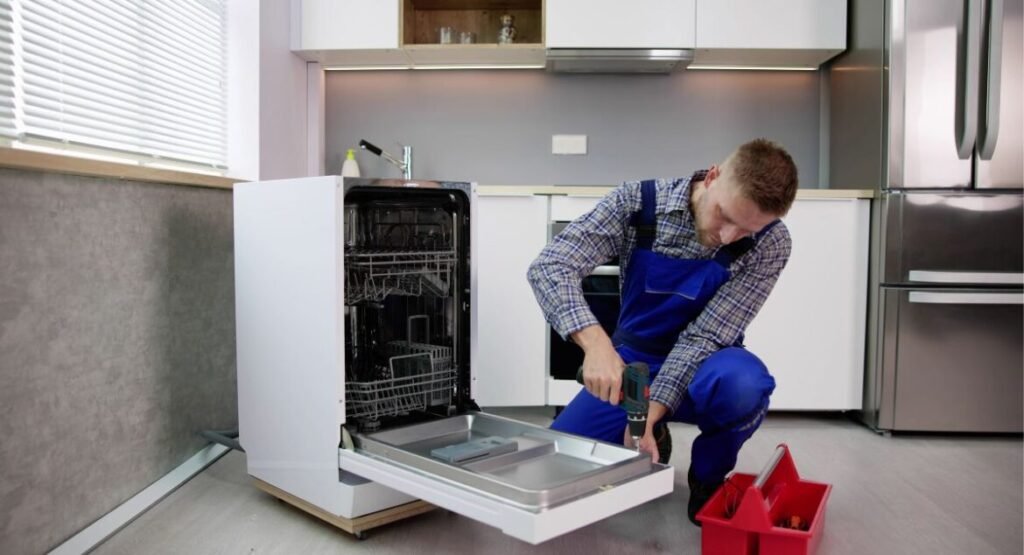
A dishwasher cleans dishes, but it also needs cleaning. Food particles can collect in the filter and other areas. A dirty filter may affect cleaning results and can cause odors.
Check and clean the dishwasher filter as often as the manufacturer recommends. Remove large food pieces from the filter area and wash the filter using the method listed in the manual.
Inspect the door gasket for food residue and buildup. Wipe it with a suitable cleaner if allowed. Also check the spray arms for blocked holes and clean them only as directed.

- ✦ **Clean the filter**
Follow the manual for filter removal and cleaning. Put the filter back correctly before running the dishwasher.
- ✦ **Keep spray arms clear**
Check for food particles or mineral buildup that may block water spray.
- ✦ **Inspect the door seal**
Wipe away residue and check for cracks or gaps that could allow water to escape.
- ✦ **Use the right detergent**
Use detergent made for automatic dishwashers. Do not substitute regular dish soap because it can create excessive foam.
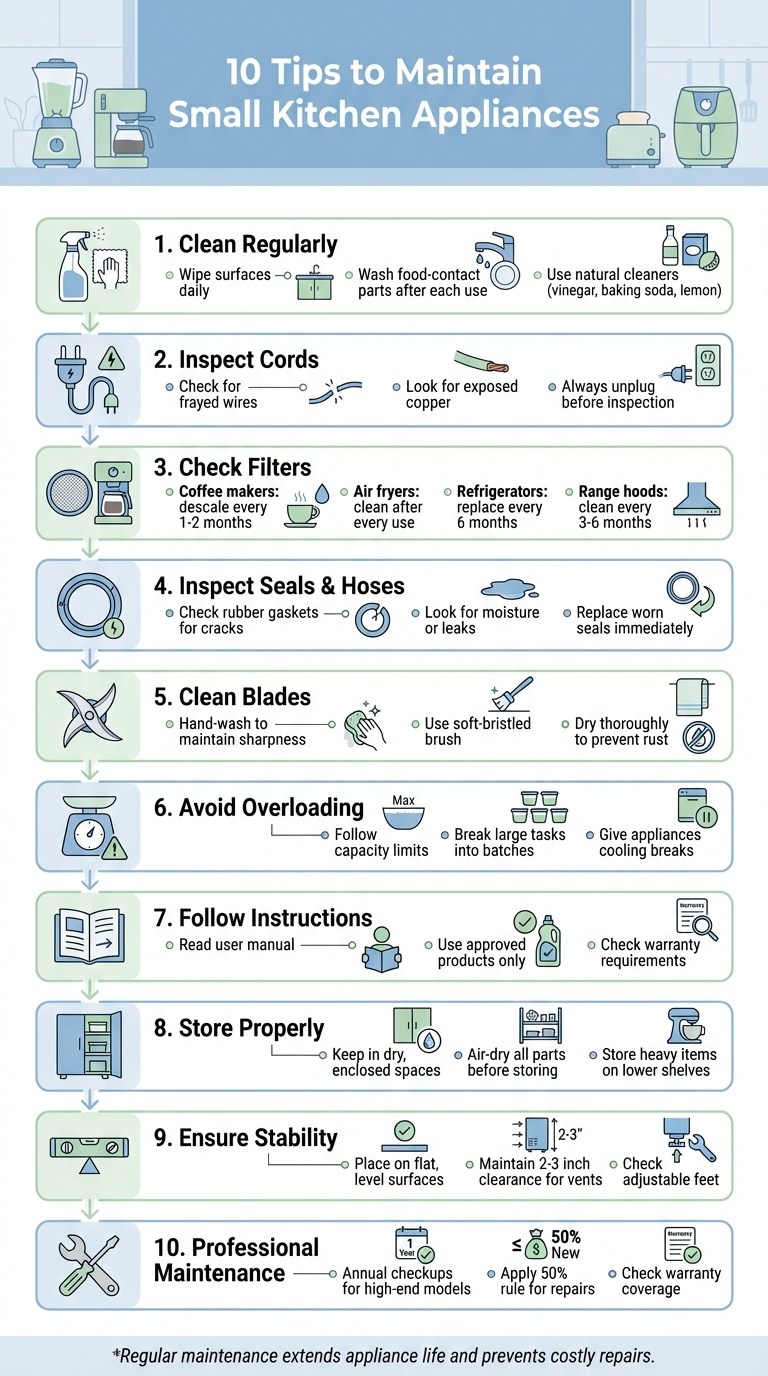
How to Maintain Small Home Appliances
Small appliances also need care. Coffee makers, blenders, toasters, air fryers, vacuum cleaners, and countertop ovens can collect food, dust, scale, and grease. Their smaller size does not mean they can be ignored.
Always unplug a small appliance before cleaning unless the manual gives another safe method. Keep water away from electrical parts, plugs, and controls. Never place an appliance in water unless it is designed for that use.
For coffee makers, mineral scale can build up in areas that carry water. Use the cleaning process and descaling product recommended by the manufacturer. For vacuums, empty the dust container and clean or replace filters as directed.

- ✦ **Coffee makers**
Clean the brew area and water parts as directed. Descale at the interval listed by the manufacturer or when scale begins to affect performance.
- ✦ **Blenders**
Clean the jar, lid, and removable parts after use. Keep the motor base dry.
- ✦ **Toasters**
Remove crumbs according to the manual. Never insert metal objects into a plugged-in toaster.
- ✦ **Air fryers**
Remove food residue from the basket and cooking area. Avoid abrasive cleaners that can damage a nonstick surface.
- ✦ **Vacuum cleaners**
Empty the bin or bag before it becomes too full. Clean or replace filters as directed and remove hair from accessible brush areas.
How to Keep Appliances Energy Efficient
Good maintenance can support efficient appliance use, but habits matter too. Keep refrigerator doors closed as much as practical, use suitable wash settings, and avoid running machines with loads that are too small or too large.
Clean filters and vents when the manufacturer recommends it. Restricted air flow can make some appliances work harder. Also make sure appliances have the clearance required by the manufacturer so air can move around them.
For older appliances, maintenance can improve operation but may not match the efficiency of a newer model. When replacement becomes necessary, compare the product’s energy information, expected use, repair needs, and purchase cost rather than looking at the purchase price alone.

- ✦ **Use the right load size**
Choose a cycle and load size that match the amount of laundry or dishes you need to clean.
- ✦ **Keep air paths open**
Do not block appliance vents or place items where they restrict required air flow.
- ✦ **Clean filters on time**
A clean filter can support proper air flow and performance in appliances that use filters.
- ✦ **Use suitable settings**
Select normal, eco, low-heat, or other efficient settings when they fit the task and the manufacturer’s instructions.
Maintenance and Energy Use
Maintenance is only one part of energy efficiency. The age and design of an appliance also matter. A well-maintained older appliance may still use more energy than a newer efficient model.
Think of maintenance as a way to keep an appliance working as designed, not as a promise that it will always use less energy.
Appliance Safety: What You Should and Should Not Do
Safety should come first when you learn **how to maintain home appliances**. Cleaning a removable filter is very different from opening an electrical cabinet. If a task requires electrical testing, gas work, sealed-system work, or special tools, use a qualified professional.
Always follow the manufacturer’s safety instructions. Unplug an appliance before cleaning or inspecting it when the manual requires it. For gas appliances, know where the shutoff is and leave gas-related repairs to qualified professionals.
Never ignore burning smells, smoke, sparks, repeated breaker trips, damaged cords, gas odors, or active leaks. Stop using the appliance when it is safe to do so and get the right help.

- ✦ **Do not bypass safety features**
Never remove or defeat switches, guards, sensors, fuses, or other safety parts.
- ✦ **Do not use damaged cords**
Stop using appliances with frayed, cut, melted, or otherwise damaged power cords until the problem is properly fixed.
- ✦ **Do not guess at repairs**
If you do not know what a part does or how to service it safely, use the manual or call a qualified technician.
- ✦ **Keep water away from electricity**
Never spray or pour cleaner into electrical controls, motors, outlets, or other areas that are not designed for moisture.
When to Call a Professional
Call a qualified repair professional when an appliance has a serious electrical fault, gas issue, refrigerant problem, repeated leak, or internal mechanical fault that you cannot safely diagnose. The same applies when the owner manual says a task requires professional service.
Professional help can also make sense when a problem keeps returning after basic maintenance. Replacing a filter may solve a blocked-air problem, but it will not fix a failing motor or control board.
Common Appliance Maintenance Mistakes to Avoid
Many appliance problems start with good intentions. People may use too much cleaner, scrub the wrong surface, overload a machine, or follow a tip meant for a different model. Always match the care method to the appliance in your home.
Another common mistake is waiting for a major failure. New sounds, longer cycle times, strange smells, leaks, and poor results can be early warning signs. A quick check is often easier than dealing with a full breakdown.
Avoid assuming that more cleaning is always better. Some parts have special coatings or materials that can be damaged by harsh chemicals, rough tools, or excess water.
- ✦ **Overloading appliances**
Too much laundry, food, or cookware can affect performance and place extra strain on the appliance.
- ✦ **Using harsh cleaners**
Strong products can damage finishes, seals, coatings, and plastic parts. Follow the manufacturer’s cleaning advice.
- ✦ **Ignoring small leaks**
Water near an appliance can damage floors and cabinets and may point to a larger fault.
- ✦ **Skipping filter care**
A dirty filter can reduce air flow, cleaning results, or appliance performance.
- ✦ **Copying generic repair tips**
A method that works on one model may be unsafe or wrong for another. Use model-specific instructions.
A Practical Home Appliance Maintenance Checklist
A checklist turns appliance care into a simple routine. Walk through your home once a month and look for the easy things first: dirt, lint, leaks, blocked vents, damaged seals, unusual sounds, and changes in performance.
Keep a note of the date when you clean filters or complete other recurring tasks. This is useful in a busy U.S. household where several appliances may have different care schedules.
Use the checklist below as a starting point, then adjust it to match each owner’s manual. The manual always takes priority over a general maintenance schedule.
- ✦ **Refrigerator**
Check door seals, clean spills, keep vents clear, and clean accessible service areas as directed.
- ✦ **Freezer**
Check for unusual frost, keep air paths clear, and follow the correct defrost method when needed.
- ✦ **Washer**
Check hoses and connections, clean the gasket and detergent area, and watch for leaks or unusual movement.
- ✦ **Dryer**
Clean the lint screen after each load and address slow drying or poor air flow without delay.
- ✦ **Dishwasher**
Clean the filter, inspect the spray arms, wipe the door seal, and remove food debris.
- ✦ **Oven and range**
Remove food and grease safely, keep vents clear, and inspect seals and burners according to the manual.
- ✦ **Microwave**
Wipe the interior, clean spills, and inspect the door and controls for damage.
- ✦ **Small appliances**
Clean removable parts, keep electrical areas dry, and replace filters or other service parts as directed.
Keep a Maintenance Record
A simple note on your phone can track filter cleaning, hose replacement, deep cleaning, and service visits. Record the model number too. This can save time when you need a replacement part or repair.
Maintenance records are also useful when you sell a home or replace an appliance. They show that you paid attention to routine care without claiming that an appliance will last for a fixed number of years.