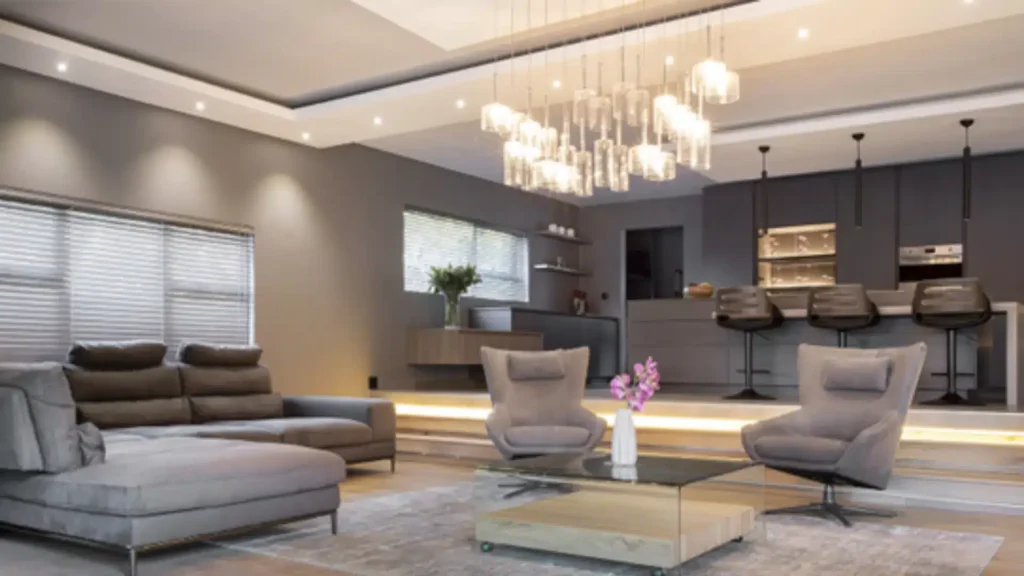
Knowing how to improve home lighting can change how a room looks and feels without a major remodel. A dark kitchen may need better task light. A dull living room may need soft light at several levels. A bedroom may need less glare and more control.
The best lighting plan starts with how you use each space. Think about where you read, cook, work, relax, dress, and move at night. Then build light around those tasks instead of simply adding brighter bulbs.
This guide explains how to improve home lighting in a practical way. It covers natural light, LED bulbs, fixture placement, color temperature, dimmers, room-by-room ideas, common mistakes, and safe DIY limits for U.S. homes.

Start With a Lighting Audit
Before buying new fixtures, look at the light you already have. Walk through the home during the day and again after dark. Note rooms that feel dim, areas with glare, and places where shadows make daily tasks hard.
A simple audit can show you where to spend money. You may not need a new ceiling fixture in every room. A floor lamp, under-cabinet light, wall light, or brighter task light may solve the real problem.
One of the most useful steps in learning how to improve home lighting is to separate lighting problems from decoration problems. A room can have beautiful fixtures and still have poor light if the sources are in the wrong places.

- ✦ Find dark zones
Look at corners, work surfaces, stairs, hallways, closets, and areas behind furniture.
- ✦ Find glare
Watch for bright bulbs that shine into your eyes or reflect from TVs, mirrors, glossy counters, and windows.
- ✦ Check controls
Notice which lights have switches, dimmers, timers, or smart controls. Better control can improve a room without adding many fixtures.
- ✦ Check daylight
See when each room gets direct and indirect daylight. This helps you decide where electric light is most important.
Ask What Each Room Needs
A living room often needs soft general light plus reading or accent light. A kitchen needs strong light where food is prepared. A bedroom often benefits from gentle light that can be dimmed at night.
The goal is not to make every room equally bright. The goal is to make each room bright enough for its purpose while keeping the space comfortable.
- ✦ Living areas
Focus on comfort, conversation, reading, and flexible mood control.
- ✦ Work areas
Give desks, counters, sinks, and benches clear task light with limited glare.
- ✦ Circulation areas
Light stairs, hallways, entries, and doorways so people can move safely.
Use Three Layers of Light
A strong home lighting plan usually combines three layers: ambient, task, and accent lighting. Each layer has a different job. Together, they help a room feel bright without making every surface equally bright.
Ambient lighting gives general light for the room. Task lighting helps you see while you cook, read, work, shave, apply makeup, or do other close tasks. Accent lighting adds focus to art, shelves, plants, walls, or architectural details.
Layered lighting is one of the most effective answers to how to improve home lighting. It also gives you more control because you can use only the layer you need at a given time.

- ✦ Ambient lighting
Use ceiling fixtures, recessed lights, chandeliers, wall lights, or well-placed lamps to provide general illumination.
- ✦ Task lighting
Place focused light close to work areas such as kitchen counters, desks, reading chairs, bathroom mirrors, and vanities.
- ✦ Accent lighting
Use focused or indirect light to draw attention to artwork, shelves, plants, textures, or other features.
Balance Light Across the Room
A common mistake is putting one very bright fixture in the center of a room. That can leave corners dark while creating harsh light below the fixture.
Instead, spread light around the room. A ceiling fixture can handle general light, while lamps or wall fixtures can brighten darker zones. This often makes a room feel more balanced without increasing total light too much.
- ✦ Use several sources
Several moderate light sources often feel more comfortable than one intense source.
- ✦ Light vertical surfaces
Wall washing and shaded lamps can brighten the visual field and make a room feel more open.
Choose the Right Light Bulbs
The bulb matters as much as the fixture. Look at brightness, color temperature, color quality, shape, and compatibility before you buy. LED bulbs are common in U.S. homes because they use less energy than older incandescent bulbs and can offer many lighting options.
Brightness is often listed in lumens. Lumens describe how much light a bulb produces. Watts measure energy use, so watts are not a good way to compare the brightness of modern LED bulbs.
Color temperature is measured in kelvins. Lower values tend to look warmer and more yellow, while higher values tend to look cooler and more blue-white. The best choice depends on the room, finish, time of day, and personal comfort.

- ✦ Check lumens
Use lumens to compare how much visible light bulbs produce instead of relying on wattage alone.
- ✦ Pick color temperature with care
Warm light can work well in bedrooms and living areas, while neutral or cooler light may suit some kitchens, work areas, and utility spaces.
- ✦ Check color quality
A higher color rendering index, or CRI, can make colors look more natural. This can matter in kitchens, bathrooms, closets, studios, and dressing areas.
- ✦ Match bulb and fixture
Check the fixture label for bulb type, maximum wattage, dimmer compatibility, enclosed-fixture limits, and other safety requirements.
Do Not Make Every Room Cool and Bright
More light is not always better. Very bright or cool light can feel harsh in spaces meant for rest. A flexible plan often works better than using one bulb type throughout the home.
When learning how to improve home lighting, test one bulb before replacing many. Look at the light in the room during both daytime and evening. Paint colors and finishes can change how the bulb appears.
- ✦ Bedrooms
Consider warm, dimmable light that supports a calm evening setting.
- ✦ Kitchens
Use clear task light with good color quality so food and surfaces are easy to see.
- ✦ Bathrooms
Use even facial light near the mirror and avoid placing a single harsh source directly above the head.
Make Better Use of Natural Light
Daylight can make a home feel fresh and open. It can also reduce the need for electric light during part of the day. Start by keeping windows clean and making sure furniture does not block useful daylight.
Use curtains and shades that let you control glare. Light-colored walls and ceilings can also help reflect daylight deeper into a room. Mirrors can redirect light, but they work best when placed with care so they do not create glare.
Knowing how to improve home lighting means looking beyond electric fixtures. A room with good daylight may need less artificial light during the day, but it still needs a good plan for cloudy days and evening use.

- ✦ Clear the window area
Move tall furniture and heavy window coverings when they block useful daylight.
- ✦ Use light window treatments
Choose shades or curtains that give you control over privacy, glare, and daylight.
- ✦ Use reflective finishes
Light walls, ceilings, and selected reflective surfaces can help spread available light.
- ✦ Control glare
Do not chase maximum daylight at the cost of screen glare, eye strain, or overheating.
Improve Daylight Without a Major Remodel
Simple changes can make a noticeable difference. Clean windows, trim plants that block light, open interior doors when privacy allows, and use lighter finishes in dark spaces.
For larger changes, consider options such as larger windows, skylights, sun tunnels, or glass doors. These projects need careful planning because structure, water control, insulation, energy performance, and local building rules can matter.
- ✦ Low-cost changes
Clean windows, adjust curtains, reduce visual clutter, and use lighter room finishes.
- ✦ Larger projects
Consider new windows or roof daylight systems only after checking design, structure, permits, and energy needs.
Improve Lighting Room by Room
Each room creates a different lighting problem. The best way to improve home lighting is to match the light to the work done in that space.
Do not copy the same fixture plan from room to room. A kitchen, bedroom, home office, and bathroom all need different mixes of brightness, direction, color, and control.

- ✦ Living room
Combine a ceiling or wall source with floor lamps, table lamps, and accent light. Use dimmers where practical so the room can shift from daytime activity to evening relaxation.
- ✦ Kitchen
Light counters and sinks directly. Under-cabinet lights can reduce shadows created by upper cabinets and overhead fixtures.
- ✦ Bedroom
Use soft ambient light plus bedside task lamps. Place controls where they are easy to reach from the bed.
- ✦ Bathroom
Use even light near the mirror and enough general light for safe movement. Keep fixtures and electrical work suited to the bathroom environment.
- ✦ Home office
Place task light beside or behind the work area to limit shadows. Watch for reflections on monitors and strong contrast between the screen and the room.
- ✦ Entry and hallway
Provide enough light for steps, door locks, and movement. Motion sensors can be useful in some areas when installed correctly.
Kitchen Lighting Tips
Kitchen lighting should help you see food, knives, counters, and appliance controls. Ceiling light alone can leave your body between the fixture and the work surface, creating shadows.
Under-cabinet lighting can place light closer to the counter. For a larger kitchen, combine general ceiling light with task lighting and selected accent light.
- ✦ Counters
Use focused light that reaches the main preparation surfaces.
- ✦ Island
Pendant fixtures can provide task light and visual interest when sized and placed correctly.
Living Room Lighting Tips
Living rooms benefit from flexibility. Use more than one light source so you can create a bright setting for cleaning or games and a softer setting for relaxing or watching TV.
Avoid placing strong lights where they reflect directly into a television. Lamps with shades can help soften the light and reduce harsh contrast.
- ✦ Reading chair
Add a nearby floor or table lamp with light directed toward the reading area.
- ✦ Artwork
Use gentle accent light when you want to highlight art without creating strong reflections.
Bedroom Lighting Tips
Bedrooms need light for dressing and cleaning, but they also need calm light for the evening. Dimmers make this balance much easier.
Bedside lights should be easy to control. Wall-mounted reading lights can also free space on small nightstands.
- ✦ Bedside control
Choose switches or controls that are easy to reach without getting out of bed.
- ✦ Closet light
Add useful light inside or near the closet so clothing colors and contents are easy to see.
Add Dimmers and Better Lighting Controls
A light does not need to run at full output all the time. Dimmers let you adjust brightness for the task, time of day, and mood. They can also make a flexible lighting plan much easier to use.
Before installing a dimmer, check that the dimmer and bulb are compatible. Some LED bulbs can flicker or behave poorly with incompatible controls. Follow the product instructions and local electrical requirements.
Smart bulbs, switches, timers, and motion sensors can add more control. They are useful when they solve a real problem, not simply because they are connected devices.

- ✦ Use dimmers
Install compatible dimming controls where you want flexible brightness.
- ✦ Use timers
Timers can automate lights in areas that follow a regular schedule.
- ✦ Use motion sensors
Sensors can work well in closets, utility areas, and some hallways when their settings suit the space.
- ✦ Use smart controls selectively
Smart systems can help with scenes and remote control, but simple switches may be better for rooms that need quick, reliable operation.
Know When to Call an Electrician
Changing a compatible bulb is a simple task. Replacing a fixture, adding a new circuit, moving wiring, or changing a switch can involve electrical work that should follow local rules.
If you are unsure about wiring, turn off the power and get qualified help. Do not rely on a wall switch alone as proof that a circuit is safe.
- ✦ DIY-friendly
Bulb replacement and some plug-in lamps are usually simple when the product instructions are followed.
- ✦ Professional work
New wiring, circuit changes, hardwired fixture installation, and other electrical alterations may require a licensed professional and permits depending on local rules.
Reduce Glare and Harsh Shadows
A room can have enough light and still feel uncomfortable. Glare often comes from exposed bulbs, poorly placed fixtures, shiny surfaces, windows, and screens. Strong contrast can also make the room feel harder to use.
Use shades, diffusers, indirect light, and better fixture placement to soften harsh sources. The aim is to put useful light where you need it without putting the brightest source directly in your line of sight.
When considering how to improve home lighting, look at the room from normal seated and standing positions. A fixture that looks fine on a design plan may feel very bright when you sit below it.

- ✦ Use shades
Fabric, frosted, or other suitable shades can soften exposed light sources.
- ✦ Bounce light
Indirect light can reduce the harsh effect of a bright source aimed straight into the room.
- ✦ Protect screens
Place lamps and fixtures so they do not create strong reflections on TVs and computer monitors.
- ✦ Reduce sharp contrast
Use nearby ambient light when a bright screen, work light, or window creates a large difference between light and dark areas.
Use Light to Make Small Rooms Feel Better
Small rooms often benefit from light on walls and ceilings. This can make the boundaries of the room feel less heavy. Floor and table lamps also add light without taking up ceiling space.
Mirrors can help reflect light, but placement matters. Avoid aiming a strong fixture at a mirror if the reflection creates glare.
- ✦ Brighten walls
Wall-directed light can help reduce dark vertical surfaces.
- ✦ Use slim fixtures
Compact wall lights and small lamps can add layers without crowding the floor.
Avoid Common Home Lighting Mistakes
Many lighting problems come from small planning errors. The most common issue is treating a room as one space that needs one light. In practice, people use different parts of a room for different tasks.
Another mistake is choosing fixtures only for their appearance. A beautiful fixture still needs the right light output, placement, beam direction, controls, and bulb compatibility.
The most practical approach to how to improve home lighting is to solve the visual problem first and choose the fixture second.
- ✦ Using one ceiling light
A single central fixture may leave work areas, corners, and seating zones too dark.
- ✦ Choosing bulbs by watts
Watts describe energy use, not the total visible light produced by a modern LED bulb.
- ✦ Ignoring color temperature
A bulb can feel wrong even when its brightness is suitable if its color does not fit the room.
- ✦ Creating glare
Very bright exposed sources can make a room less comfortable even when overall light levels seem high.
- ✦ Skipping dimmers
Fixed brightness can be limiting in rooms used for many activities.
- ✦ Overusing recessed lights
More ceiling fixtures do not always solve poor lighting. Their placement and beam direction matter.
- ✦ Forgetting maintenance
Dusty fixtures, dirty shades, and aging lamps can reduce useful light over time.
Think About the Whole Room
Lighting works with paint, flooring, cabinets, furniture, windows, and mirrors. Dark finishes can absorb more light, while light finishes can reflect more of it.
This does not mean every room needs white walls or maximum brightness. It means the lighting plan should account for the finishes already in the space.
- ✦ Dark finishes
They may need more deliberate light placement because they can make a space feel visually darker.
- ✦ Light finishes
They can reflect light and may help spread a moderate amount of illumination.
Plan a Practical Lighting Upgrade on a Budget
You do not need to replace every fixture to improve home lighting. Start with the rooms you use most and the areas that cause the biggest problems. Small changes can often make a room more useful.
A sensible order is to improve bulbs and controls first, then add task lighting, then address fixture placement and larger electrical work. This lets you test what works before spending more.
If you are planning a remodel, build the lighting plan before walls are closed or cabinets are installed. Early planning makes it easier to place wiring, switches, outlets, and fixtures where they will be useful.
- ✦ Low-cost upgrade
Replace poor bulbs with suitable LED bulbs, clean fixtures, adjust shades, and add plug-in task or accent lamps.
- ✦ Mid-range upgrade
Add compatible dimmers, under-cabinet lighting, better lamps, or selected wall fixtures.
- ✦ Larger upgrade
Consider new hardwired fixtures, recessed lighting, improved controls, or daylight changes as part of a planned renovation.
- ✦ Spend where it matters
Prioritize kitchens, work areas, bathrooms, stairs, entries, and rooms where poor light affects daily use.
A Simple Lighting Upgrade Checklist
Walk through the home and write down the three rooms that need the most help. For each room, list the tasks you perform there and identify the darkest or most uncomfortable area.
Then choose one change at a time. This makes it easier to see which improvement helped and keeps the project under control.
- ✦ Step 1
Identify dark areas, glare, shadows, and poor controls.
- ✦ Step 2
Improve bulbs and task lighting before adding many new fixtures.
- ✦ Step 3
Add dimmers or other controls where flexible brightness would help.
- ✦ Step 4
Recheck the room at different times of day and make small adjustments.