If you have hard water, you have likely seen the telltale white film on a faucet, shower door, sink, or tile. These marks can look like dirt, but they are often mineral deposits left behind when water dries. The good news is that you can remove many hard water stains with simple household supplies and the right method.
When learning how to remove hard water stains, the key is to soften the mineral buildup before you scrub. A mild acid can break down deposits with less effort than dry scrubbing. I have found that short contact time, gentle pressure, and a full rinse work better than aggressive scrubbing on most household surfaces.
The surface matters, too. Glass, ceramic tile, stainless steel, chrome, and natural stone do not react to cleaners in the same way. This guide explains how to remove hard water stains safely, when to use vinegar, when to choose another cleaner, and how to stop stains from coming back.
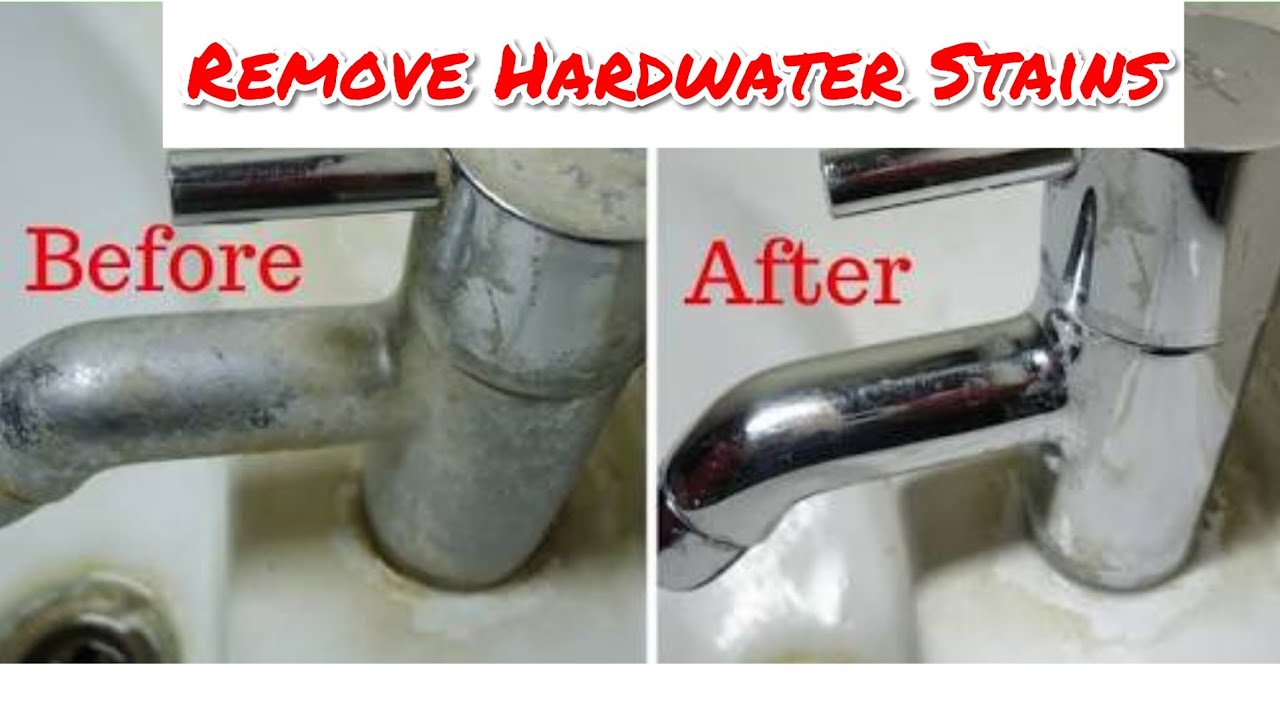
What Are Hard Water Stains?
Hard water contains dissolved minerals, mainly calcium and magnesium. When water dries, these minerals can remain on the surface. Over time, they can form a cloudy film, white spots, rough scale, or a crusty layer.
Hard water stains are common in bathrooms and kitchens. You may see them on shower glass, faucets, sinks, tubs, toilets, tile, and stainless steel. They are not usually caused by poor cleaning. The mineral-rich water itself leaves the deposit behind.
Fresh spots are often easy to remove. Older buildup can become thick and stubborn. That is why it helps to clean small deposits before they turn into a hard mineral layer.
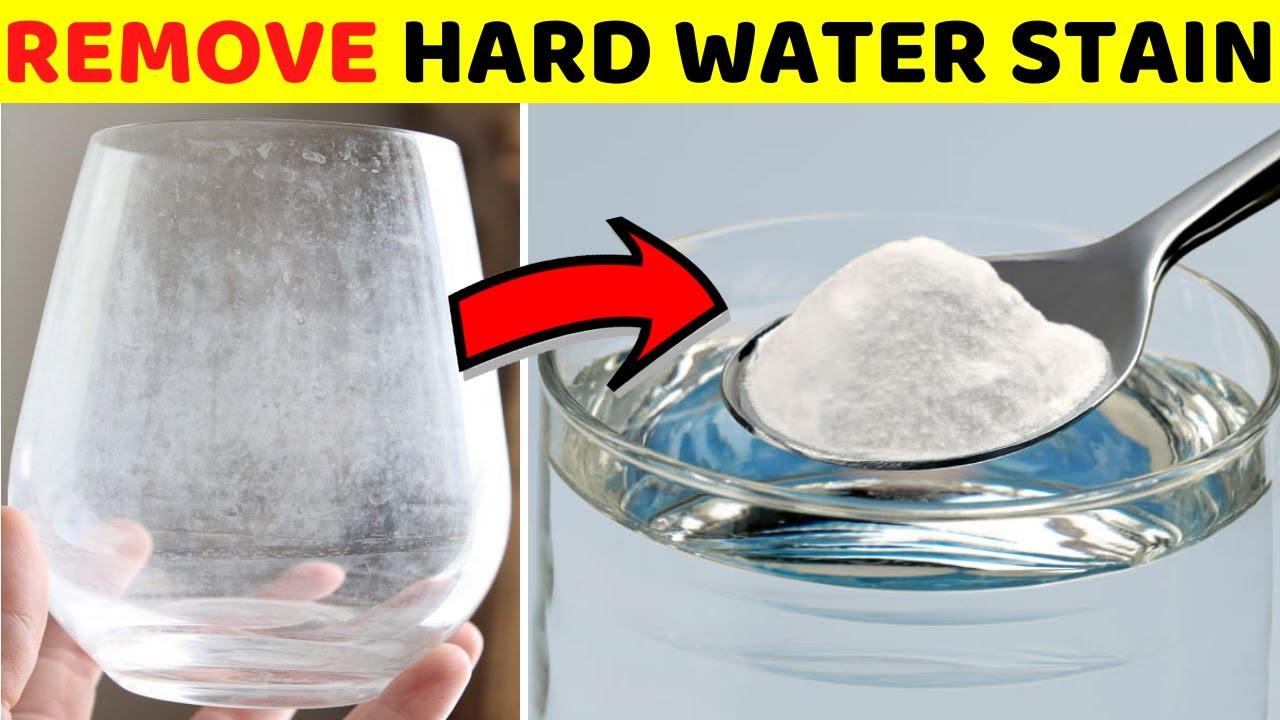
- ✦ White or cloudy film
A pale film on glass, chrome, tile, or fixtures often points to mineral deposits.
- ✦ Rough texture
Run your fingers over the area after it dries. A gritty or crusty feel can signal mineral scale.
- ✦ Spots after drying
If marks appear soon after water evaporates, hard water may be part of the problem.
Hard Water Stains vs. Soap Scum
Hard water stains and soap scum can look alike. Soap scum often feels greasy or waxy, while mineral deposits tend to feel chalky or rough. Both can appear together in a shower, so you may need to remove soap residue before treating the mineral layer.
- ✦ Mineral deposit
Often looks white, gray, cloudy, or chalky and responds well to mild acidic cleaners on acid-safe surfaces.
- ✦ Soap scum
Often feels slick or waxy and may respond better to a suitable bathroom or degreasing cleaner.
How to Remove Hard Water Stains with White Vinegar
White vinegar is one of the simplest options for many acid-safe surfaces. Its acetic acid can help dissolve mineral deposits, making them easier to wipe away. It works best on fresh or moderate buildup.
For a basic method, mix equal parts white vinegar and water in a spray bottle. Apply it to the stain, let it sit for several minutes, then wipe with a soft cloth or non-scratch sponge. For thicker deposits, you can use undiluted white vinegar for a short period if the surface is suitable and the manufacturer does not prohibit acidic cleaners.
Do not let vinegar sit for a long time just because the stain is stubborn. More contact time is not always better. If the first treatment does not work, repeat it rather than using more force.

- ✦ Step 1: Remove loose dirt
Wash away dust, hair, soap residue, and other loose debris first.
- ✦ Step 2: Apply vinegar
Spray a vinegar solution over the mineral deposit and keep the area damp during the short treatment.
- ✦ Step 3: Wipe gently
Use a microfiber cloth or soft sponge to lift the softened buildup.
- ✦ Step 4: Rinse well
Rinse the surface with clean water to remove loosened minerals and vinegar residue.
- ✦ Step 5: Dry completely
Buff the surface with a clean, dry microfiber cloth to reduce new water spots.
When Vinegar Is Not Safe
Do not use vinegar on marble, limestone, travertine, or other acid-sensitive natural stone. Acid can etch these materials and leave a dull mark that looks worse than the original stain. Always check the care instructions for the surface before using an acidic cleaner.
- ✦ Avoid natural stone
Use a stone-safe cleaner on marble, limestone, travertine, and similar surfaces.
- ✦ Check finishes
Some specialty finishes can react badly to acidic products. Follow the manufacturer’s cleaning directions.
How to Remove Hard Water Stains from Glass Shower Doors
Glass shower doors show hard water stains quickly because every drop can dry on the surface. A mild acid can loosen the mineral film, but thick buildup may need more than one treatment.
Start by rinsing the glass and removing loose soap residue. Spray a suitable vinegar solution over the affected area and let it work for a few minutes. Wipe with a microfiber cloth or non-abrasive sponge, then rinse and dry the glass.
For stubborn spots, repeat the process instead of reaching for a harsh abrasive. A razor scraper may damage glass if used incorrectly, so only use one when the glass manufacturer allows it and you know how to use it safely.

- ✦ Use a soft tool
Microfiber cloths and non-scratch sponges help reduce the risk of surface marks.
- ✦ Work in small areas
Treating one section at a time makes it easier to keep the cleaner from drying.
- ✦ Dry after cleaning
A dry microfiber cloth removes leftover water that could leave new mineral spots.
How to Prevent Water Spots on Shower Glass
Prevention takes less work than removing thick buildup. Use a shower squeegee after each shower and wipe the lower edges where water tends to collect. Regular drying can greatly reduce the amount of mineral residue that has time to build up.
- ✦ Squeegee the glass
Make a quick pass over the glass after showering.
- ✦ Keep the door dry
Use a clean microfiber towel for areas where water tends to pool.
How to Remove Hard Water Stains from Faucets and Fixtures
Faucets often collect mineral deposits around the base, aerator, handles, and seams. These areas stay wet longer, so scale can build up fast. The safest approach is to soften the deposit first and then wipe it away.
For chrome and other acid-safe finishes, place a cloth dampened with a suitable vinegar solution over the deposit for a short time. Remove the cloth, wipe the area gently, rinse well, and dry it. Avoid rough pads that can scratch the finish.
If mineral scale blocks a faucet aerator, remove the aerator if the design allows it. Soaking the removable part in a suitable descaling solution can loosen deposits. Rinse it well before putting it back.

- ✦ Wrap, do not soak the whole fixture
A damp cloth can target the buildup without exposing every part of the fixture to cleaner.
- ✦ Rinse after treatment
Clean water helps remove both loosened minerals and cleaning residue.
- ✦ Dry the finish
A soft dry cloth helps prevent water spots and keeps the fixture looking clean.
How to Remove Hard Water Stains from a Faucet Aerator
Minerals can collect inside the small screen at the faucet tip. If the water stream becomes weak or uneven, buildup may be blocking the aerator. Remove it if possible, soak it in a suitable descaling solution, rinse it thoroughly, and reinstall it.
- ✦ Check the manual
Confirm that the aerator can be removed and learn which cleaners are safe for the fixture.
- ✦ Rinse thoroughly
Flush away loosened particles before returning the aerator to the faucet.
How to Remove Hard Water Stains from Tile, Sinks, and Toilets
Ceramic and porcelain surfaces are often easier to clean than natural stone. You can usually use a mild acidic cleaner on glazed ceramic or porcelain when the manufacturer’s care instructions allow it. Rinse well after cleaning, especially around metal parts and grout.
For a sink, first remove food, soap, and other residue. Apply the appropriate cleaner to the mineral deposits, wait briefly, and scrub gently with a non-scratch sponge. Rinse the basin well and dry it to reduce fresh spots.
Toilet bowl scale can be harder because deposits may sit below the water line. A toilet-safe descaler can help with heavy buildup. Never mix toilet cleaners with bleach or other cleaning products unless the product label specifically says the combination is safe.
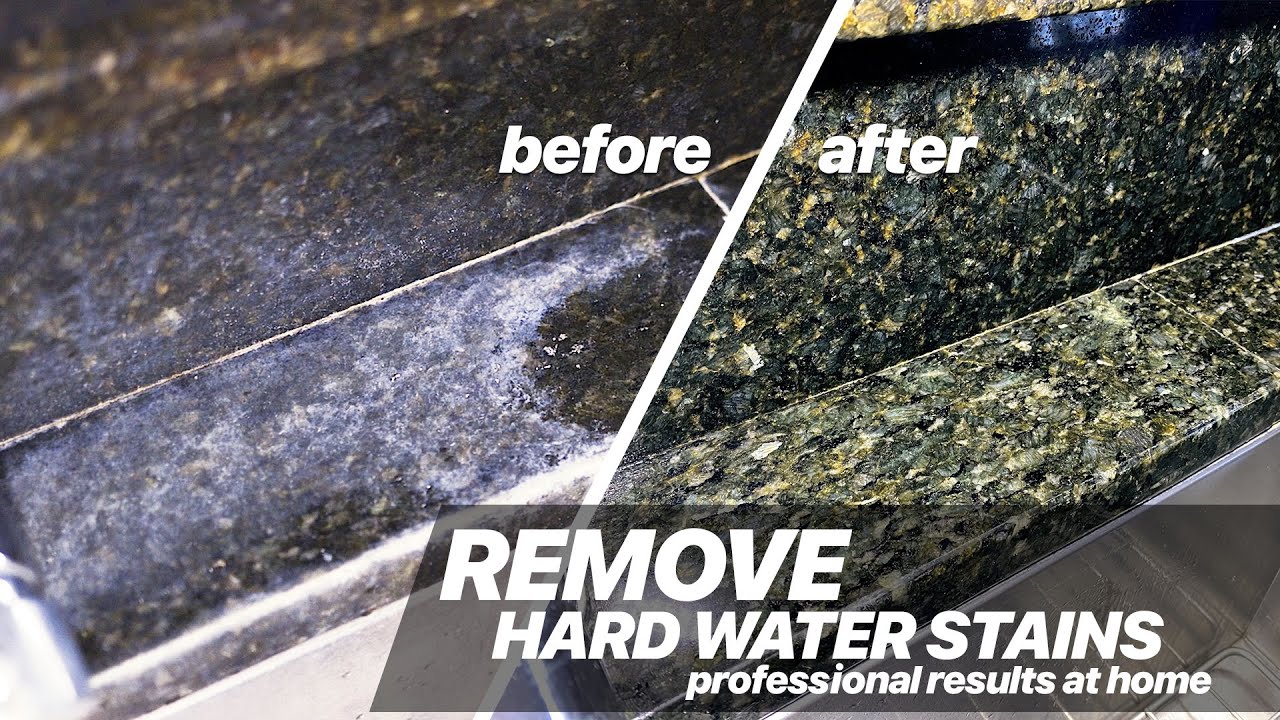
- ✦ Ceramic tile
Use a suitable mild acid on glazed ceramic when the surface care guide permits it.
- ✦ Porcelain sink
Treat mineral deposits gently and rinse well to protect the finish.
- ✦ Toilet bowl
Choose a toilet-safe descaling product for heavy mineral buildup and follow its label.
- ✦ Grout
Test first because some grout types and sealers can react poorly to acidic cleaners.
How to Remove Hard Water Stains from Toilet Bowls
For a light ring, a toilet-safe cleaner may be enough. For thick mineral scale, use a product made for toilet descaling and follow the label directions. Mechanical tools made for toilet bowls can help with stubborn deposits, but avoid anything that can scratch the porcelain.
- ✦ Use toilet-safe products
A product designed for toilet bowls reduces the risk of damaging the fixture.
- ✦ Never mix cleaners
Mixing acids, bleach, ammonia, or other cleaners can create dangerous fumes or reactions.
How to Remove Hard Water Stains from Stainless Steel
Stainless steel can show water spots, mineral film, and scale around sinks and faucets. The surface can look dull after repeated cleaning, especially when people scrub against the grain. A gentle approach usually gives a better result.
Start with a soft cloth and a mild cleaner that is suitable for stainless steel. If the manufacturer’s care instructions allow it, a diluted vinegar solution can help with mineral deposits. Wipe in the direction of the steel grain, then rinse and dry.
Avoid steel wool and harsh abrasive powders unless the manufacturer specifically approves them. Scratches can trap dirt and make future stains more noticeable.

- ✦ Follow the grain
Wipe in the same direction as the visible lines in brushed stainless steel.
- ✦ Skip harsh abrasives
Rough scrubbers can leave scratches that permanently change the look of the surface.
- ✦ Dry after rinsing
Water left on stainless steel can dry into another layer of mineral spots.
How to Remove Hard Water Stains from Natural Stone
Natural stone needs special care. Marble, limestone, travertine, and some other stones contain minerals that can react with acids. Do not use vinegar or other acidic cleaners unless the stone manufacturer or a qualified stone-care professional confirms that they are safe.
For these surfaces, use a cleaner labeled for the specific stone. If an acidic cleaner has already caused a dull patch, cleaning alone may not restore the finish. Etching can require professional polishing or refinishing.
- ✦ Use stone-safe products
Choose a pH-appropriate cleaner made for the type of natural stone you have.
- ✦ Test first
Test a new cleaner in a small hidden area before treating a visible section.
Other Methods for Removing Stubborn Hard Water Buildup
Vinegar is useful, but it is not the only option. Citric acid is another mild acid that can dissolve mineral deposits on compatible surfaces. Commercial limescale removers can also work well, especially when buildup is thick and has been present for a long time.
The important part is to match the cleaner to the surface. A strong descaler may remove mineral scale quickly but can also damage stone, metal finishes, grout, or sealers. Always read the label and follow the stated contact time.
For very thick deposits, several short treatments are often safer than one long soak. If the surface has already become etched, scratched, or discolored, removing the mineral deposit may not restore its original appearance.

- ✦ Citric acid
Citric acid can dissolve mineral deposits and is available in some cleaning products and powdered forms.
- ✦ Commercial limescale remover
These products are made to target mineral scale, but their labels should be checked for surface restrictions.
- ✦ Gentle scrubbing
Use a non-abrasive sponge or soft brush after the deposit has softened.
- ✦ Repeat instead of forcing
A second mild treatment is often safer than aggressive scrubbing on a delicate finish.
What Not to Use on Hard Water Stains
Avoid treating every surface as if it were the same. Strong acids, abrasive powders, rough pads, and improvised scraping tools can create permanent damage. Never mix cleaning products to make a stronger solution.
- ✦ Do not mix bleach and acids
Acidic products and bleach can create dangerous chlorine gas.
- ✦ Avoid abrasive scrubbing
Steel wool and rough pads can scratch glass, stainless steel, and finished fixtures.
- ✦ Do not use vinegar on acid-sensitive stone
Acid can etch marble, limestone, travertine, and other sensitive stone surfaces.
How to Prevent Hard Water Stains from Coming Back
Once you know how to remove hard water stains, prevention is the next step. The simplest habit is to remove water before it dries. A squeegee, microfiber cloth, or quick towel wipe can reduce mineral deposits on shower glass, faucets, and sinks.
If hard water affects the whole home, a water softener can reduce the amount of calcium and magnesium entering the plumbing. For a home-wide problem, consider testing the water and discussing treatment options with a qualified water professional.
- ✦ Dry wet surfaces
Wipe shower doors, faucets, sinks, and other wet areas before water can evaporate.
- ✦ Clean small deposits early
Fresh mineral spots are easier to remove than thick scale.
- ✦ Fix leaks
A dripping faucet or leaking shower fitting can keep one area wet and create repeated buildup.
- ✦ Consider water treatment
A properly sized water softener can help when hard water is a persistent whole-home issue.